
For decades, new recruits joining the Air Force have left their hometowns and taken commercial flights to San Antonio, Texas, home of the service’s boot camp for all enlisted troops.
But perhaps oddly for a military branch built on aviation, that final civilian flight to Texas was the only exposure to a real airplane an Air Force recruit could expect for months or even years. Instead, the experience of Air Force boot camp, which the service calls Basic Military Training, or BMT, has traditionally been mostly indistinguishable from other services: roughly two months of marching, uniform and barracks inspections, memorizing rules and, of course, getting yelled at.
In the Air Force, airplanes have always come later.
But that has begun to change. Beginning this summer, the service is reducing traditional events like marching and inspections, and instead it is putting new recruits through drills on a specially built mock-up airfield with real-world retired Air Force planes.
The Air Force calls the overhaul BMT Next.
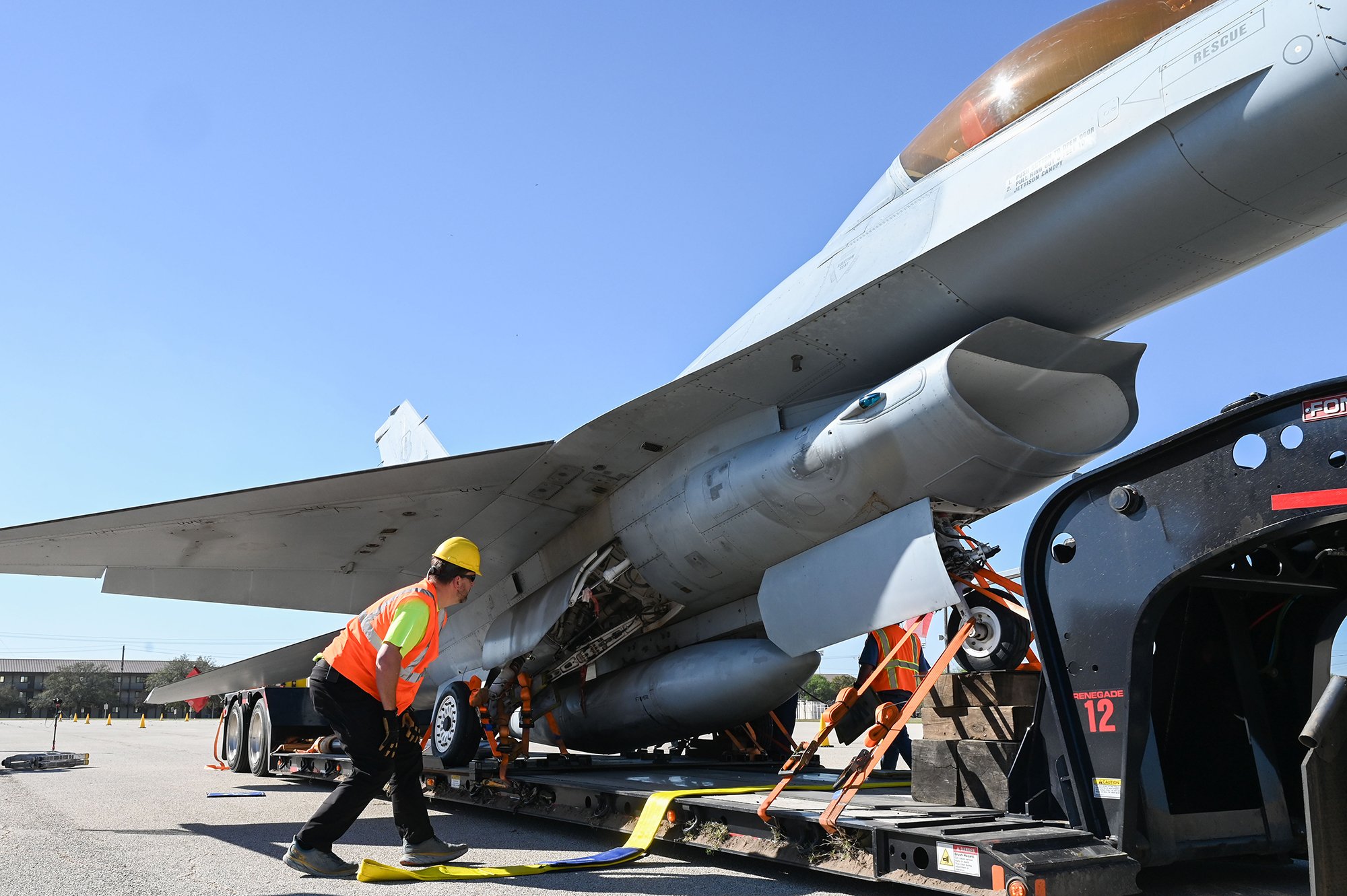
A full-size F-16 arrived at Joint Base San Antonio-Lackland in March as the service’s first hands-on training plane for boot camp, and a retired C-130 is scheduled to arrive next month. The retired aircraft will be the centerpieces of a simulated airfield the Air Force has built at the center of its basic training complex on the base.
Top Stories This Week
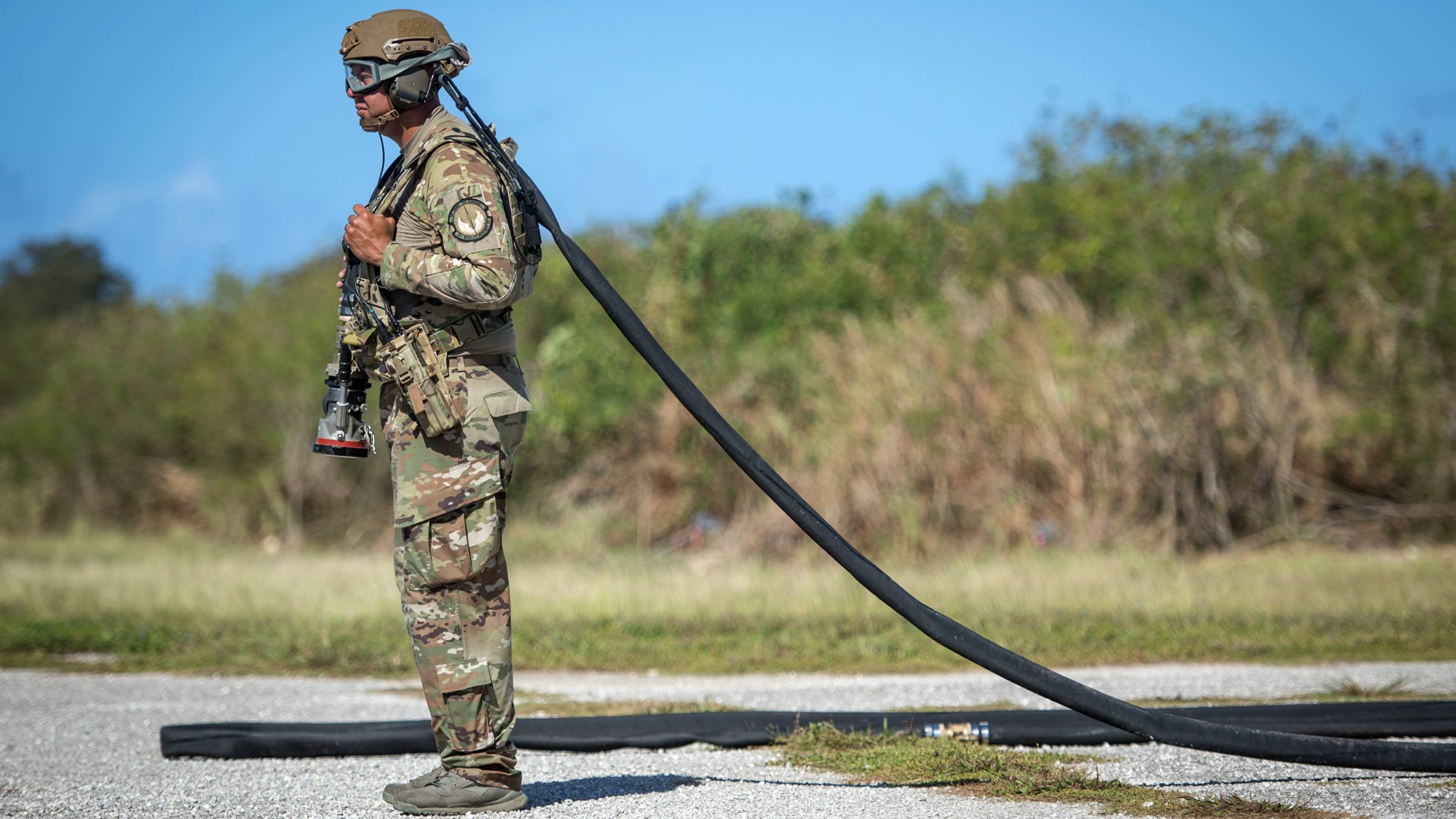
Airmen are already using F-16 to run drills and training events that simulate basic concepts behind an expeditionary airfield, from refueling planes to repairing damaged runways.
The curriculum centers on eight concepts that Air Force leaders view as the heart of modern expeditionary airfield operations, like the basic airfields airmen can expect to find when deployed. Drills on the retired planes are already underway for current classes, with the full mock-up airfield expected to be ready in October.
Capt. Paige Skinner, an Air Force spokesperson, said the current setup covers the planes and 16 training stations for the eight core airfield skills. Importantly, Skinner said, the airmen are still basic recruits, and the training is not intended to qualify them in any of the highly technical skills involved, like loading bombs or refueling planes with real gas.
“The objective is not to master these technical tasks,” Skinner said. “Those skills are developed later in follow-on technical training. Instead, the exercise uses the context of airfield operations to challenge a team’s problem-solving and communication skills, ultimately creating an identity that is tightly bound to the Air Force’s core mission.”
To make room for the airfield exercises, Air Force recruits now get less of what Skinner called “legacy” boot camp traditions: hyper-picky inspections of uniforms and barracks, marching drills, and other traditional ‘detail-oriented’ training.
“We are optimizing our schedule to focus on warfighting,” Skinner said. “By reducing the hours historically dedicated to legacy dorm inspections and ceremonial drill, we are reclaiming critical time to immerse trainees in high-intensity mission generation tasks. Discipline and attention to detail remain foundational to BMT, but trainees are now expected to apply those traits directly to tasks like rapid runway repair, airfield defense, and casualty evacuation.”
Trainees will also get a block of training in an oldy-but-goody military skill, orienteering with a map and compass. The new airmen will navigate between spots on the airfield in an event the Air Force refers to — perhaps in a sign of the digital-GPS times — as a “baseline analog” skill.
“This is specifically designed to teach recruits how to orient themselves and maneuver effectively across a military base under simulated stress,” Skinner said. “In a high-end fight, communications and digital navigation systems may be degraded or denied.”
By 2031, the Air Force says it will replace the mock-up facility with a larger, custom-built training range with four full mock-up airfields.
Loading comments…
Comments couldn’t be loaded. Please refresh the page.