
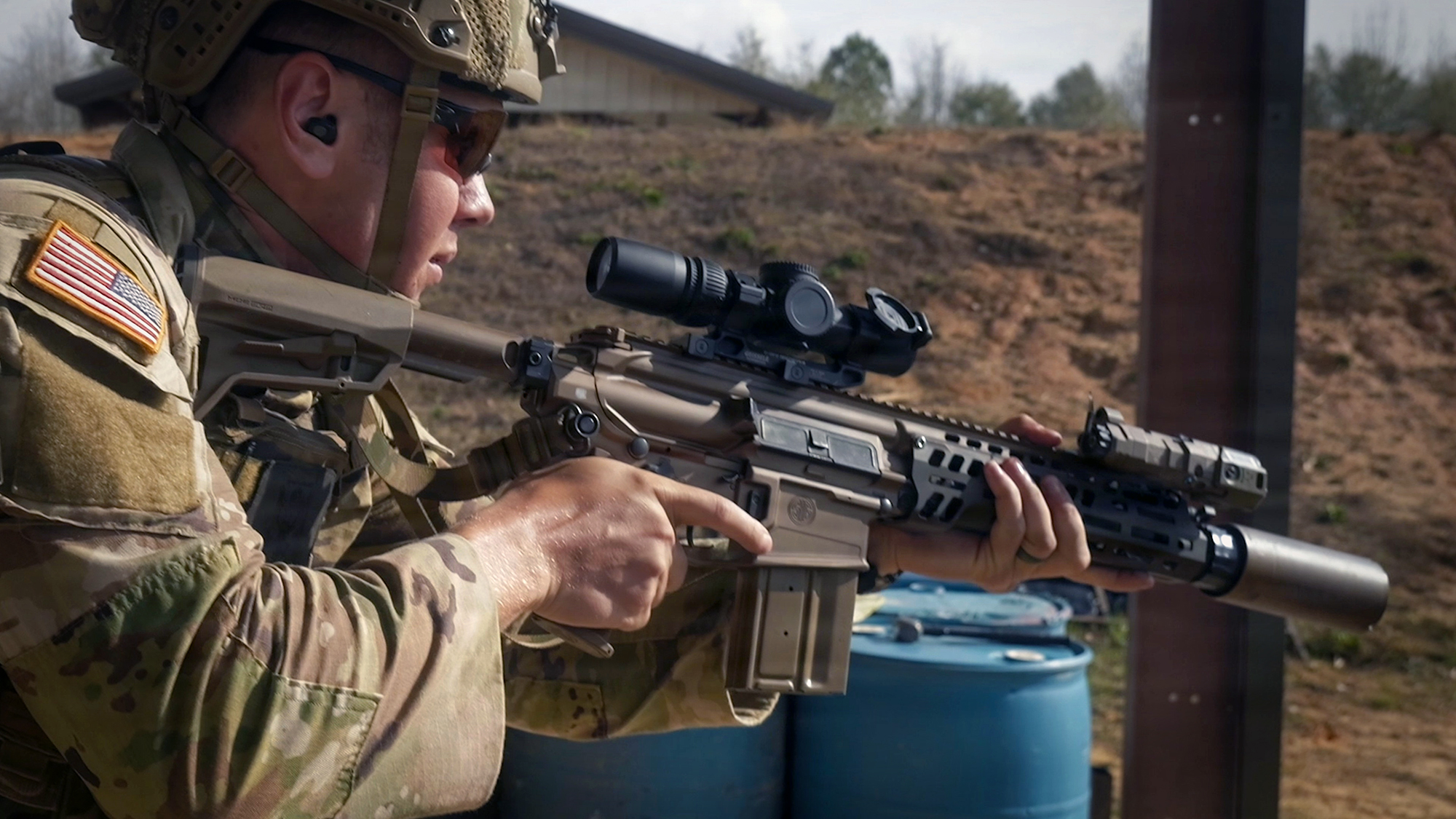
When it comes to the production of the Army’s newest small arms, the priority has shifted from the M7 rifle to the lighter XM8 carbine, an Army spokesperson told Task & Purpose.
“The production line has changed to the XM8,” said David Patterson Jr., director of public affairs for the Army’s Capability Program Executive Ground, which oversees weapons development, helmets, sensors and other equipment for soldiers.
The M7 rifle and XM8 carbine are part of the Army’s Next Generation Squad Weapon program along with the M250, a machine gun variant. All three models fire the 6.8 x 51mm round, which is designed to give the weapons an increased range. The Army is fielding the weapons to soldiers who are most likely to see direct close combat.
The Army has not purchased any M7s this fiscal year, which began on Oct 1, Patterson said.
Top Stories This Week
“The Army is focused on fielding M7 Rifles, XM8 Carbines, M250 Automatic Rifles, fire control and the family of 6.8mm ammunition to the Close Combat Force as rapidly as possible,” Patterson told Task & Purpose. He added that future purchases are “pre-decisional.”
At the moment, the future of the M7 appears to be unclear.
In 2022, the Army selected Sig Sauer to build the Next Generation Squad Weapon rifle and machine gun, which are intended to replace the M4 carbine and M249 Squad Automatic Weapons for close combat forces, which include infantry, scouts, combat medics, forward observers, combat engineers, and special operations forces.
When asked if the production line for the M7 had ended, a spokesman for Sig Sauer deferred to the Army on the matter.
“The M7 remains in service, and SIG SAUER continues to standby to support production and sustainment needs, while the U.S. Army continues to expand its XM8 footprint,” said Tory Mazzola, the company’s vice president of global communications.
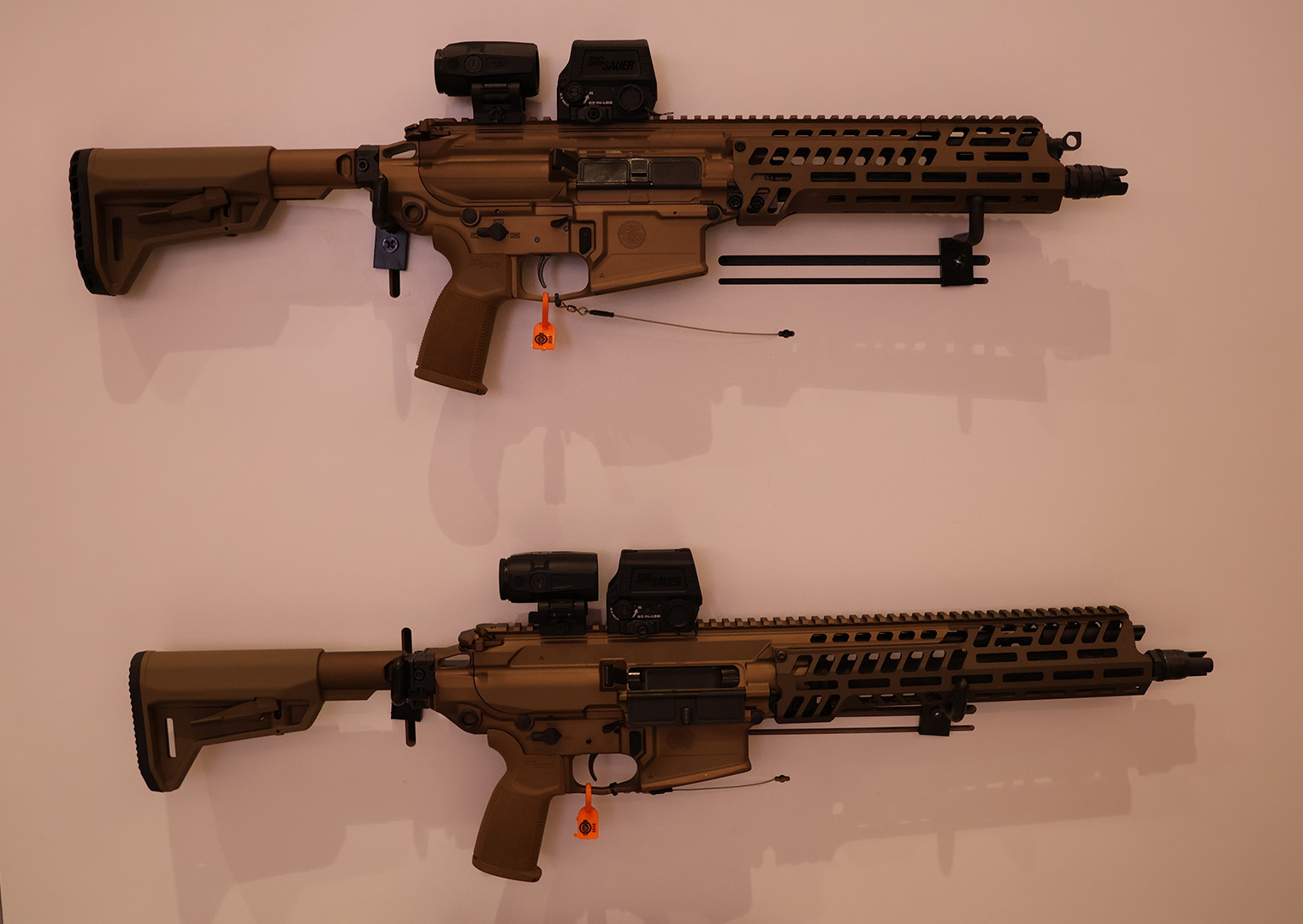
The XM8 includes several changes based on soldiers’ feedback about the M7, including a fixed stock, softer butt pad and a more rigid handguard for optics and other mounted equipment.
“A key difference is the XM8 carbine’s shorter barrel, making the system 3.5 inches shorter and more than a pound lighter than the fielded M7 rifle,” Mazzola told Task & Purpose. “The XM8 carbine’s improved balance, felt recoil, and ergonomics expand soldier maneuverability while delivering the same level of incredible lethality as the M7 rifle.”
Mazzola declined to provide specific information on how many M7s and XM8s have been delivered to the Army so far.
The Army began fielding the M7, then known as the XM7, in 2024, but it has faced criticism from within the ranks, with an Army infantry officer criticizing the weapon as“unfit for use as a modern service rifle.”
Separately, the Marine Corps confirmed in February that it had decided not to adopt the M7 in favor of its M27 Infantry Automatic Rifle.
Loading comments…
Comments couldn’t be loaded. Please refresh the page.