
On Friday, U.S. military forces carried out another strike on a boat accused of trafficking drugs by sea, killing three people and pushing the death toll in these strikes to 202.
The strike took place in an unspecified part of the eastern Pacific Ocean, and it’s unclear what military asset took out the boat. Video shared by U.S. Southern Command, which announced the strike, shows a small boat exploding in a fireball. It was the 61st strike on a small vessel in the Caribbean Sea and Eastern Pacific since Sept. 2. A day later on May 30, U.S. forces hit another boat in that region, targeting what SOUTHCOM has called “narco-terrorists.”
“Three male narco-terrorists were killed during this action,” SOUTHCOM said.
All of the strikes are a part of Operation Southern Spear, the formal name for the military’s ongoing actions against drug trafficking organizations around Latin America. In its announcements of both strikes, SOUTHCOM said that the boats were operated by “Designated Terrorist Organizations” and that the strikes were “at the direction” of SOUTHCOM commander Gen. Francis Donovan.
According to the military’s released figures, the armed forces have conducted 62 strikes, destroying 63 vessels including one semi-submersible and killed 205 people, 17 of those either found dead during search and rescue operations or assumed dead after ending searches.
Top Stories This Week
The operation was formally announced in mid-November, although strikes began in September and have retroactively been placed under the operation. Since August, the U.S. has deployed warships including a carrier strike group, destroyers, fighter jets, drones and a Marine Expeditionary Unit to Central America and the Caribbean in support of what became the operation. The Trump administration has said that the United States is engaged in an armed conflict with drug trafficking groups, and has designated several as terrorist organizations, although it has presented little evidence showing that those killed are traffickers themselves.
The death toll passed 200 people killed a few days after the State Department and Department of Defense’s quarterly report to Congress on Operation Southern Spear was released. The lead inspector general report, published May 20, primarily focuses on Jan. 1-March 31 but discusses the operation as a whole. In it, the inspectors note that SOUTHCOM “said that it could not publicly release its measures of effectiveness for assessing the conduct of OSS” and that the operation’s mission statement is classified.
Despite that, the report — which cites interviews and documents from SOUTHCOM and the military — does offer parameters of what falls under the operation. Primarily, the report says, Operation Southern Spear “primarily involves lethal airstrikes against small boats suspected of shipping illegal narcotics in the Caribbean Sea and eastern Pacific Ocean.” The inspector general’s paper also says that some related efforts in Latin America are distinct from and do not count as a part of Operation Southern Spear, including ongoing non-lethal interdictions by a multinational task force led by the U.S. Coast Guard, the seizure of sanctioned oil tankers and the Jan. 3 attack on Venezuela. It also notes that U.S. military involvement in Ecuador in support of that country’s anti-narcotics operations is not a part of Southern Spear.
The ongoing anti-narcotics endeavor was also impacted by the launch of the U.S. and Israel’s war in Iran, according to the findings. Operation Epic Fury “has required a significant reprioritization of DoW assets to the U.S. Central Command AOR, including the USS Gerald R. Ford carrier strike group, which had previously been supporting OSS and other operations in the Caribbean Sea,” the report said, using the Trump administration’s unofficial name for the Department of Defense.
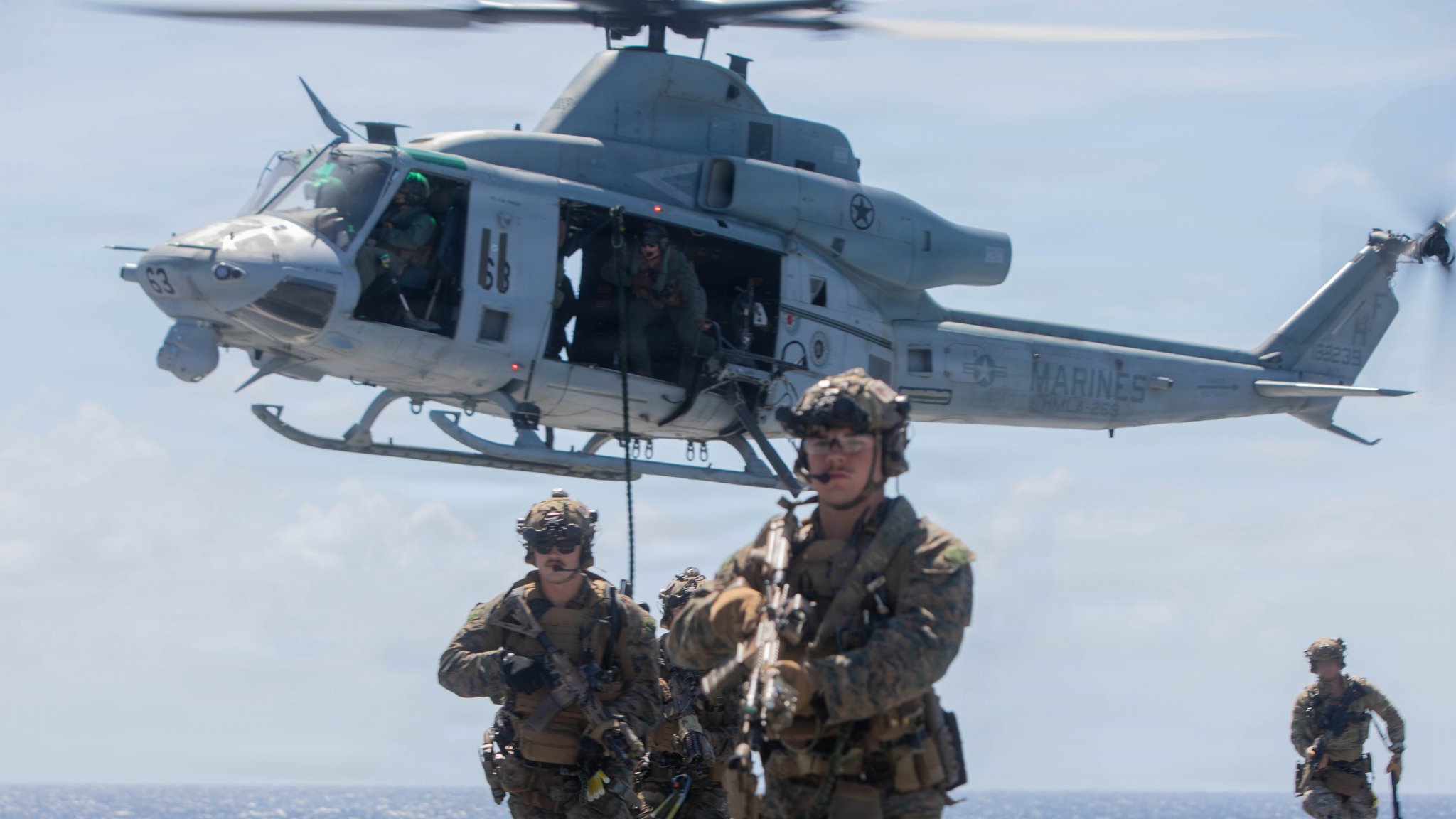
In the last few days, more U.S. forces have arrived in the Caribbean. Marines from the 24th Marine Expeditionary Unit deployed to Puerto Rico as a littoral combat force, replacing the Iwo Jima Amphibious Ready Group and the 22nd Marine Expeditionary Unit. The USS Nimitz and its carrier strike group is currently in the Caribbean as part of a lengthy voyage around Latin America and will spend the next week in Jamaica.
Loading comments…
Comments couldn’t be loaded. Please refresh the page.