
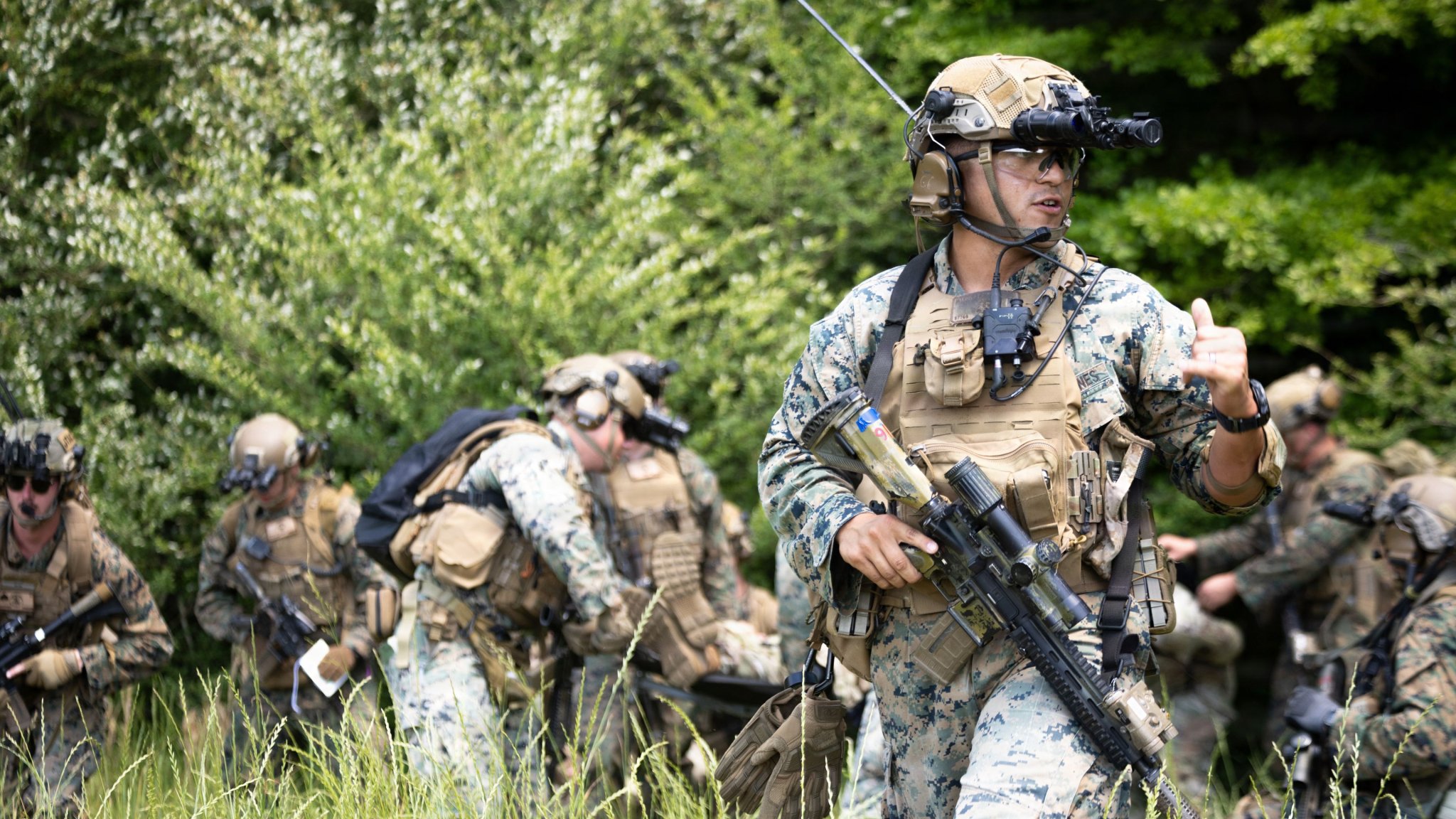
A new set of Marines is now waiting as the “immediate crisis response force” in Latin America, Marine Corps officials said Friday, as the 24th Marine Expeditionary Unit replaced the 22nd MEU in the Caribbean.
Roughly 1,300 Marines from the 24th MEU are now deployed to the area, Marine officials said, as part of Operation Southern Spear, the Pentagon’s ongoing mission to stem drug trafficking in the region. While MEUs often are embarked on Navy amphibious ships, the 24th is deployed as Littoral Combat Force-24 at the recently reopened Roosevelt Roads Naval Station in Puerto Rico.
“The Marines and Sailors of LCF-24 are postured to execute all prescribed mission sets directed by our higher echelons of leadership; to deter the threats facing our hemisphere today,” Col. Ryan Lynch, the littoral combat force’s commander said in the Marine Corps’ announcement. “Through our transition with the 22nd MEU, we have seamlessly assumed the watch. Our posture is active, our forces are integrated, and we are committed to standing as the regional security partner of choice.”
Top Stories This Week
The Marines, officials said, will disrupt “networks utilized by Designated Terrorist Organizations and narco-terrorists,” the term the Department of Defense is using for drug traffickers. However, it was unclear what that might mean amid a campaign focused mostly on airstrikes on speedboats.
However, the U.S. has designated several drug cartels as terrorist groups in recent months, opening up actions the military can legally take against their operations. The Marine Corps also said that the force is certified to carry out missions including supporting embassies or recover downed aircraft personnel.
With the arrival of the 24th MEU, the Iwo Jima Amphibious Ready Group also is wrapping up a 10-month deployment to the Caribbean this week. The group, which the 22nd MEU was embarked on, deployed in August as part of an initial U.S. military build up in the region. At its height, the Navy had several destroyers, its largest aircraft carrier and a special operations mothership in the region. Several aviation units have also deployed to reopened bases in Latin America.
Marines from the 22nd MEU remained in the area for months, while U.S. forces began carrying out dozens of airstrikes on small ships that the Pentagon has claimed were transporting drugs. The strikes have killed at least 190 people since September, according to the Pentagon.
The Iwo Jima group also participated in Operation Absolute Resolve, the Jan. 3 attack on Venezuela that captured President Nicolás Maduro.
The amphibious transport dock the USS Fort Lauderdale, which had been a part of the Iwo Jima Amphibious Ready Group, is remaining in the area to support the Marines. A spokesperson for Joint Task Force – Southern Spear told Task & Purpose that the command is headquartered at Roosevelt Roads, with a “large contingent” embarked on the USS Fort Lauderdale.
The littoral combat force’s aerial component is built around Marine Medium Tiltrotor Squadron 365 (VMM-365) Reinforced. The squadron operates MV-22B Ospreys. Additionally, a UH-1Y Venom detachment from Marine Light Attack Helicopter Squadron 269 (HMLA-269) is a part of the force, providing close air support capabilities.
The newly arrived Marines come as the U.S. has sent more military power to the Caribbean amid escalating threats against Cuba. The aircraft carrier the USS Nimitz entered the area this past week.
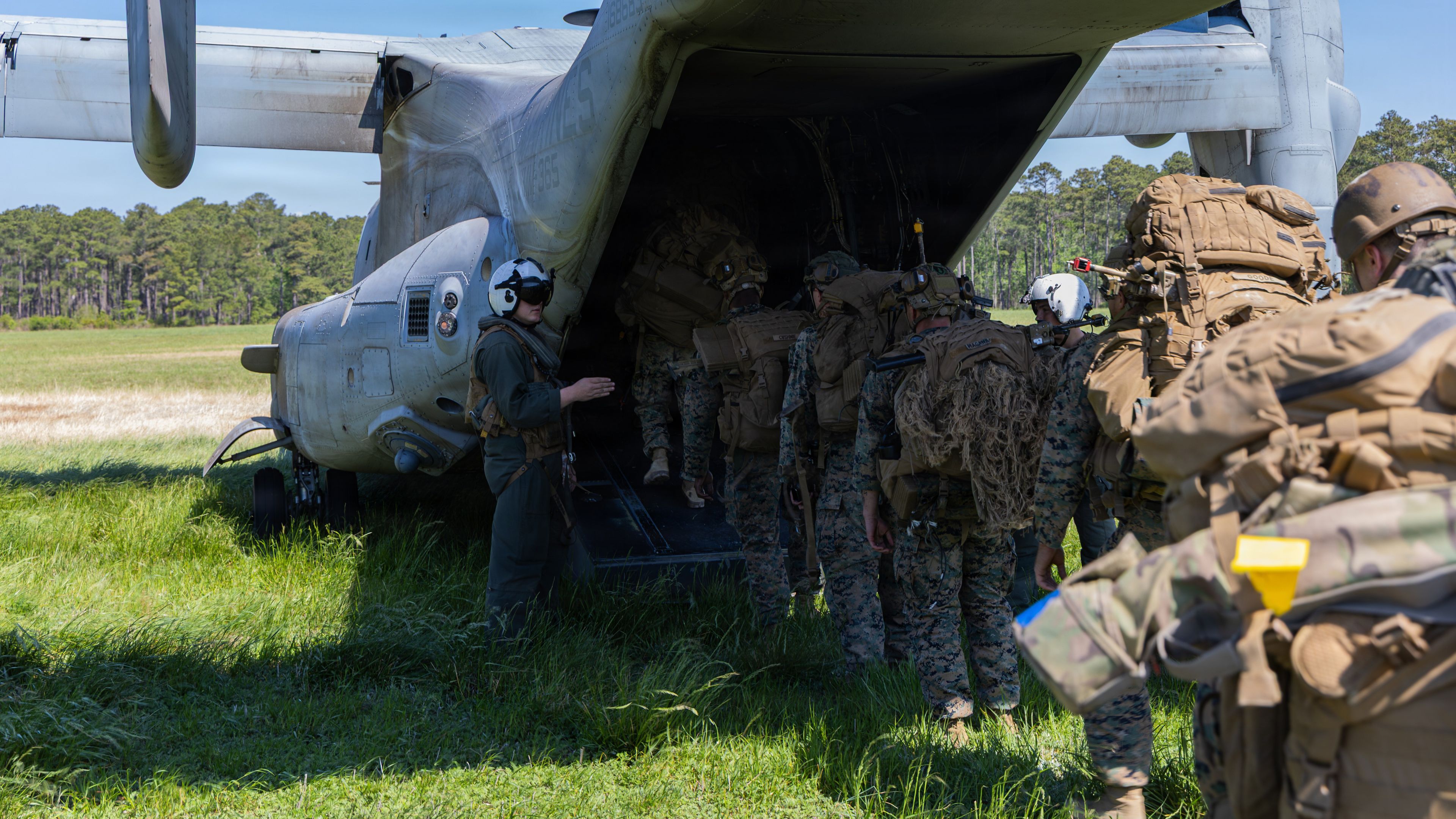
Marine Corps Gen. Francis Donovan, the current head of SOUTHCOM, previously commanded the 24th MEU from 2011-2013. He met with some of the deployed Marines in Puerto Rico this week.
A recently released inspector general report on Operation Southern Spear found that the military had struck at least 47 boats between September 2025-March 2026, killing at least 156 people (additional strikes since have pushed the total to nearly 200 dead). Two-thirds of those strikes have been in the eastern Pacific Ocean, with the rest in the Caribbean Sea.
The report noted that Operation Southern Spear is distinct from non-lethal interdiction operations, the seizure of sanctions oil tankers, the attack on Venezuela and military support against drug traffickers in Ecuador. Additionally, the report said that SOUTHCOM said it “could not publicly release its measures of effectiveness for assessing the conduct of OSS.”
According to the report, Operation Southern Spear’s mission statement is classified.
Marine Corps Lt. Gen. Calvert L. Worth, the commander of II Marine Expeditionary Force said in a statement that the littoral combat force is “not just a crisis response force; they provide options to the Combatant Commander and serve as a tool for building partner capacity and securing the advantage across all domains.”
Loading comments…
Comments couldn’t be loaded. Please refresh the page.