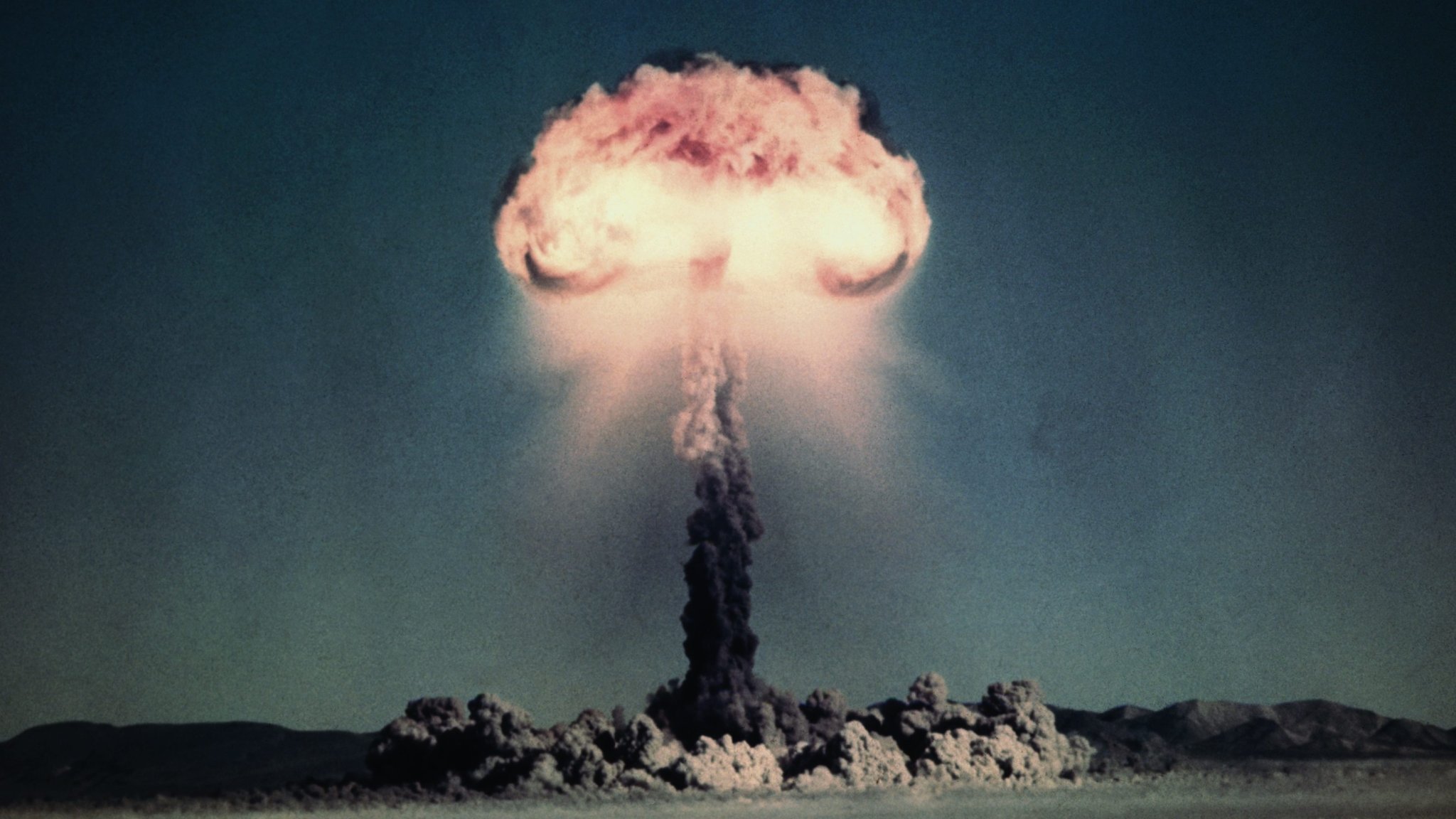
In the early years of nuclear development, as atomic bombs and nuclear power made their way into the American military arsenal, companies in the defense industry sometimes got weird with them.
They developed nuclear air-to-air missiles, portable nuclear launch devices, tried to create nuclear death clouds in the atmosphere and nukes small enough for Special Forces soldiers to parachute with. They even considered nuclear-powered bases on the Moon that would be able to repel enemy spacecraft.
For every idea that made the cut, such as nuclear-powered submarines, there were several other more fantastical or outright science-fiction ideas involving nukes that were also proposed.
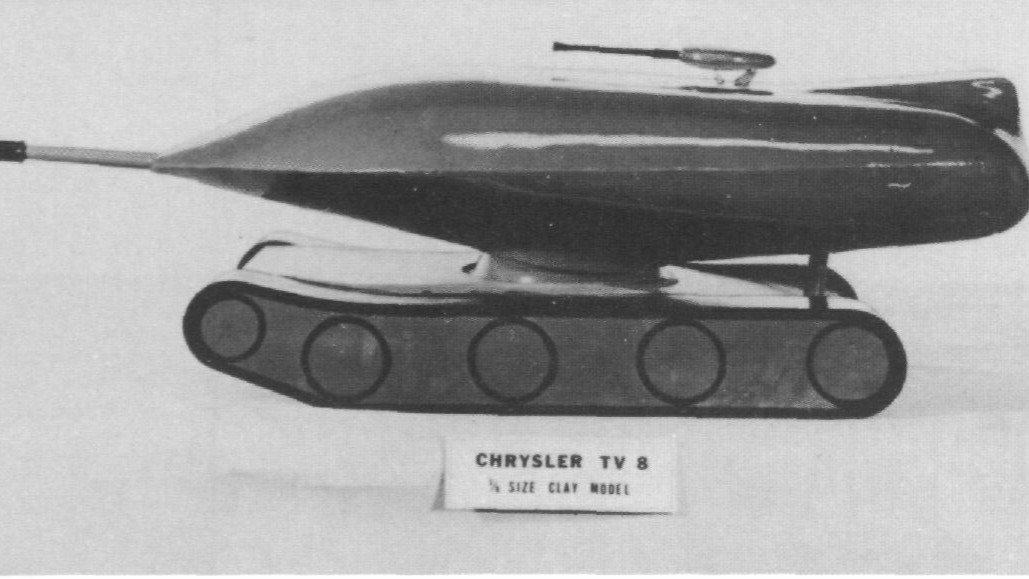
That includes the TV-8, a nuclear-powered tank proposed in the 1950s by Chrysler. Yes, the car maker. Chrysler was already working heavily with the U.S. military, building several widely used tanks as well as the Army’s first intercontinental ballistic missile, the Redstone, which in turn was used for some of America’s first orbital space launches. By the mid-1950s the U.S. Army was exploring potential new tank designs and reached out to several manufacturers to field proposals for the next evolution in armor. The TV-8 was Chrysler’s entry in the ASTRON project.
Top Stories This Week
Details on the tank are sparse, but what is known comes across today as deeply bizarre. The tank treads are familiar, but the body of the tank — crew, ammo, main gun, etc — all sit above it, isolated in a main pod. The oblong, curved structure is more akin the fuselage of a B-2 Spirit than a World War II-era Sherman tank, or even the M1 Abrams of today.
The design had two purposes: The shape was meant to withstand nearby explosive blasts, including nuclear ones, and to help it stay buoyant during amphibious operations. A built-in water jet on the lower section would propel it forward, while its watertight turret would fire 90mm rounds. The tank utilized closed-circuit cameras to give tankers a live feed of their surroundings, according to the “A History of the American Main Battle Tank” by R.P. Hunnicutt.
Then there was the power.
Chrysler put forward a theoretical plan to consider powering the tank with a nuclear reactor.
If you’re thinking, ‘that makes no sense,’ well, the Army soon agreed, but “an onboard reactor on a mechanized battlefield” was the kind of thing you could propose in the early 1950s. The general idea was that a nuke-powered TV-8 would have essentially unlimited range and be freed from the constraints of fuel supply logistics (although ammunition would still need to be delivered).
Of course, that still meant putting a small nuclear reactor inside the tank. Even if the crew could be protected, using the TV-8 in combat meant that any damage to the tank from enemy fire risked exposing nearby troops to dangerous amounts of radiation.
A prototype was built, although it didn’t have the nuclear reactor. The gasoline-powered prototype was tested, but deemed unsuitable, in part because it was still highly susceptible to enemy armor. By 1956, only a year after it was put forward, the TV-8 was killed.
To the good fortune of Army tankers, but to the detriment of strange nuclear project aficionados everywhere, the atomic TV-8 was never actually built or fielded. But it remains an interesting, now-retro-futuristic look at how military weapons makers once envisioned the Atomic Age.