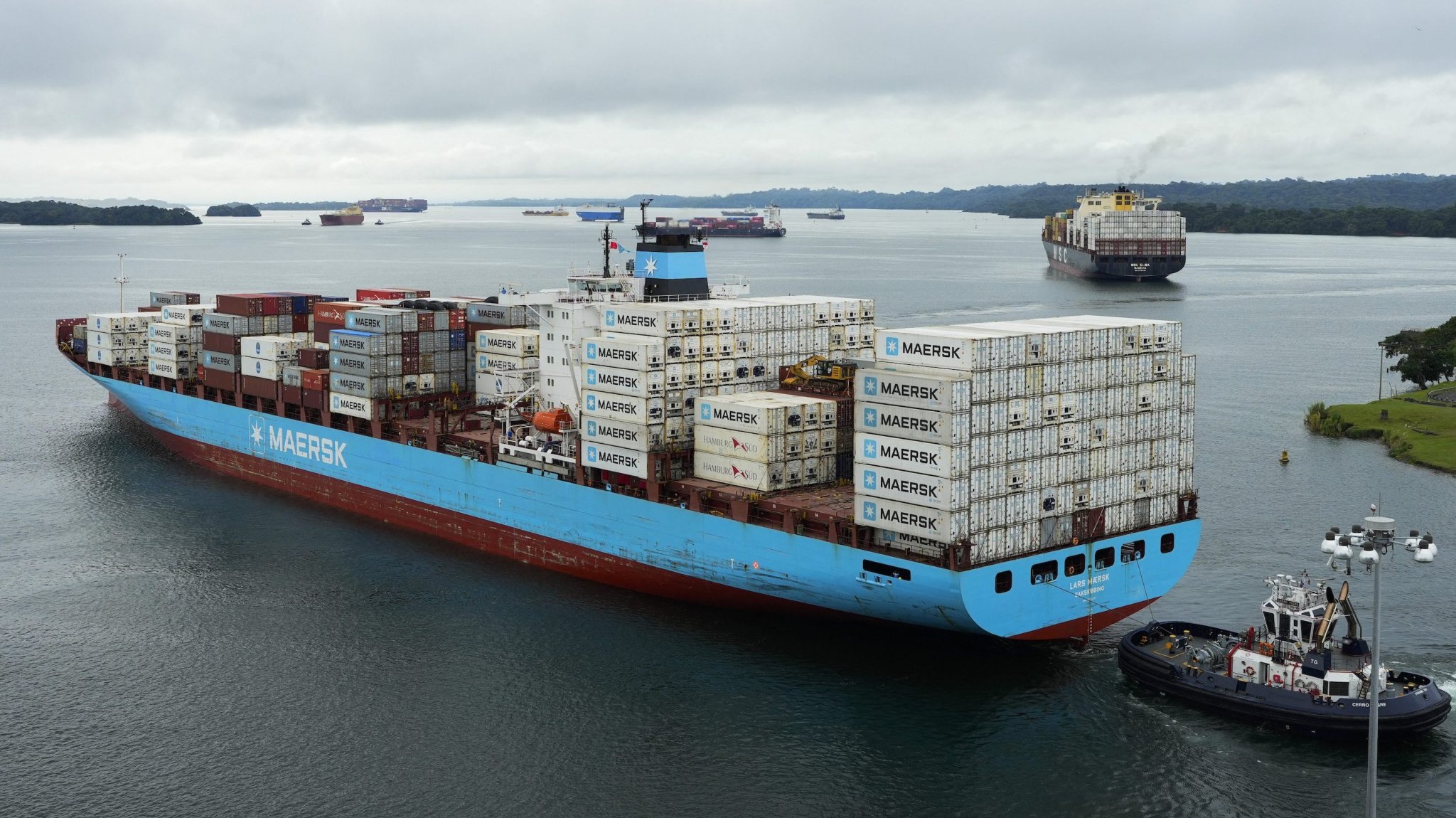
Military families shipping their household goods and cars to new assignments are seeing delays brought on by the ongoing U.S. war with Iran, Pentagon officials say.
A March 10 memo issued by the Defense Department’s Personal Property Activity, or PPA, warned that “the operation in the Middle East is causing severe, widespread, and rapidly evolving disruptions to air and sea shipments. Airport closures, suspensions of port operations, the effective closure of the Strait of Hormuz and significant security risks are preventing vessel and airline ability to safely transit the area.”
A Pentagon official confirmed to Task & Purpose that the interruptions could affect shipments for over 1,000 service members including many moving to new assignments as a Permanent Change of Station, or PCS.
“Delays and routing changes associated with international household goods (HHG) and unaccompanied baggage (UB) shipments are expected,” the memo said. The PPA memo was sent to companies that contract with the military to move household goods and vehicles for military families who PCS.
“We are aware of family members whose shipments have been impacted, and service members that have been impacted by Operation Epic Fury,” said Maj. Matt Visser, a spokesperson for the PPA, told Task & Purpose. “We are being proactive.”
The PPA issued a “stop movement” order on March 6 for shipments overseas, preventing household goods and unaccompanied baggage from being transported in countries near ongoing combat operations, including Bahrain, Cyprus, Iraq, Israel, Jordan, Kuwait, Lebanon, Oman, Pakistan, Qatar, Saudi Arabia and the United Arab Emirates.
PPA officials said in the memo normal shipments to or from those countries would resume when the commander of U.S. Central Command determines that the area “is safe for such shipments to resume.”
Visser encouraged families PCSing to call 1-833-MIL-MOVE or email PCScallcenter@mail.mil.
Weeks of delays for overseas moves
A moving industry official confirmed that families are facing delays.
“Even though this conflict is over in Iran right now, we are going to be seeing the impacts domestically as well,” said Katie McMichael, executive director of Movers for America, a coalition of 1,100 companies contracted by the military to handle PCS moves.
McMichael said military families moving abroad and within the U.S. should prepare for delays because of shipment suspensions abroad and heightened base security measures at home.
“For people overseas, it can definitely be weeks. They have a blanket suspension to certain countries right now. They’re dealing with shipments on a case-by-case basis,” McMichael told Task & Purpose. “On the domestic side, it could be hours in some cases, if a base is really busy. We might have drivers that sit in line all day, and they might have to turn around and come back the next day because they just can’t get through the line.”
The Pentagon declined to give an estimate on the average delays that service members are facing.
Visser said there hasn’t been a complete termination of all movement, adding that “some shipments are still moving as local conditions allow.”
Stateside, families can see delays if their civilian movers have trouble getting on base. On March 2, the Department of Defense suspended the Trusted Traveler Program, which streamlines access to military bases for vetted contractors and vendors.
Movers for America told customers in an advisory that in some instances, delivery drivers are waiting over two hours “which kickstarts a ripple effect of delayed deliveries and pickups.”
As the military enters “peak” PCS season, which begins in April and runs through August, McMichael said they’re anticipating “steep delays” for domestic moves if base security measures continue. The delays could be different depending on the size of the base. For instance, a larger installation with more daily traffic and more troops PCSing could see longer delays.
Defense Secretary Pete Hegseth established the Personal Property Activity earlier this year as part of the Pentagon’s overhaul for PCS moves. The PPA contracts with moving companies to ship household goods and vehicles for nearly 300,000 service members who PCS across the U.S. and overseas each year, Hegseth said in a January 2026 video.
McMichael said movers will have to pay higher prices, but it won’t impact servicemembers whose moves are covered by the Defense Department. However families that opt to hire their own movers with a personally procured move — which the Pentagon says nearly 30% of troops do each year — should expect to see “higher oil prices reflected in the rates you’re going to get on the commercial market,” she said.
“Moving companies, they are just as frustrated as the customers right now at getting these shipments moved. I think just stay in close contact with your moving company,” McMichael said.