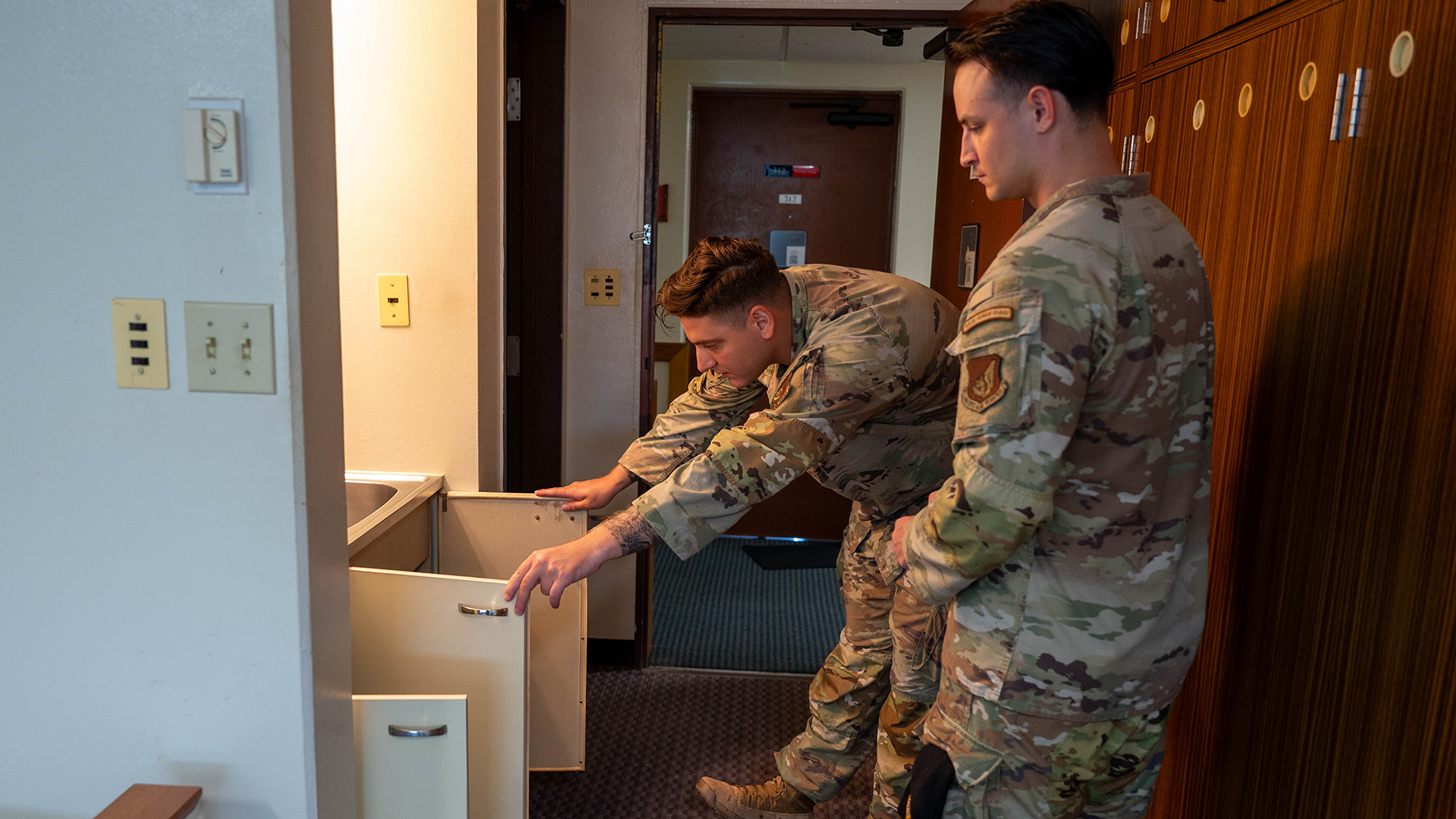
Every barracks room and “unaccompanied housing” unit in the Air Force will get a direct inspection in the coming days to ensure that airmen are living in “clean, comfortable, and safe” conditions,” according to a memo posted on the unofficial Air Force amn/nco/snco Facebook page. The Air Force confirmed to Task & Purpose that the memo is authentic.
“Unaccompanied housing” is the term the service uses for the dorms and barracks where the overwhelming majority of unmarried Air Force junior enlisted service members live.
The heads of the Air Force’s major commands have until Oct. 29 to certify that the living conditions for airmen in dorms are up to standards, the memo says. Any airmen living in dorms that are dirty or unsafe will be immediately relocated.
Top Stories This Week
Commanders are also directed to come up with a plan that uses “in-house labor” as much as possible to make any improvements to unaccompanied housing, according to the memo.
“The plan should consider in-house Civil Engineer projects, Self-Help Bay Orderly, Dorm Party efforts and other avenues as appropriate,” the memo says. It also noted that “compelling contracted initiatives will be considered.”
The memo also calls for commanders to develop a plan by Oct. 29 for a department-wide “capability for service members to directly submit and track UH [unaccompanied housing] facility work orders.”
No information was immediately available on Wednesday about what this capability might entail.
The inspections are intended to support the Pentagon’s Barracks Task Force, which Defense Secretary Pete Hegseth stood up earlier this month, the memo says. On Oct. 7, Hegseth gave the task force 30 days to come up with an “investment plan” to improve troop housing.
When Hegseth announced the task force’s formation, he cited a 2023 Government Accountability Office report that found “serious health and safety risks” in housing for junior enlisted troops at 10 military bases.
“Service members in six of 12 discussion groups also told us about issues with pests, including bedbugs, rodents, cockroaches, and wasps,” the report says. “At three of 10 installations, officials told us service members are generally responsible for pest control, or for removing hazardous material from barracks, such as mold and sewage.”
After the report found that 17,000 Marines were living in substandard barracks, the Corps launched “wall-to-wall” inspections of all its barracks rooms in early 2024.
The Marines have launched “Barracks 2030,” a multiyear effort to improve living conditions. As of May, the Corps had refurbished 11 out of its 109 barracks over the past two years, improving living conditions for about 4,200 Marines.
The Navy also ordered service-wide inspections of barracks this year after Navy Secretary John Phelan was “shocked and dismayed” when he visited the Palau Hall barracks at Andersen Air Force Base on Guam in March. Phelan ordered that the sailors and Marines living in the housing facility be moved within 10 days.
An Army survey compiled in June found soldiers living in barracks face persistent problems, including mold and pest infestations, maintenance delays, privacy concerns and security issues.