The Air Force is once again revising basic training, this time by adding simulated permanent and expeditionary airstrips to give trainees hands-on experience at operating and defending airfields.
The air base training ranges are expected to open this year as part of the latest overhaul of Basic Military Training, or BMT, which is expected to begin in the spring, said Maj. Gen. Wolfe Davidson, commander of 2nd Air Force.
“For the first time in BMT, the training environment will simulate the capabilities of the operational Air Force,” Davidson said in a statement to Task & Purpose. “The simulated airstrips provide an immediate, realistic mission context that allows trainees to understand the ‘why’ behind their training. It allows them to see how the discipline and teamwork learned on the drill pad directly translate to generating airpower.”
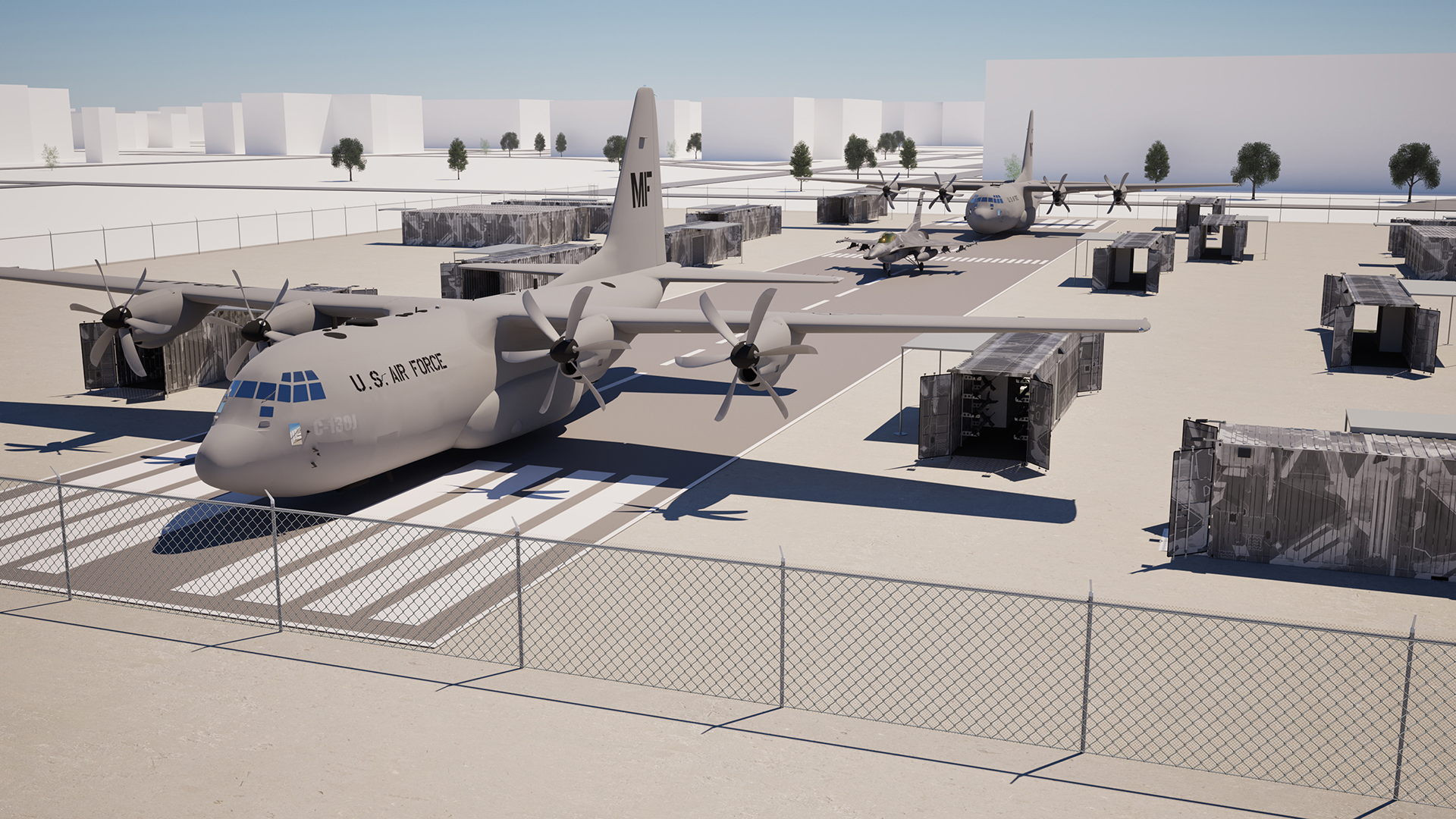
Air & Space Forces Magazine first reported that the Air Force planned to incorporate the simulated airfields into basic training.
Trainees will learn “foundational skills” at the Initial Air Base Training Range at Lackland Air Force Base, Texas, which will feature F-16 fighters and C-130 cargo aircraft, Davidson said. The simulated forward airfields will be added to the PACER FORGE exercise, the culminating event of basic training that puts recruits through combat scenarios in a simulated deployed environment, which is held at the Chapman Training Annex at Lackland, he said.
Adding the airstrips to the exercise “will create a complex and immersive expeditionary airfield environment,” Davidson said.
Dubbed “BMT 3.0,” the changes to basic training will include using containerized training stations to teach airfield tasks, including arming fighters, cargo loading, refueling, aircraft marshaling, post-attack runway assessment and repair, and casualty transfer and evacuation, Davidson said.
The simulated permanent airfield is expected to open starting in April, and it will feature 16 training stations by fall, Davidson said. Construction on the first expeditionary airfield training range is expected to be finished in October, with another set to be built in October 2027, he said.
Top Stories This Week
Trainees will learn how to defend both types of airfields against enemy attacks, Davidson said.
“Operating in ‘simulated contested conditions’ is a core component of the new model,” Davidson said. “During the culminating PACER FORGE exercise, trainees will be required to defend their forward air base and apply their skills as a team while facing a variety of simulated challenges and attacks.”
The most recent changes come just months after the Air Force announced in September that it was revamping basic training by having trainees exercise more and work in smaller teams.
Davidson said that last year’s update to basic training was “an early step,” and that including simulated airstrips in basic training is meant to give trainees a better understanding of what it takes to defend, operate, generate, and sustain airpower.
“The focus is on developing and assessing foundational competencies like perseverance, accountability, resilience, and teamwork,” Davidson said. “The scenarios are designed not for trainees to master specific technical tasks, but to challenge their problem-solving and communication skills in controlled-stress situations. Collectively, this will result in a basic understanding of airfield operations.”