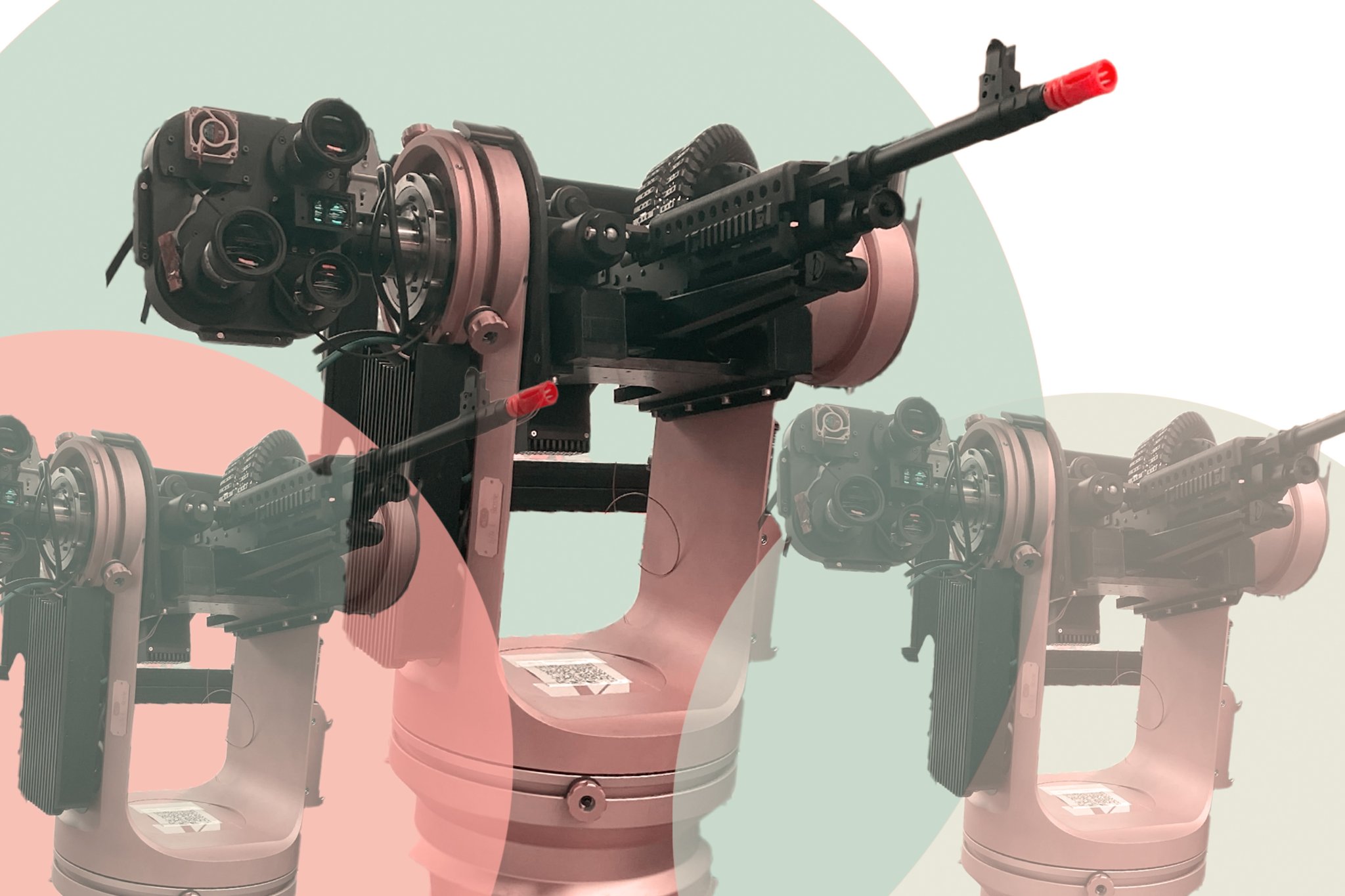
This anti-drone robot-powered weapon system comes in rose gold.
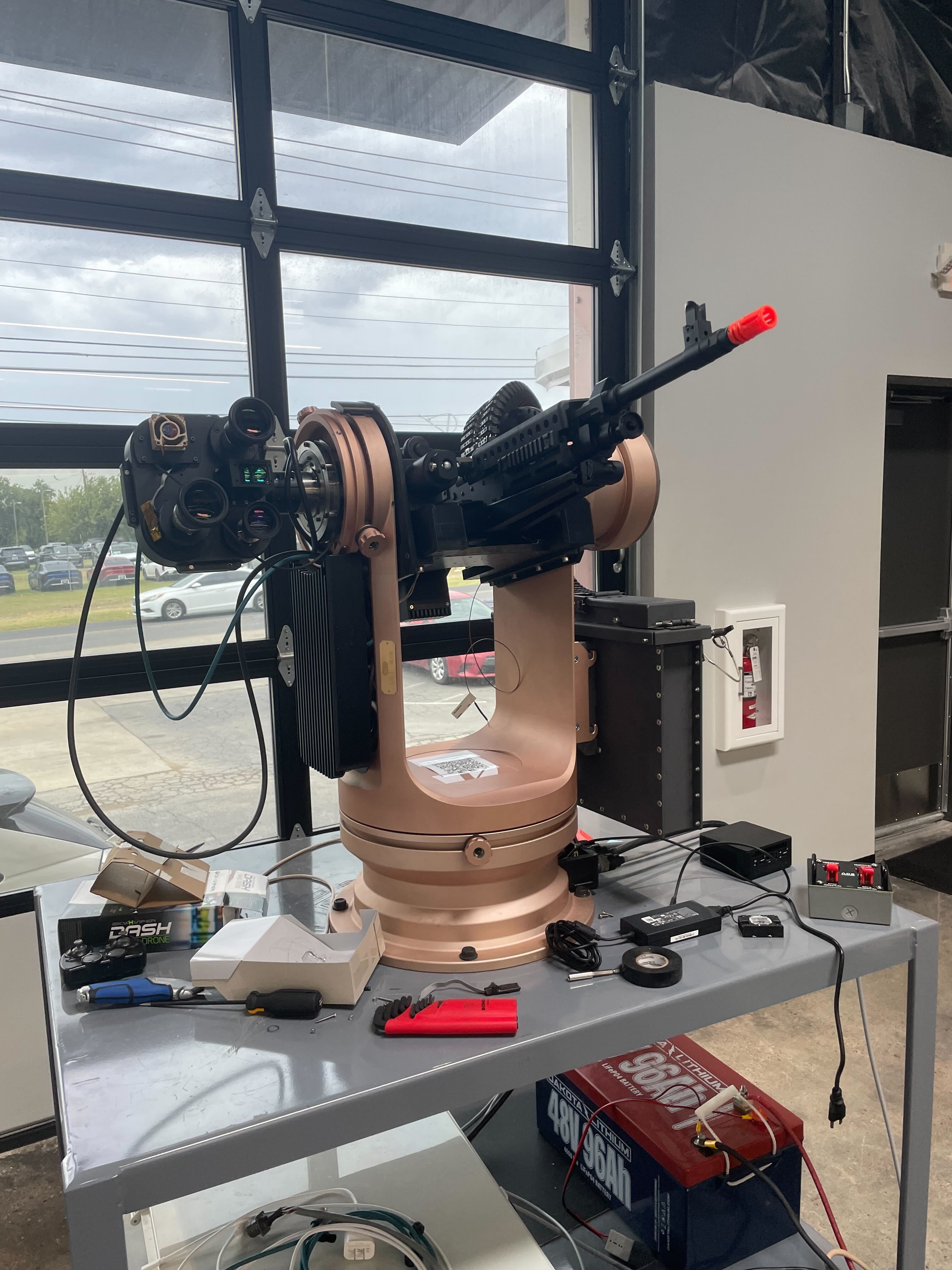
Okay, well, it was an accident. Typically, the Austin, Texas-based start-up behind the machine — an automated tracking system designed to shoot down drones, and known as the Bullfrog — delivers the device in traditional military field colors — green, tan or black. But thanks to an ordering snafu, a recent shipment of cladding arrived in the pinkish-metallic hue known as rose gold.
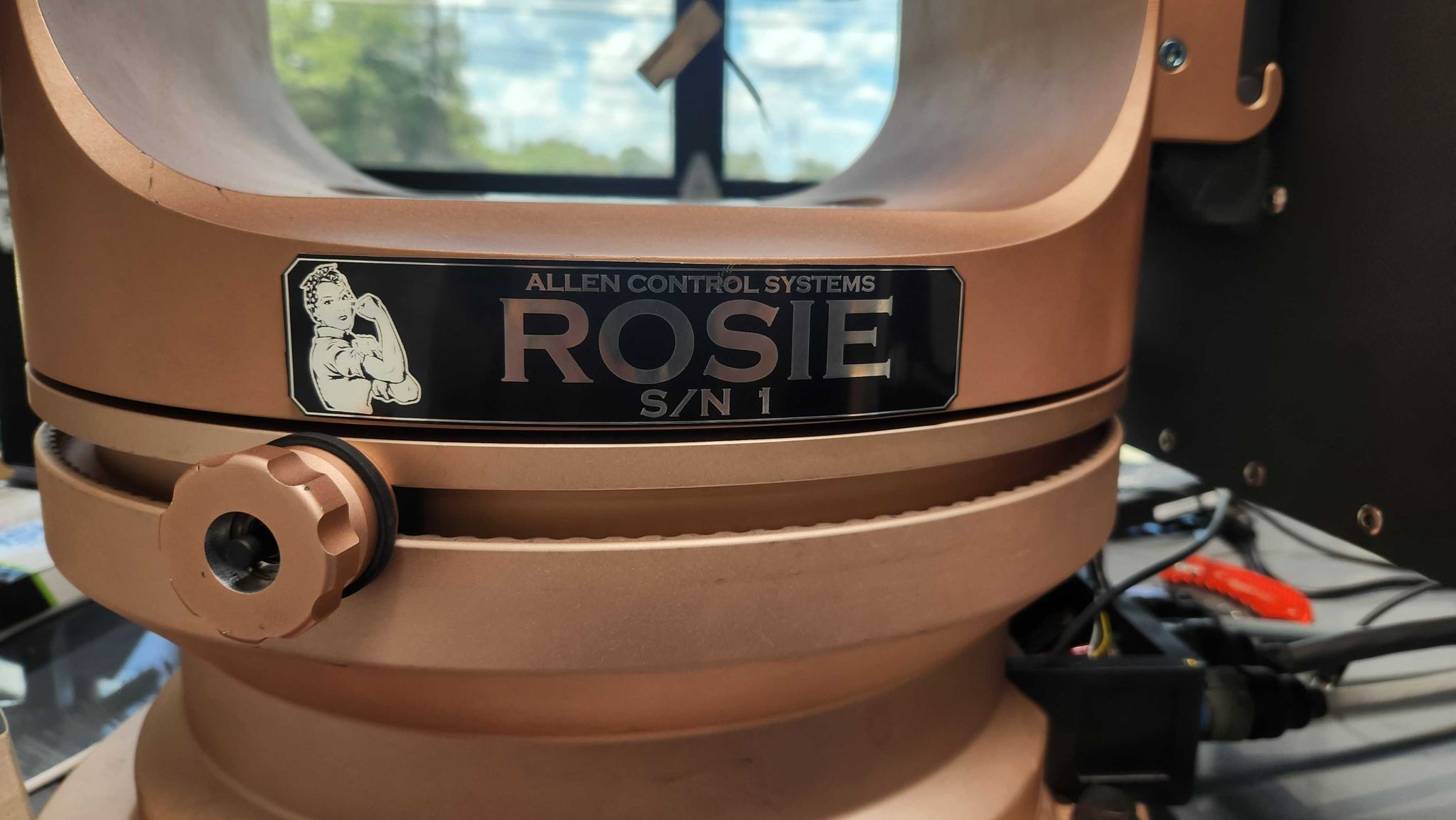
Which is how the company ended up with an in-house model they call “Rosie.”
The Bullfrog is made by Allen Control Systems, which markets the device as a low-cost remote weapon system to combat the existential drone problem that 21st-century militaries will face. The Bullfrog uses artificial intelligence to track, detect and shoot down unmanned aerial systems, or UASs, that fly within small arms range of bases or vehicles. It’s compatible with weapons commonly used by infantry, like M240 medium machine guns. The system can work autonomously or be controlled by an operator, according to the company.
Company lore is mixed on how exactly it happened. CEO Mike Wior suspects someone intended to order a tan color but picked the gold hue instead.
President Steve Simoni says he thinks his team was following his orders to “make it look beautiful.”
“When you’re destroying drones, you want to look good,” said Simoni, who also referred to it as “the iPhone of turrets.”
Company officials shared pictures of the fashionably clad mounts with reporters, including Task & Purpose.
“It’s for the girls,” said one female defense reporter.
The company has shopped the drone-killer equipment to all military services but is still in conversations over formal contracts. They are primarily targeting work with the Army and Special Operations Command, which is known for being an early adopter of new defense tech.
“Look, if SOCOM wants it in rose gold, it’s certainly available,” Wior said. “I think the Saudis and the Emirates might buy the rose gold.”

AI-powered drone kills
The Bullfrog uses electro-optical systems for scanning the skies — instead of radar like other detectors — so the weapon doesn’t emit an electromagnetic signature, which is key for the modern battlefield where detection can be deadly.
The Bullfrog is classified as a remote-controlled weapon system, which Simoni said means it would normally be controlled by a human using a joystick to aim and fire.
“In our remote weapon station, now, that can be done autonomously, which allows you to hit much faster, smaller, moving targets like drones,” Simoni said. “With a joystick control, they can’t hit drones because the drone moves out of the screen too quickly.”
The company says the system is capable of taking out drones up to 800 meters away that are classified as Groups 1, 2 and 3 UAS, which range from lightweight, handheld sizes to others that weigh over 1,000 pounds.
For the modern battlefield, the Bullfrog was built to do point defense against short-range threats, Simoni said.
This applies to “any asset that you want to defend in a one-mile, one-kilometer radius around it,” he said. “Any sort of vehicle that’s driving, like a logistics convoy, tanks, things like that, all need a point defense right now. They have no point defense against drones, which is why you see in Ukraine that there’s not a lot of tanks running around right now.”
The company also hired video game engineers to feed its algorithm with synthetic data from “realistic models,” Wior said. These engineers design thousands of images of a wide variety of drones in different environments and at different times of day, images that are then used to train the system’s AI.
“Imagine a new drone is on the battlefield wreaking havoc. You wanna be able to recognize that drone specifically and the model as quickly as possible,” Wior said. “If it just hits the battlefield, it could take months, years, [to compile] enough data to feed a computer vision system for it to be able to reliably detect and identify that specific drone.”
Newcomer to defense tech
Allen Control Systems was founded by Wior, Simoni and Luke Allen, the chief technology officer. Simoni and Allen are both former Navy nuclear engineers.
As newcomers to the defense world, the team takes an unorthodox approach to marketing. The company began selling $30 t-shirts that depict the BullFrog accompanied by: “If it flies, it dies.”
Wior said the fact that they’re part of conversations, even with technology that has not been battle-tested, shows the direction that the military is going. While the Pentagon used to invest in technology “that was just on paper,” now they’re getting more experimental, which is the core focus of the Army’s Transforming in Contact initiative.
“Working with companies like ours, what it means is I’m gonna start paying for getting this integrated onto a vehicle platform so that when this is ready to be put in soldiers’ hands, I already have a plan to install it on a tank, on a Bradley, on a Paladin, on any of the ground combat vehicles, [unmanned surface vehicles],” he said. “That’s the type of conversations that we’re having with the military.”