
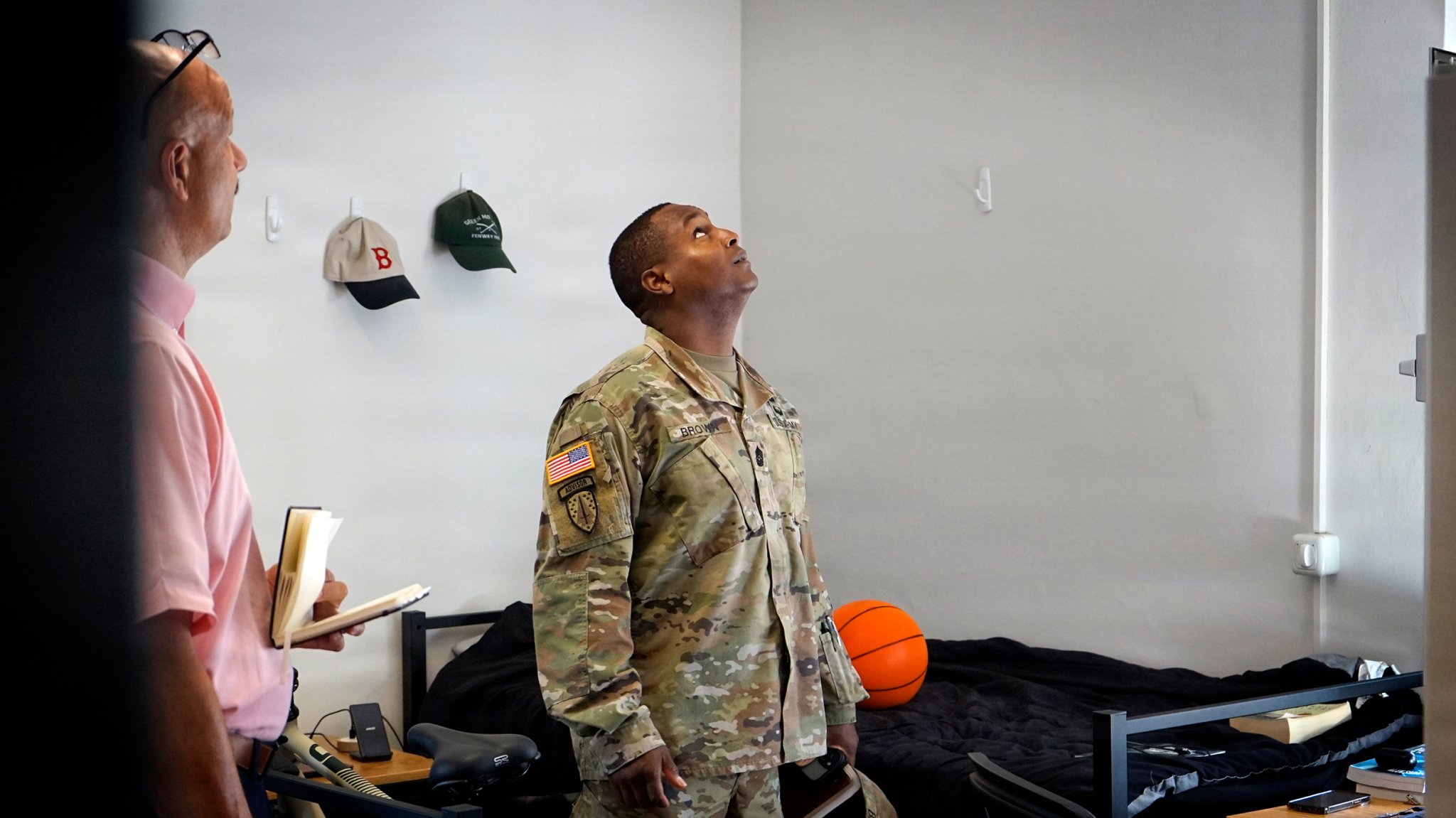
The Army’s plan to fix its barracks issues hinges on using cheaper, pre-assembled materials to design buildings that will last 25 years — half as long as its current barracks. The aim? To tear them down and rebuild as they fall into disuse, then promptly move soldiers in.
The concept is strikingly similar to “planned obsolescence,” a business practice where products are intentionally designed to fall apart after a predetermined period. The plan is a departure from how the service has built long-standing barracks, which have been mired in controversy over maintenance and sustainment delays in recent years.
The service is using a new authority granted by Congress called “repair by replacement,” W. Jordan Gillis, assistant secretary of the Army for Installations, Energy and Environment, said at a panel with reporters Tuesday at the Association of the United States Army conference in Washington, D.C.
“A barracks that we know is likely to cost more to renovate than it would to just build new, we are allowed to knock it down,” Gillis said. “Then, using restoration modernization dollars, which are more flexible than military construction dollars, we can construct a new barracks. We have a number of those projects stacked up.”
Rob Evans, founder of the barracks review app Hots&Cots, told Task & Purpose that the move to buildings that last 25 years doesn’t prevent the Army from housing soldiers in buildings that exceed their intended lifespan.
“What’s to stop them from using buildings longer than their life cycle, which they have a history of doing,” he said. “That is a big question and concern I have. Are we gonna continue seeing that? Because there was a couple of reports already out that the Army has been known to do that.”
A Government Accountability Office report from August found that about a third of Department of Defense buildings are more than 50 years old, with many originating from World War II. A 2022 GAO report found that Army officials reported that the average age of 63 facility categories, including barracks, “exceeded their expected lifespans.”
Evans said the plan to move to 25-year buildings doesn’t address maintenance backlogs and sustainment risks that the GAO has recommended as an issue worth addressing.
“You can build all the new barracks you want, but if you don’t have a good maintenance plan in place to maintain the barracks, they’re just gonna fall apart again,” Evans said. “So you’re fixing one thing by building new barracks, but you’re not changing the maintenance piece of this.”

As part of the new projects, the Army said its plan is to turn to “industrialized construction” methods like modular parts, prefabricated walls, pre-engineered metal buildings, and 3D-printed materials, officials said in a release from early October.
The news release said that seven barracks projects were targeted in fiscal year 2026. Five projects have been awarded at Fort Hood, Texas, Joint Base Lewis-McChord, Washington,
Devens Reserve Forces Training Area, Massachusetts, Fort Stewart, Georgia and Fort Bliss, Texas. Two projects at Fort Gordon, Georgia and Joint Base McGuire-Dix-Lakehurst, New Jersey need additional funding from Congress, according to the Army.
The barracks project at Fort Stewart, Georgia was highlighted by officials who said the service was able to move distinctly fast on using new Congressional authorities. The service awarded the contract in nearly three months instead of years later.
David Dentino, deputy assistant secretary of the Army for installations, housing and partnerships, said they’ve estimated that they’ve saved about $90,000 per bed with the Fort Stewart project.
“Typically with our construction processes, we’ll pay anywhere from about [$300,000] a bed, depending on where it is, all the way up to [$600,000] a bed if you’re in Hawaii or someplace like that,” Dentino said. “This price saved us 25% on the cost of that project, and so we’re really excited about that.”
Army officials said in the release that longer lifespan requirements for buildings were “too rigid and wastes resources.”
“We often build [50- or 75-year-old] buildings. We end up being then stuck with a thing that no longer suits our needs,” Gillis said at the roundtable. “Where it makes sense, we will build a shorter life cycle building at less cost so that we can get better value.”

Broadening authorities to other construction projects
Army officials said a host of new military construction authorities granted by Congress in recent years allow them to use different contracts, pick contractors faster and adjust the agreements along the way. Some of those types of contracts have been criticized by Congress for taking away oversight and transparency on how federal money is spent.
Next year, the service plans to use new authorities for more than 40 barracks projects, depending on funding. Gillis declined to give details on those upcoming projects because the fiscal year 2027 budget hasn’t been finalized by Congress.
Dentino said the “repair by replacement” authority only applies to barracks, but they’re looking to expand it to other construction projects on bases like hangars or firehouses.
“Congress is justifiably apprehensive about opening up that aperture too much for us,” Dentino said.
Officials said they’re not expecting any new authorities from lawmakers. As part of construction reforms, they’re also changing requirements and statutes on the Army Corps of Engineers’ side.
Dentino said the Corps of Engineers ran a pilot out of Fort Hood, Texas, to look at its acquisition contracts. Going forward, Dentino said, they’ve removed a previous requirement for contractors to hire separate officers who handle quality assurance, quality control, and safety oversight of construction projects. The Army has estimated they’ll save money on what the contractor charges in fees.
“They had to hire a person that this was their one job,” Dentino said. “By allowing them to share those duties on smaller projects and streamlining all of that we think we’re going to save about 11% on the overhead.”
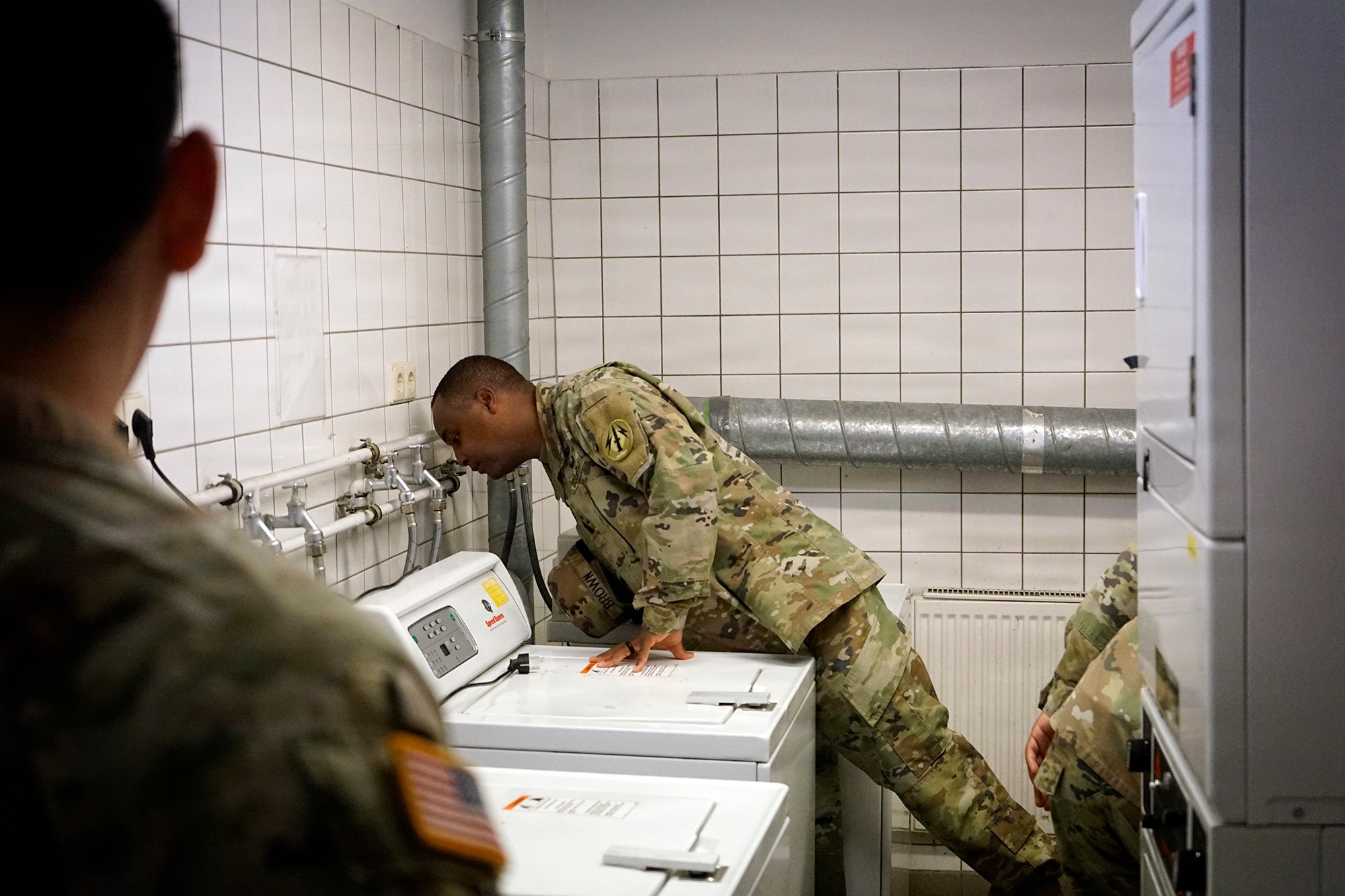
“Repair by replacement” isn’t the Army’s only attempt at an out-of-the-box solution to its barracks issues.
In 2010, the service signed a $9.7 million contract with Ramtech to build Advanced Individual Training barracks at Fort Sam Houston in San Antonio, Texas. Each floor of the barracks buildings was designed and built as “six-sided unitized boxes,” which were arranged as cubes “stacked together,” according to the company.
In July, nearly 5,200 enlisted medical service members living in the dorms were moved out because of “systemic infrastructure failures” that stemmed from the construction.
Gillis said the Army has learned lessons from the dorm’s structural failures and is are being cautious about moving forward with new projects.
“Anytime we talk about new, innovative construction and how we are all excited to save $1 and do something faster, I look at the barracks at Fort Sam and the modular construction that we were very excited about back in 2010 or 2012 as a cautionary tale,” Gillis said. “Any of these projects that we’re talking about, whether any kind of industrialized construction approach, we are not going all in. We will build one and be sure that we are satisfied before it delivers, rather than repeating those steps.”
Dentino said that the vendors that the Army is looking at for industrialized construction methods are “light years ahead in terms of quality and durability” compared to what was used at Fort Sam Houston.
Loading comments…
Comments couldn’t be loaded. Please refresh the page.