
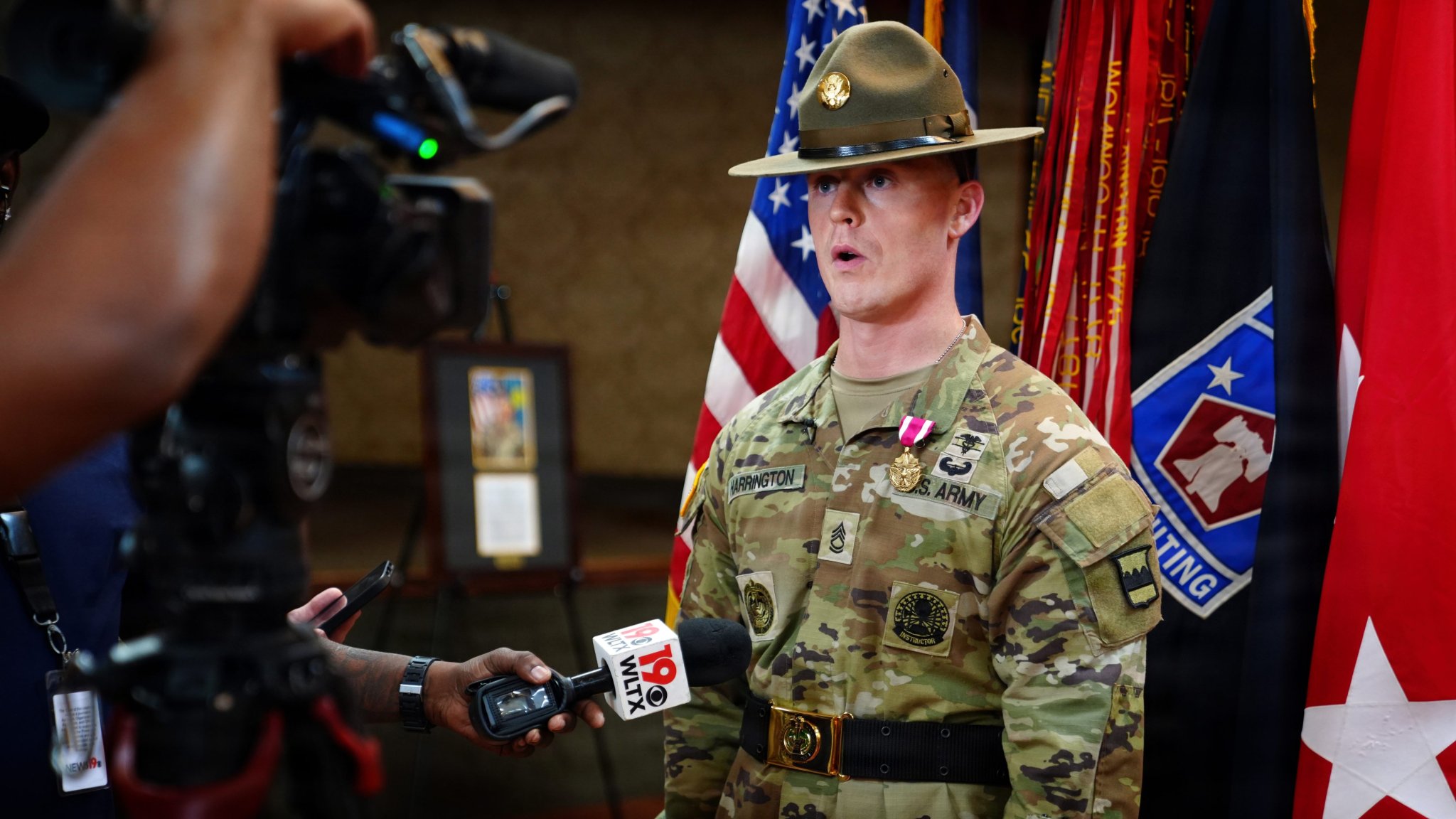
Sgt. 1st Class Kevin Harrington speaks with a clear, even voice, which, if you’ve ever met an Army drill sergeant, might be surprising. When he discusses life “on the trail,” as drill sergeants describe their jobs, his words are free of the raspy or strained tones that many in his profession have adopted after countless hours of shouted “corrections.”
Part of his unblemished voice, he says, comes from good technique and the occasional cup of tea.
“Tea with some honey sometimes,” he said. “And you have to not yell from your throat. You have to use that diaphragm if you need to be loud.”
But mostly, he admits, he’s just, well, built for this.
“I think I’m just naturally born loud,” Harrington said. “I have a louder voice. My wife swears I don’t listen when I talk, so I’m kind of a natural. When you have to make sure 240 individuals can hear you, because we get that many during our summer surges, we have to be loud to be heard, right?”
Beyond his voice, as the 2026 Army Reserve Drill Sergeant of the Year, Harrington breaks most of the cliches associated with drill sergeants as a campaign-hatted disciplinarian.
“You think of a ‘drill sergeant,’ you think of yelling, and this authoritative figure that’s always screaming,” Harrington told Task & Purpose. “But we’re so much more than that, right? We are coaches, mentors. We’re fathers. We’re chaplains. We have to operate with empathy.”
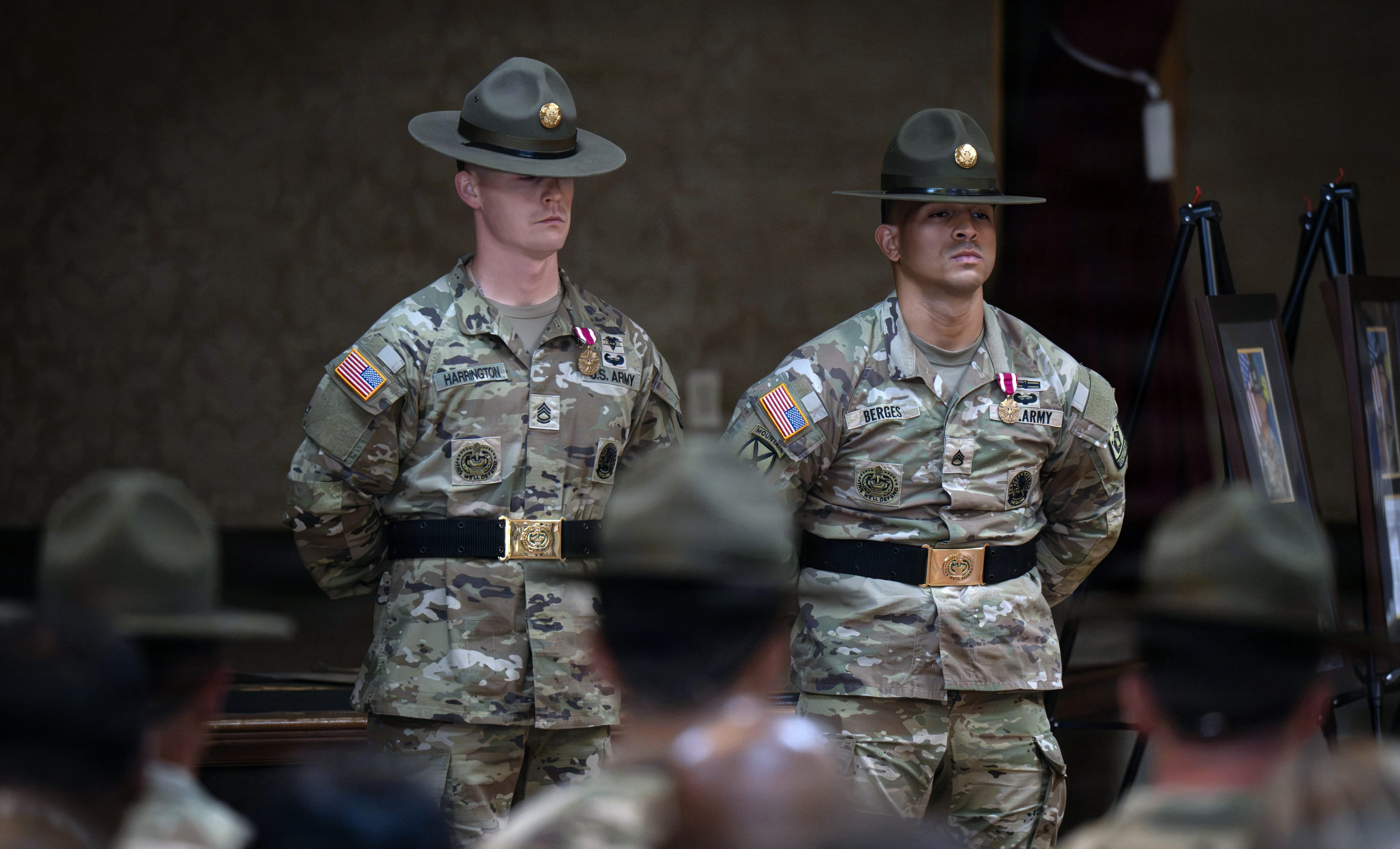
Harrington and Staff Sgt. Noel Berges recently beat 12 other finalists from Army training bases across the country to be named the Army’s top drill sergeants. The two noncommissioned officers topped a three-day contest at Fort Sill, Oklahoma, with Harrington named the top reserve drill sergeant, while Berges was the winner among active-duty entrants.
The drill sergeants competed in 34 events, from an Army fitness test to weapons handling skills, to 14 graded “lanes” of drill sergeant-specific skills. Those included teaching a group of actual basic trainees from Fort Sill, Oklahoma, how to move tactically as a squad, perform drill and ceremonies, and how to handle and fire an M4 for basic Army marksmanship qualification, a favorite for Harrington.
“I love the coaching aspect of getting someone that has no idea what they’re doing to ultimately qualify with their weapons,” he said.
Competitors also interviewed before a board and briefed leaders on ways to improve how the Army trains drill sergeants.
Missing from the contest, Harrington admitted, were any chaos-causing displays that soldiers of any era likely recall from basic training. Points were not awarded for bay tossing, nor were rankings kept for foot lockers upended.
“This competition was more mentally driven than it was physical,” Harrington said. “We’re doing teaching, teaching battle drills, teaching rifle marksmanship. We had a lane where we had to coach an individual through that with handling weapon systems and going over different firing positions.”
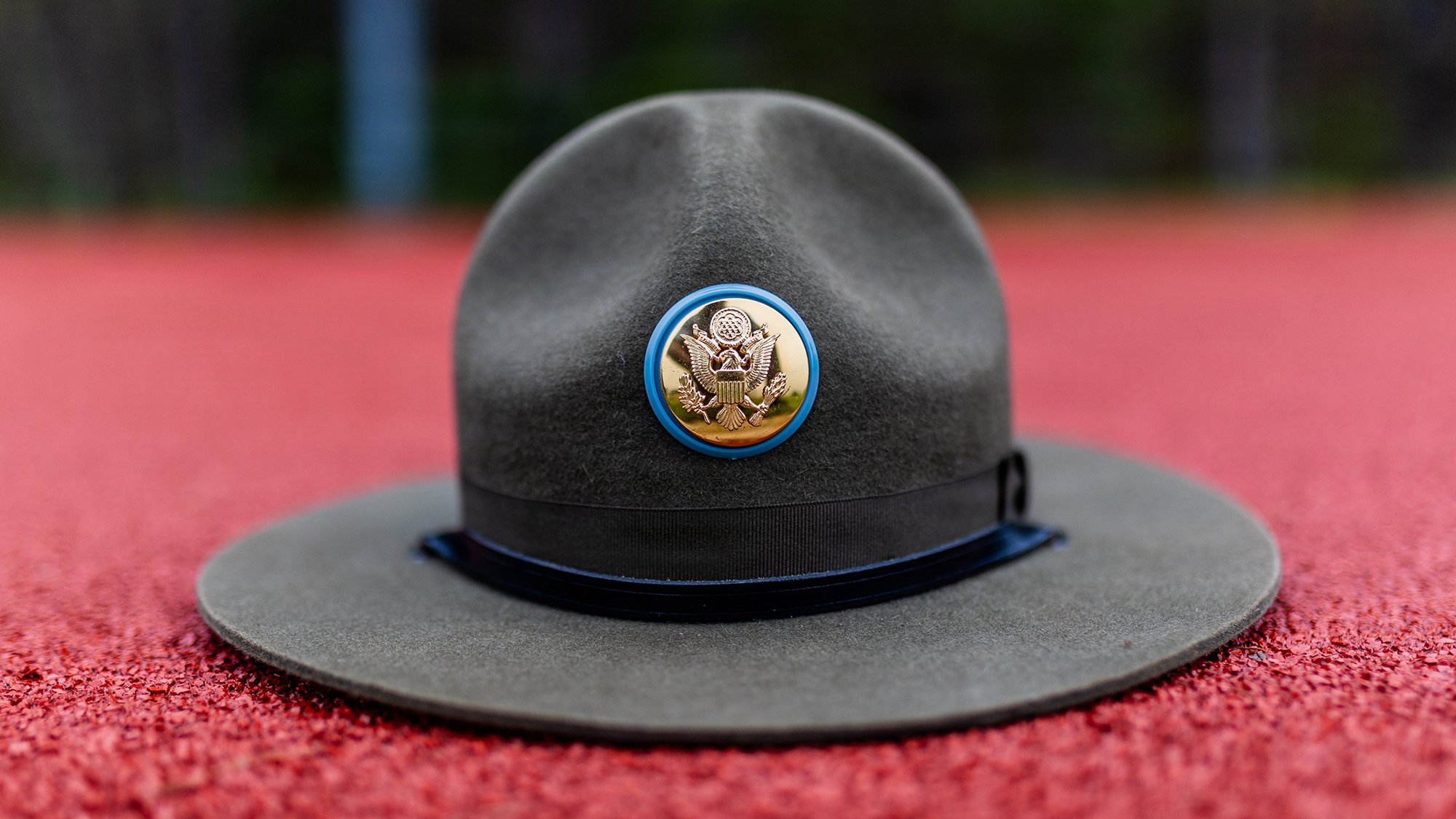
A “decline” in the rigor of basic training is a perpetual favorite topic of veterans of every age. But the issue of harsher, tougher basic training has gotten a boost since Secretary of Defense Pete Hegseth promised to revamp basic training so that drill sergeants would “instill fear,” curse, and “put their hands on recruits.”
Harrington, while avoiding commenting on those policies, said he was confident that current training standards give new recruits all they can handle while producing soldiers ready for the army.
“Basic combat training is supposed to be challenging,” Harrington said. “We’re not doing anything that is outside of what we’re supposed to be doing as drill sergeants. We’re just making the next warfighter. Between corrective action and corrective training, teaching, mentoring, coaching an individual up, they’re civilians coming off of the couch, the sons and daughters of our citizens, and we have to make them into a soldier.”
Top Stories This Week
The value of a good drill sergeant, he said, is not in harassment or hazing, but in teaching and understanding how to keep recruits on track.
“You know life happens and these individuals go through, you know, tough times, leaving their families, coming from hard situations, and everything like that,” he said. “And you have to be empathetic and support them and coach them through that, and get them to cross the finish line.”
That was the approach, he said, he learned in his own days at boot camp, which made him seek the chance to get “on the trail” himself.
“I actually volunteered to be a drill sergeant because I just had so much respect and admiration for my drill sergeant,” he said. “And because of that, I was like, ‘This is something that I want to do.’”
Loading comments…
Comments couldn’t be loaded. Please refresh the page.