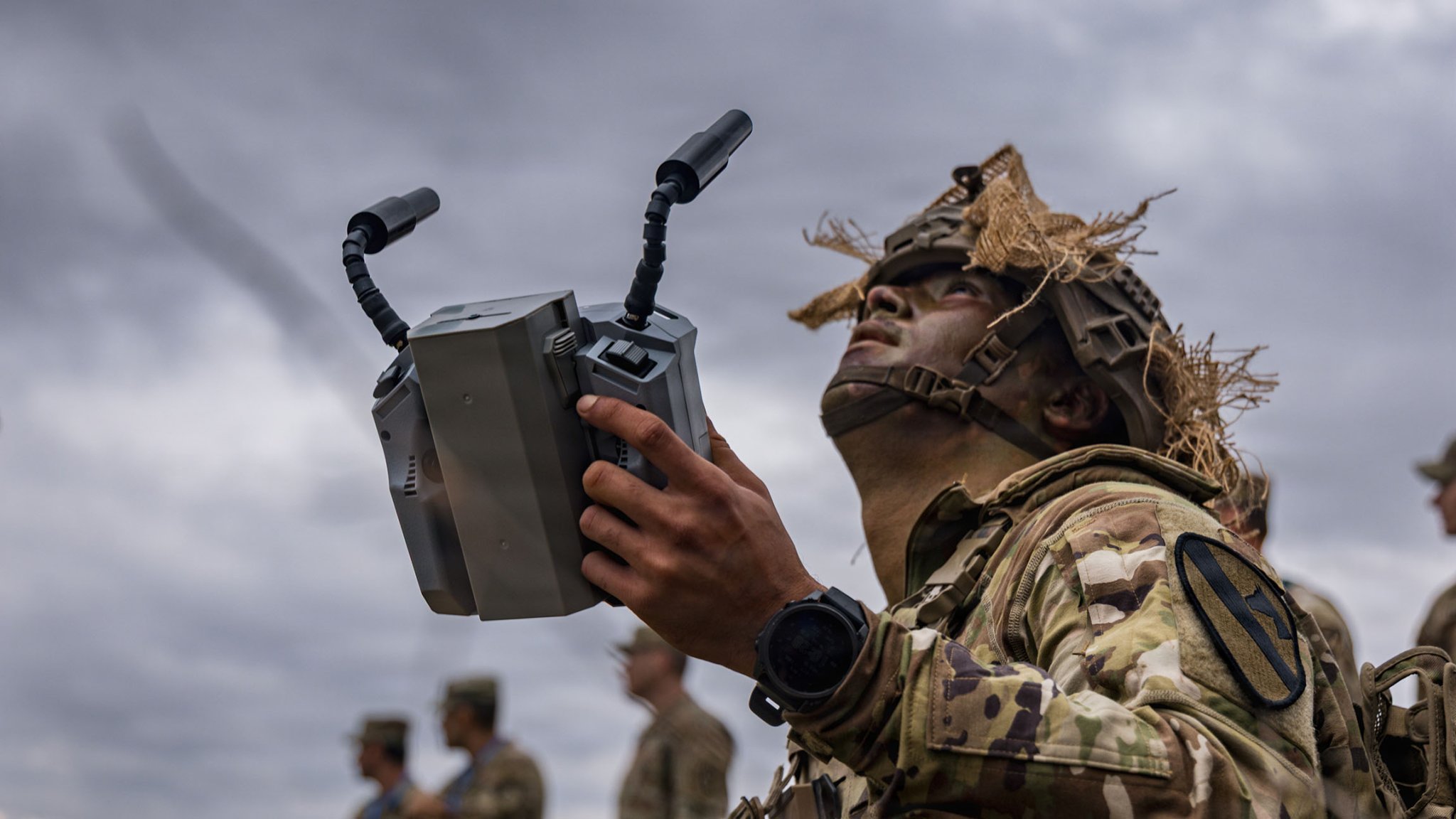
Soldiers from across the Army raced quadcopters, tried out new inventions and tested out offensive drone tactics in the first Best Drone Warfighter Competition this past week.
The three-day competition, held this past week at the Army Aviation Center of Excellence and the Maneuver Center of Excellence, in Huntsville, Alabama, brought together soldiers from who were working on the rapidly expanding use of drones. The competition is designed to be similar to Army events such as Best Ranger or Best Sapper. The inaugural event involved three competitions: Best Drone Operator, and Best Tactical Squad and Best Innovation. And the Army has crowned the winners of each category.
Notably, the Army did not send out requirements to units on who could participate. According to Business Insider, units were told “just send your best UAS operators.” As such, teams were drawn from across the Army, National Guard and reserves.
Top Stories This Week
The competition had similarly open-ended rules for the equipment. Units also brought in their own drones, rather than using one set design for the events. That meant they were able to bring their own modified UAS and gear, giving the Army insight into what kinds of loadouts might be best suited for the battlefield.
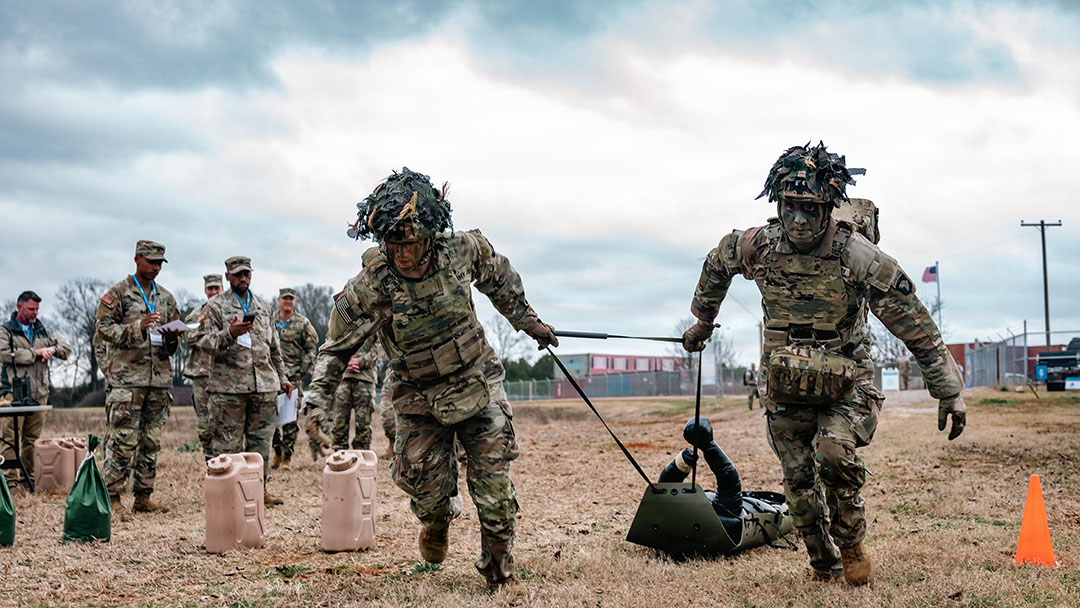
Some of that was evident in the Best Tactical Squad competition, which was designed to mimic some combat situations. Teams of two soldiers had to rapidly apply camouflage and load up their gear, drag a weighted dummy across the grounds of the center and then set up and launch their packs of drones. The teams were meant to be hunter-killer duos: One soldier controlled a reconnaissance drone meant to locate targets, while the other would launch a series of one-way attack drones to take them out (the event used nets to catch the drones, rather than use kinetic explosives). Staff Sgt. Angel Caliz and Spc. Jonah Burks, a team from the 2nd Cavalry Regiment, were the inaugural winners.
For the drone operator contest, soldiers had to strap on goggles and pilot first person view drones through a large obstacle course with elevation changes, sharp turns and some windy conditions. Success was measured in how quick each pilot could complete the course and if they could at all. Sgt. Javon Purcher, an artillery soldier with the 1st Cavalry Division, was declared the winner.
The final plank of the event was less a competition using set standards and targets, but a chance for soldiers to showcase their own inventions. Teams presented their own creations, items or modifications meant to help complete specific tasks or aid in the deployment of UAS in combat. A team from the Pennsylvania Army National Guard’s 28th Infantry Division, comprising 1st Lt. Ryan Giallonardo, Chief Warrant Officer 3 Robert Reed, Chief Warrant Officer 2 Nathan Shea and Sgt. 1st Class Brent Wehr, won the event, winning over judges with a unique idea. They fielded Project R.E.D. (Recovery Exploitation Drone), a drone with a robotic arm and claw meant to grab and recover another drone. They first had to pitch the idea in front of the judges on the first day, then demonstrate it in action the next.
Beyond serving a new benchmark event for soldiers, the Army’s drone competition marks another sign of how quickly the service is trying to integrate UAS into its tactics and operations. Only a few months ago, the military held a multi-service “drone crucible,” pitting teams from the Army, Marine Corps, Navy and Air Force against each other to test tactics and learn from each other. That event had originally been designed to be a competition but turned into a way to get feedback from other services.
The Army is rapidly building out its drone force, including planning to buy a million drones, even as the service works on counter-drone weapons and tactics. The Army is also aiming to expand the event in the next year, Col. Nicholas Ryan, the Director of Army UAS Transformation at the Aviation Center of Excellence, told reporters, by adding new challenges such as electromagnetic jamming in future competitions.