
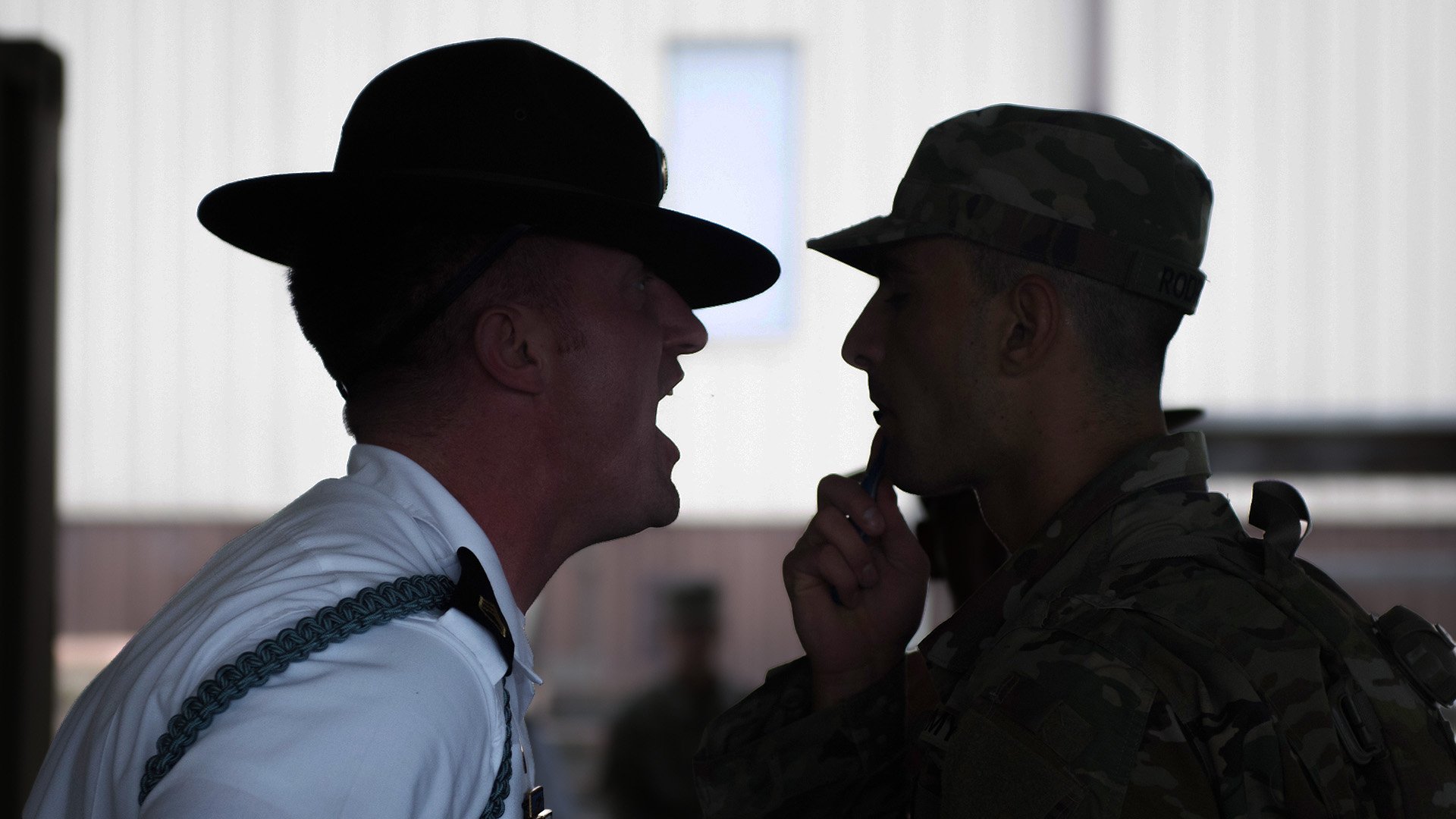
The Army adopted a string of changes in its discrimination and harassment policies, shortening the time a soldier has to file a complaint, rolling back rules for anonymous reports and handing more power to commanders to dismiss them.
The new Army policies will reflect Pentagon rule changes developed after Defense Secretary Pete Hegseth said that investigations under the Military Equal Opportunity (MEO) program had been “weaponized.” The MEO office reviews reports of discrimination and harassment related to race, sex, or religion. Hegseth said in an April 2025 video on X that some service members have used the system to “retaliate against superiors.”
The new Army policy, which will take effect when the regulation is published in the coming months, ends the option for soldiers to make anonymous reports of discrimination or discriminatory harassment. Instead, they can make “confidential” reports which will withhold their identity unless there is a larger safety threat, or a law or Department of Defense regulation “imposes a duty to report information.”
Soldiers making reports of bullying, hazing and sexual harassment cases, which are covered by separate federal laws, can still do so anonymously.
Rachel VanLandingham, a military justice expert and former Air Force lawyer, said the policy is trying to “square Hegseth’s overly broad directive,” and implement “commander’s intent while complying with federal law in these specific areas.”
More discretion for commanders
Gary Barthel, a retired Marine Corps lieutenant colonel and military justice lawyer, said another major change is giving commanders more authority and discretion in handling these complaints.
“They’re trying to give the commands more lenience in investigating what they feel they want to investigate, and they can dismiss whatever they feel is not credible,” Barthel said. “In the past, commanders and commanding generals have always taken the step that ‘Hey, I’m going to investigate this because I know if I don’t, Congress is going to be all over me because somebody made a complaint and they’re feeling like it was swept under the rug.’”
The Army policy’s stated intent is to reduce formal MEO and harassment complaints and instead settle disputes “efficiently before they escalate” through “conflict resolution, mediation and facilitation.” Complaints can now be dismissed within 14 days if there is not “sufficient or actionable information” or if it was filed more than 60 days after the most recent incident — a timeline that can be extended by a commander or civilian in the MEO program. Once an agreement is reached, a mediator will draft a memorandum of agreement which details terms and follow-up actions.
VanLandingham said commanders were always in charge of accountability measures or punishments that resulted from MEO investigations, so changing the process for racial discrimination complaints is more of a “message” to soldiers and commanders.
“We’re going to give it all back to the commanders. That’s the underlying tenor,” she said. “This really comes down to what’s being undercut here because it doesn’t have the statutory protections that hazing and bullying and sexual harassment textually specifically do.”
‘Professional’ activities, like boot camp, exempt
The new policy also shifts definitions of what constitutes bullying and hazing in boot camp and other training, which Hegseth said he believes have gone soft.
Hegseth first hinted at related reforms when he told hundreds of military generals at Marine Corps Base Quantico, Virginia, that complaints of bullying and hazing and “toxic leadership” had “been weaponized and bastardized.” Hegseth told the military’s top brass that he wanted to make basic training “scary, tough and disciplined” and allow drill sergeants to bay toss, do shark attacks, and “put their hands on recruits.” He said that it didn’t mean they could be “reckless or violate the law, but they can use tried and true methods to motivate new recruits.”
The Defense Department has set definitions for harassment, bullying and hazing. But the new Army policy adds stipulations or additional scenarios to those three categories.
Top Stories This Week
For bullying, the definition now includes posting “malicious gossip, rumors and lies” on social media, sharing humiliating photos or sending “vicious texts.” Barthel said encompassing rules for cyberbullying is useful “given where we are in society.”
A reworked definition of harassment, VanLandingham said, is “intentionally trying to broaden the scope of what’s allowable and to limit the scope of what could be punishable.”
The Defense Department’s underlying definition of harassment continues to include oral, written, or physical actions that would be “unwelcome or offensive” to a “reasonable person,” and creates an intimidating, hostile, or offensive environment.
The Army’s new definition includes that language but also notes that official military activities “conducted in a professional manner,” such as basic training and other training programs, disciplinary actions or combat exercises, “do not constitute harassment.”
The new policy also stipulates that “rude, ignorant, abrasive or unkind” behavior is “not necessarily indicative of harassment,” but can be depending on the “totality” of circumstances.
VanLandingham said many dangerous or sometimes fatal cases of bootcamp bullying or hazing were accompanied by harassment. She gave the example of Raheel Siddiqui, who was forced into a clothes dryer during bootcamp at Marine Corps Recruit Depot Parris Island, South Carolina. A Marine Corps investigation found that he was subjected to anti-Muslim slurs and physical abuse before he took his own life.
“You can’t have bullying without having harassment,” she said. “One of the most common places is during basic training, so don’t tell me: ‘Well, if it’s conducted in a professional manner or such as basic training, it’s not harassment.’ It may well be because you didn’t define what ‘professional’ here is. Just being in basic military training doesn’t inoculate and immunize behavior — in fact, that’s where you have some of the highest risk of harassment.”
Loading comments…
Comments couldn’t be loaded. Please refresh the page.