
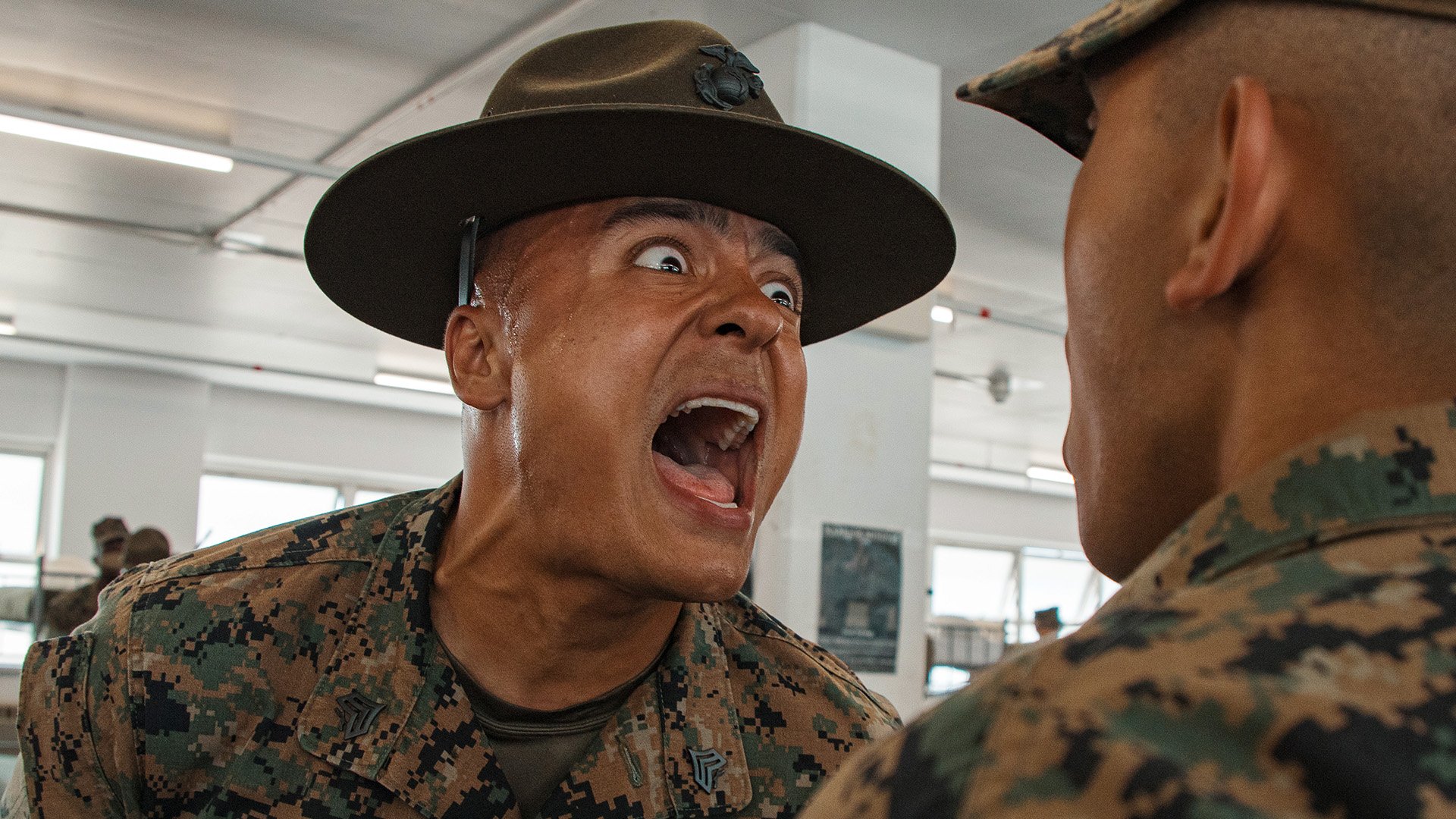
Hazing could become a specific charge under the Uniform Code of Military Justice, under a provision in the upcoming fiscal year’s defense spending bill.
The proposal would require the Secretary of Defense and the Joint Service Committee on Military Justice to consider adding hazing to the UCMJ as a standalone offense or as a modifier to other charges. That might mean adding hazing as a specific offense under Article 93, which bans cruelty, oppression, or maltreatment of subordinates. The proposal was included in the Senate version of the National Defense Authorization Act for fiscal year 2027, which Congress is currently debating.
Hazing cases are currently charged as Article 93 for cruelty and maltreat which can carry up to three years in prison and a dishonorable discharge. In 2019, Congress amended Article 93 to outlaw abuse of a training leadership position. The charge carries up to a five-year prison sentence, and applies to drill instructors at boot camp and other specific training situations.
The majority of Article 93 charges usually include a clear superior and subordinate relationship, but “hazing doesn’t always have to be someone superior to you,” said Guy Womack, a military defense lawyer and retired Marine Corps lieutenant colonel. “This would make it more clear what is being outlawed, and what kind of relationship of superiority or seniority even applies.”
Womack said that as the laws have changed and the culture has shifted on what is considered acceptable, certain practices have gone away. He gave the example of so-called “blood pinning” in the Marine Corps, an unofficial practice which involved newly promoted Marines getting their metal rank insignia affixed to their collar, but instead of attaching the pin to the backing, members of their unit would take turns hammering the rank with their fists, driving the studs into the skin and pinning it in place.
“It would hurt. It wasn’t fatal. It was painful,” he said. “A lot of units did that as they thought it was good for morale.”
No more ‘guessing’ on hazing rules
The proposal also requires defense officials to come up with an official definition of hazing, which Womack said would make cases more “clear cut.”
“Someone could know in advance what would constitute hazing. Right now, they may think that ‘Well, as long as we don’t cause someone to bleed or we don’t in some way do something that could actually hurt them,’” Womack said. “They don’t have real guidance on that. They’re kind of guessing, is this hazing or not? And if they make it an actual article under the UCMJ, it would make it simpler.”
Sen. Kristen Gillibrand (D-NY) included the proposal in the Senate version of the NDAA after she threw support behind a House bill introduced earlier this year. The Harry Lew and Danny Chen Military Justice Reform Act was named after Army Pvt. Danny Chen and Marine Lance Cpl. Harry Lew, who both committed suicide while deployed to Afghanistan after they were subject to bullying and hazing in their units.
Top Stories This Week
Eight soldiers were charged in Chen’s case. Several soldiers were discharged from the service and found guilty of hazing and maltreatment, and one sergeant was acquitted of the most serious charge of negligent homicide.
Three Marines were charged in Lew’s case. One pleaded guilty to assault and two others were found not guilty of humiliating and demeaning Lew.
The House bill was introduced by Lew’s aunt, Rep. Judy Chu (D-Calif.), who said the policy was a response to “a broader culture of military hazing and abuse that we must confront directly.”
In October 2025, Chu and dozens of lawmakers wrote a letter to Secretary of Defense Pete Hegseth after his Sept. 30 remarks at Quantico, Virginia, where he told hundreds of generals that the words “bullying” and “hazing” and “toxic” had “been weaponized and bastardized inside our formations,” undercutting commanders and noncommissioned officers. He vowed to make basic training “scary, tough and disciplined” by allowing drill sergeants to bay toss, launch shark attacks, and “put their hands on recruits.”
“This does not mean they can be reckless or violate the law, but they can use tried and true methods to motivate new recruits, to make them the warriors they need to be,” Hegseth said during the speech.
In a subsequent memo, Hegseth called for a review of the Pentagon’s hazing, bullying, and harassment definitions. In response to lawmakers’ concerns, Pentagon personnel and readiness officials said in December that the department “unequivocally rejects hazing.”
The Senate and House are currently working on separate versions of the NDAA. A final negotiated version will eventually be voted on before becoming law. The NDAA is supposed to be approved by Congress before Oct. 1, but Congress has typically passed a final law late into the next fiscal year.
Loading comments…
Comments couldn’t be loaded. Please refresh the page.