A political battle over legislation that safety advocates say would have prevented a deadly crash between a civilian passenger jet and an Army helicopter last year appears to have stalled in Congress.
A Senate bill that would’ve mandated military aircraft be equipped with specific signaling technology failed to pass the House Tuesday afternoon. The vote came a day after the Pentagon signaled its opposition to the legislation over “budgetary burdens” and alleged national security risks.
A separate House bill is still on the table, but advocates say it does not go far enough to enforce much-needed aviation safety reforms.
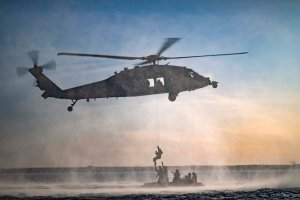
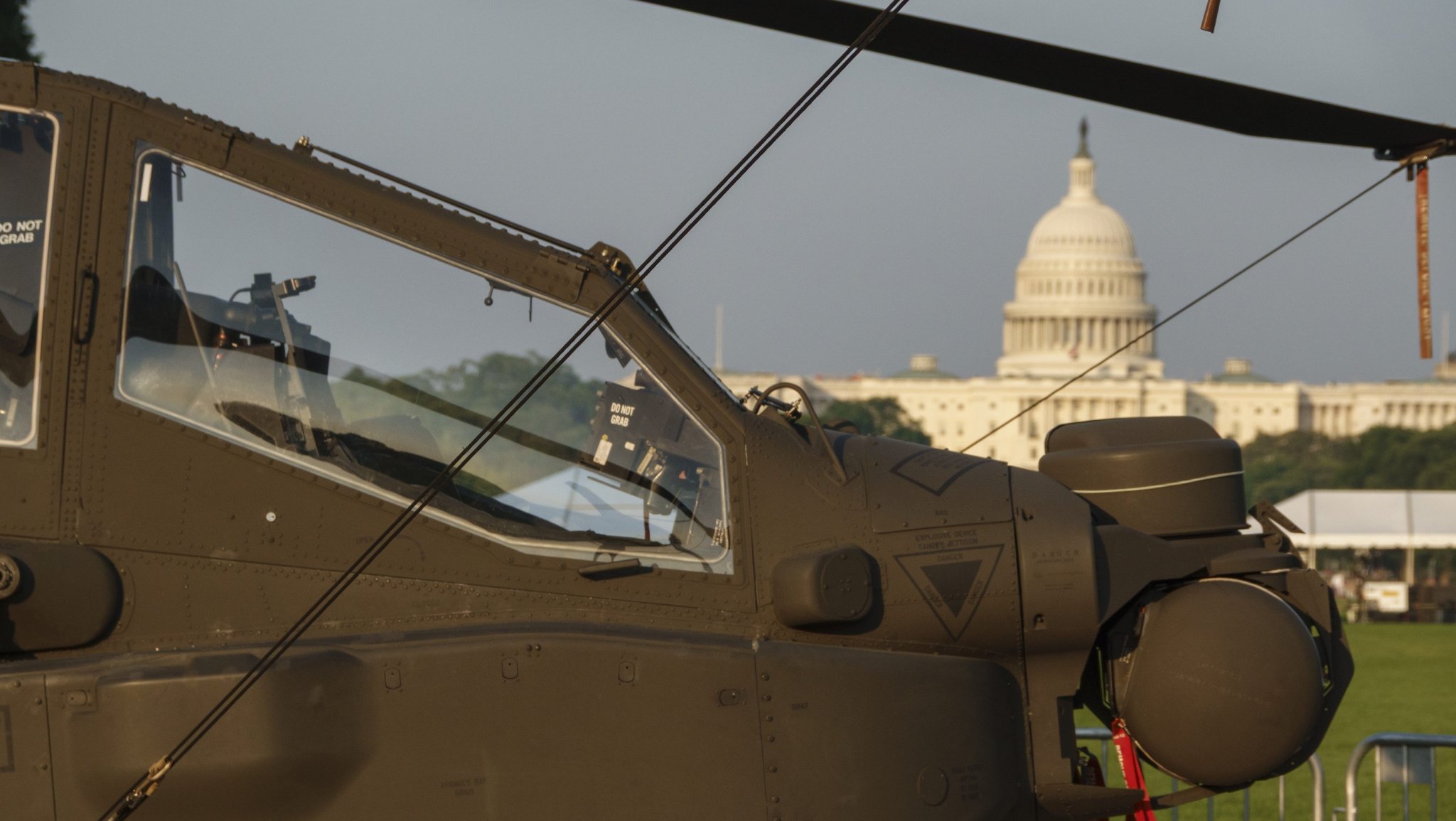
On the evening of Jan. 29, 2025, an Army helicopter and an American Airlines jet collided and fell into the Potomac River near Washington, D.C. The commercial aircraft had been approaching Reagan National Airport in Washington, D.C., when it collided with soldiers flying an Army UH-60 Black Hawk helicopter on a training mission out of Fort Belvoir, Virginia. The crash killed 60 passengers, four civilian flight crew members, and three soldiers, Chief Warrant Officer 2 Andrew Loyd Eaves, Staff Sgt. Ryan Austin O’Hara, and Capt. Rebecca Lobach.
Family members of the crash victims, aviation professionals and safety advocates had called for Congress to pass a measure that would require civilian and military aircraft to use Automatic Dependent Surveillance–Broadcast, or ADS-B, technology. The systems are also referred to as “ADS-B In,” which allows crews to receive data in the cockpit from other aircraft in flight, and “ADS-B Out,” which allows aircraft to send location signals to air traffic operators and nearby planes.
Families of the crash victims said in a statement they were “devastated” that the Rotorcraft Operations Transparency and Oversight Reform Act, or the ROTOR Act, failed by one House vote, despite passing the Senate unanimously.
“The same risk that killed 67 people thirteen months ago is still in the sky tonight. A majority of the House — and the will of the people — voted today to fix it. We call on House leadership to bring the ROTOR Act back for a vote that lets the majority pass it,” they said. “We are not done.”
The bill needed a two-thirds majority to pass, but fell short with 264 in favor and 133 against.
The families also criticized the “last-minute Pentagon reversal” after officials endorsed the bill in December, adding “We would like to know what changed, and who asked for it.”
At a press conference on Tuesday morning, families of those killed in the crash said the accident was “preventable” as they pointed to nearly 20 years’ worth of advocating for aircraft to install the aircraft signal technology. The National Transportation Safety Board, NTSB, the lead federal agency tasked with independently investigating civil transportation accidents, recommended to the Federal Aviation Administration in 2008 that ADS-B “would provide an immediate and substantial contribution to safety, especially in terminal operations.”
“Does that sound familiar? 154 days after this letter was written, my son, Spencer, was born,” said Douglas Lane, the father of Spencer Lane, a passenger who died on the American Airlines flight.
Top Stories This Week
In its investigation of the crash, the NTSB found that with ADS-B technology, the American Airlines flight crew would have had a 59-second heads-up and the Army helicopter crew would have had a 48-second warning before the collision, Rep. Don Beyer (D-Va.) noted at the press conference.
“ADS-B In would have given the pilots of both aircraft a fighting chance to avoid the disaster,” Beyer said.
The NTSB found that Army standard operating procedures specified not broadcasting the aircraft’s position while on mission. The agency recommended that the Department of Defense require all aircraft operating in the U.S. airspace to receive nearby aircraft data on a cockpit display and audible alerts of traffic.
Sean Parnell, a Pentagon spokesman, said in a statement Monday that the Senate bill “would create significant unresolved budgetary burdens and operational security risks affecting national defense activities.”
Parnell added that the department “remains ready to continue productive dialogue with Congress to ensure the legislation achieves its safety goals while protecting essential operational capabilities and resources.”
Lead Senators from the committee that introduced the bill said in a statement that the ROTOR Act “includes specific language at the Pentagon’s behest to best protect classified flights” and that flights like the deadly one in January 2025, “should have to broadcast their position using ADS-B Out in busy airspace like every other military and civilian flight.”
Last week, House members introduced the Airspace Location and Enhanced Risk Transparency (ALERT) Act of 2026, or ALERT Act, which directs the Secretary of Defense to reach an agreement with the Secretary of Transportation on using the aircraft signal technology. It also gives military aircraft crews “discretion” over when to use ADS-B.
“That is not accountability; it is a waiver,” families of the 67 victims, a number of professional pilot associations and commercial airlines like Boeing and Delta Air Lines, wrote in a Feb. 20 statement.