
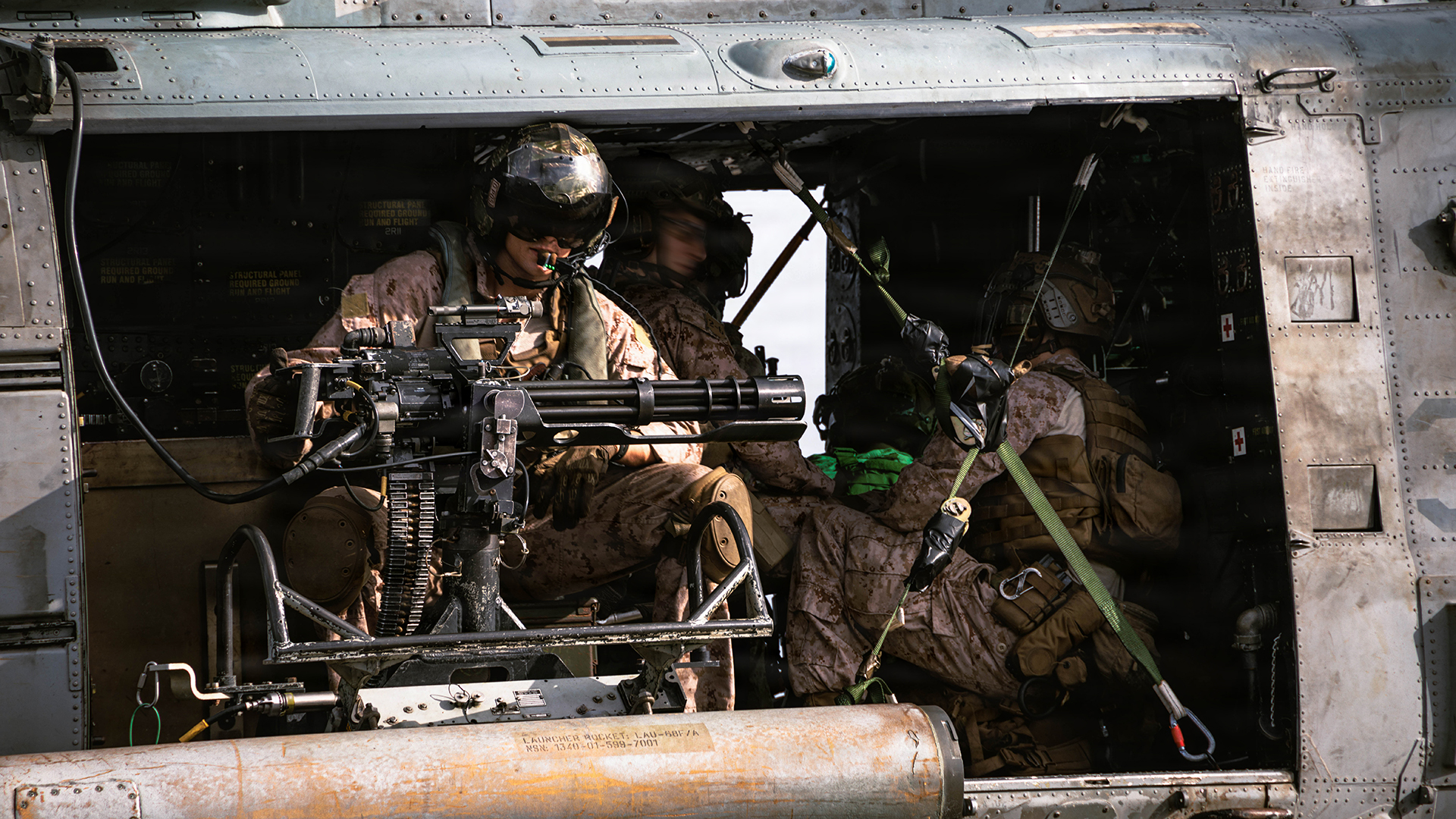
If President Donald Trump decides to order the U.S. military to capture Kharg Island from Iran, the operation would require at least 1,200 troops, experts told Task & Purpose. Whether or not that number would be enough to hold the island is less clear.
For the moment, it is uncertain whether U.S. troops may be tasked with capturing the island, which processes about 90% of Iran’s crude oil exports.
Trump initially wrote in a Thursday social media post that “at some point in the not too distant future, we will be taking Kharg Island.” He later announced that he had canceled further U.S. military strikes against Iran.
Given the size of Kharg Island, which sits roughly 15 miles from the Iranian coast, taking it would likely require a reinforced battalion up to a brigade-sized force of between 1,200 and 4,000 U.S. troops, said retired Army Gen. Joseph Votel, who led U.S. Central Command from 2016 to 2019.
Top Stories This Week
“The specific tasks to be accomplished will actually drive the size of the force,” Votel told Task & Purpose.
Sustaining U.S. troops on Kharg Island would require support, including air cover, logistics, and engineering and evacuation capabilities, Votel said.
Kharg Island is about 8 square miles large and has a population of about 8,000 permanent residents, said Jonathan Schroden, an expert on Marine Corps force design with CNA, a Washington, D.C.-based not-for-profit research and analysis organization.
Schroden has not conducted an analysis of how many troops would be needed to take the island, but speaking in general terms, he estimated the U.S. military would not need a large force to seize it.
“It’s worth noting that a Marine Expeditionary Unit brings with it a reinforced infantry battalion of about 1,200 Marines and amphibious seizure operations are a core capability of that unit,” Schroden told Task & Purpose. “Holding it might require more than that — depending on, for example, how much of a threat the 8,000 Iranian residents might pose — so some amount of follow-on forces might also be required.”
Kharg Island’s proximity to the Iranian coast puts it within range of Iran’s long-range weapons, he said.
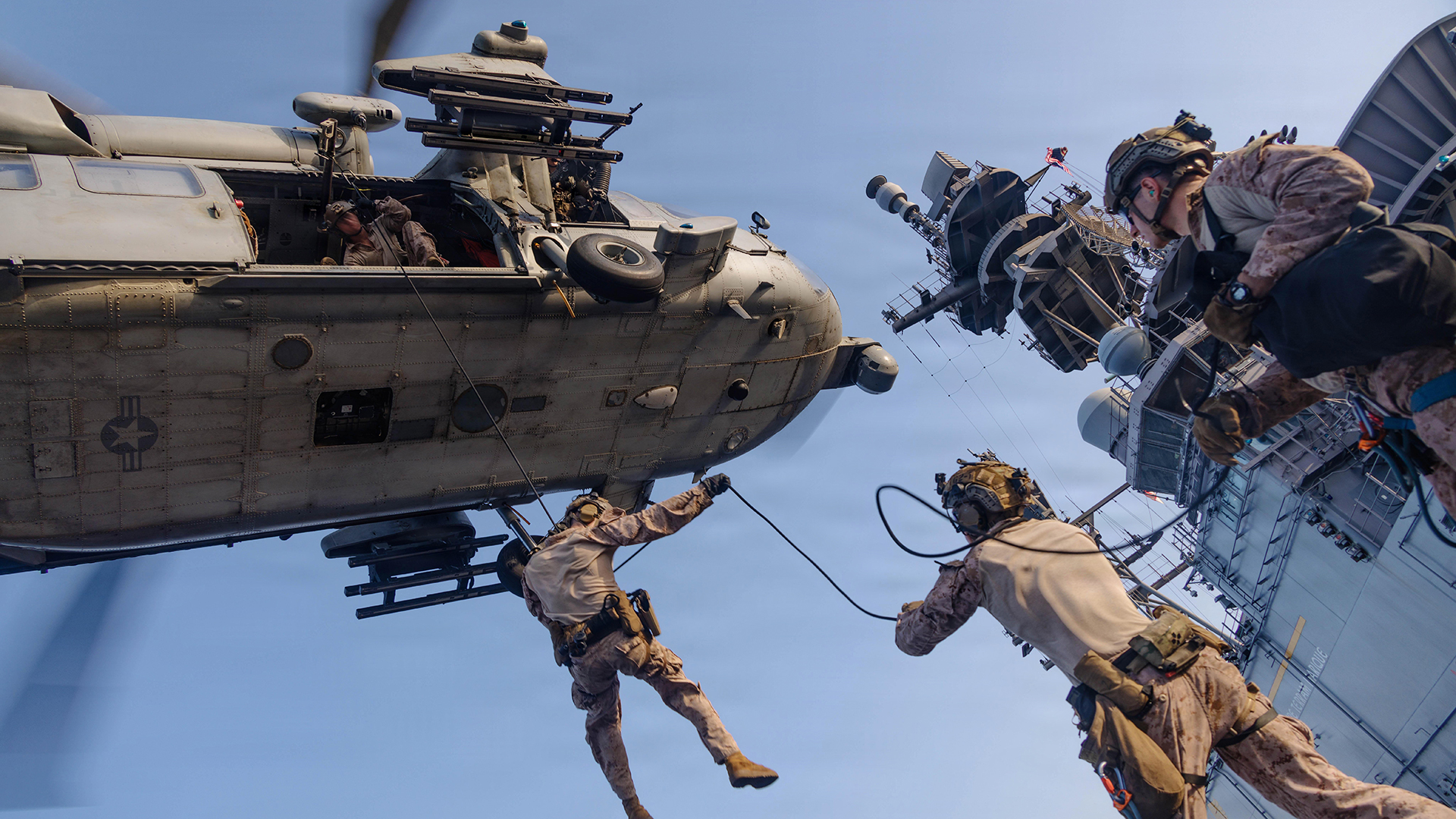
“Any force the U.S. might put on the island would likely face a steady threat of attacks by air and would require constant air defense, likely through some combination of organic capabilities and overhead protection provided by Marine or joint aviation,” Schroden said.
A retired senior defense official who spoke to Task & Purpose under condition of anonymity agreed that about 1,200 U.S. troops would be needed to secure Kharg Island, adding they would likely be conventional forces, such as a Marine battalion landing team or a reinforced Army airborne battalion — or a combination of the two.
Taking the island would be less risky than holding it, said the official, who explained that U.S. forces would need engineers to dig defenses against Iranian rocket and missile attacks. To hold the island for any length of time, the U.S. military would also have to suppress Iranian weapons that could be used to strike it.
A U.S. military operation to capture Kharg Island would require more forces and involve more risk than the special operations mission in January that captured former Venezuelan President Nicolás Maduro, said Caitlin Talmadge, who teaches about U.S. military strategy and operations at the Massachusetts Institute of Technology.
An airborne landing could be difficult due to the island’s terrain and civilian population, and an amphibious operation so close to the Iranian mainland could leave U.S. forces vulnerable to Iranian attacks, Talmadge told Task & Purpose.
“But even assuming insertion goes well, actually maintaining a sustainable presence and resupplying the forces on the island would be difficult and potentially risky for U.S. service personnel,” she said.
CORRECTION: 6.11.2026; This article was updated after publication to address an error in figures attributed to retired Army Gen. Joseph Votel.
Loading comments…
Comments couldn’t be loaded. Please refresh the page.