
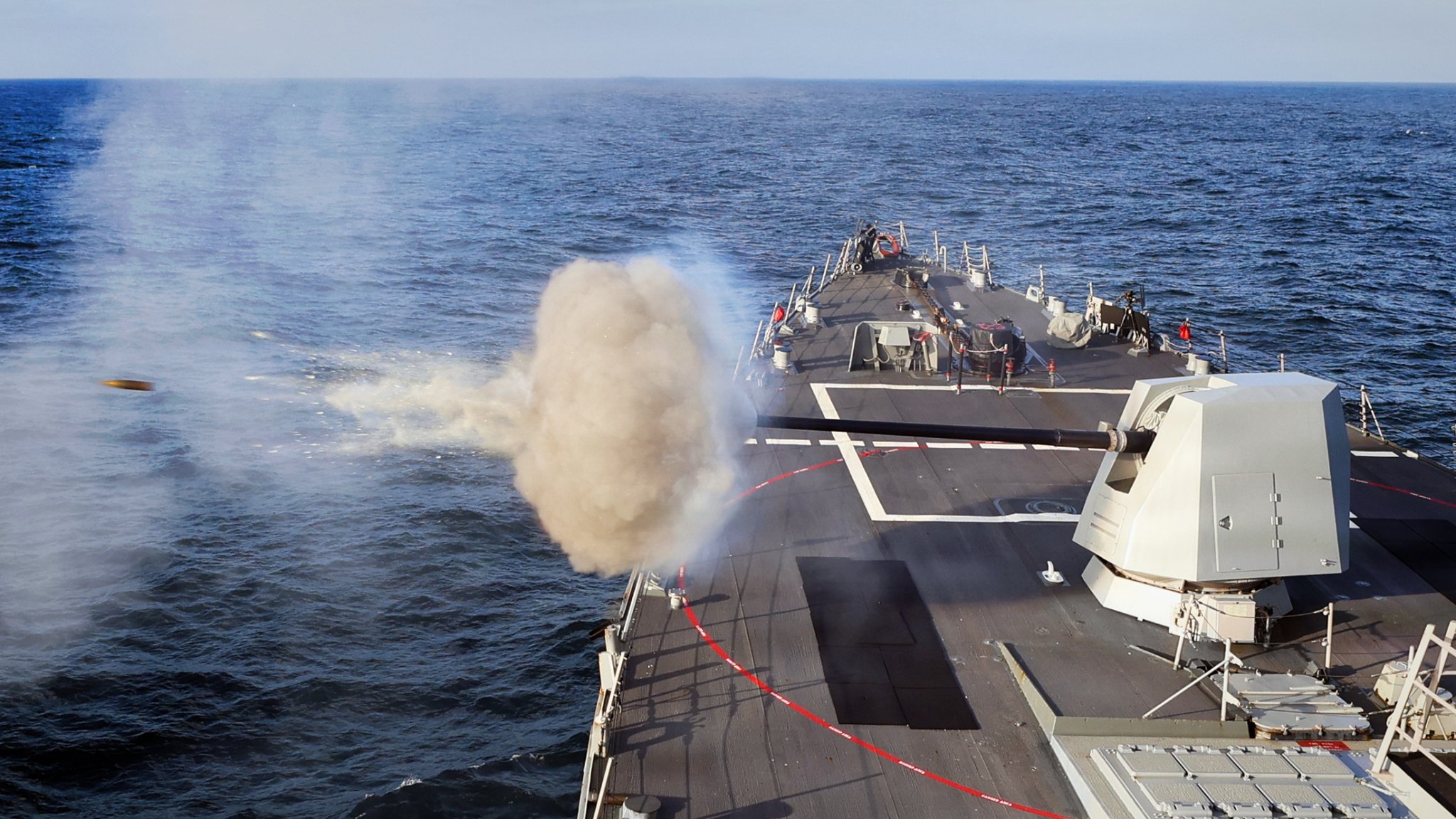
Should a vessel attempt to run the U.S. military’s current blockade of Iranian ports, Navy sailors are authorized to fire warning shots if necessary, said Air Force Gen. Dan Caine, Chairman of the Joint Chiefs of Staff.
“Any ship that would cross the blockade would result in our sailors executing pre-planned tactics designed to bring the force to that ship — if need be, board the ship and take her over,” Caine said during a Thursday Pentagon news briefing. “And that includes a series of escalated force options, which could include warning shots and others.”
Since the U.S. military imposed the blockade of all ships entering and leaving Iranian ports on Monday, American troops have not had to board any vessels. Additionally, Caine said that, so far, 13 ships have turned around after being warned by the Navy not to attempt to run the blockade.
Top Stories This Week
Each time, Caine said, a U.S. Navy warship has transmitted the following message to the ships: “Do not attempt to breach the blockade. Vessels will be boarded for interdiction and seizure transiting to or from Iranian ports. Turn around or prepare to be boarded. If you do not comply with this blockade, we will use force.”
President Donald Trump announced the blockade on Sunday after accusing Iran of failing to fulfill its promise to reopen the Strait of Hormuz, a strategic waterway through which about 20% of the world’s crude oil flows. The following day, Trump warned that if any Iranian “fast attack ships” try to interfere with the blockade, they will be “ELIMINATED.”
U.S. military operations against Iran have been paused since both countries agreed to a ceasefire on April 7. The American government has demanded that Iran reopen the Strait of Hormuz as part of a peace agreement, but negotiations between U.S. and Iranian officials over the weekend failed to reach any kind of settlement.
On Thursday, Caine told reporters that the U.S. military is conducting “maritime interdiction actions and activities” in the Pacific against ships that left the Middle East before the blockade was established.
“In addition to this blockade, the joint force, through operations and activities in other areas of responsibility, like the Pacific area of responsibility, under the command of Adm. [Samuel] Paparo, will actively pursue any Iranian-flagged vessel — or any vessel — attempting to provide material support to Iran,” Caine said. “This includes dark fleet vessels carrying Iranian oil. As most of you know, dark fleet vessels are those illicit or illegal ships evading international regulations, sanctions or insurance requirements.”
Loading comments…
Comments couldn’t be loaded. Please refresh the page.