
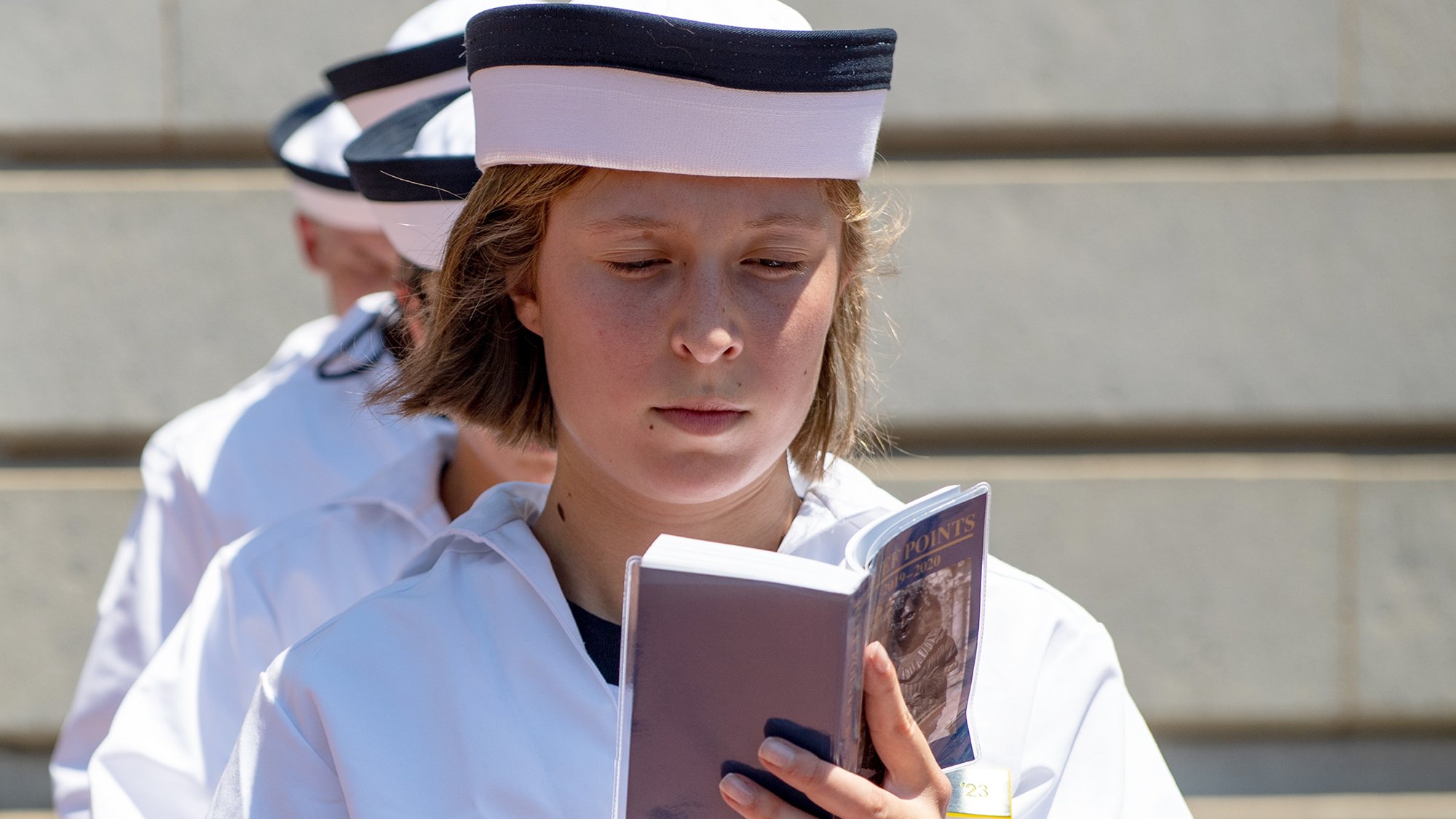
The U.S. Naval Academy is bringing back a requirement for incoming female students to cut their hair below the chin.
As the new freshmen arrive in Annapolis, Maryland, for Induction Day, the start of what is known as “plebe summer,” women will have to report with hair “cut to the chin,” academy officials said.
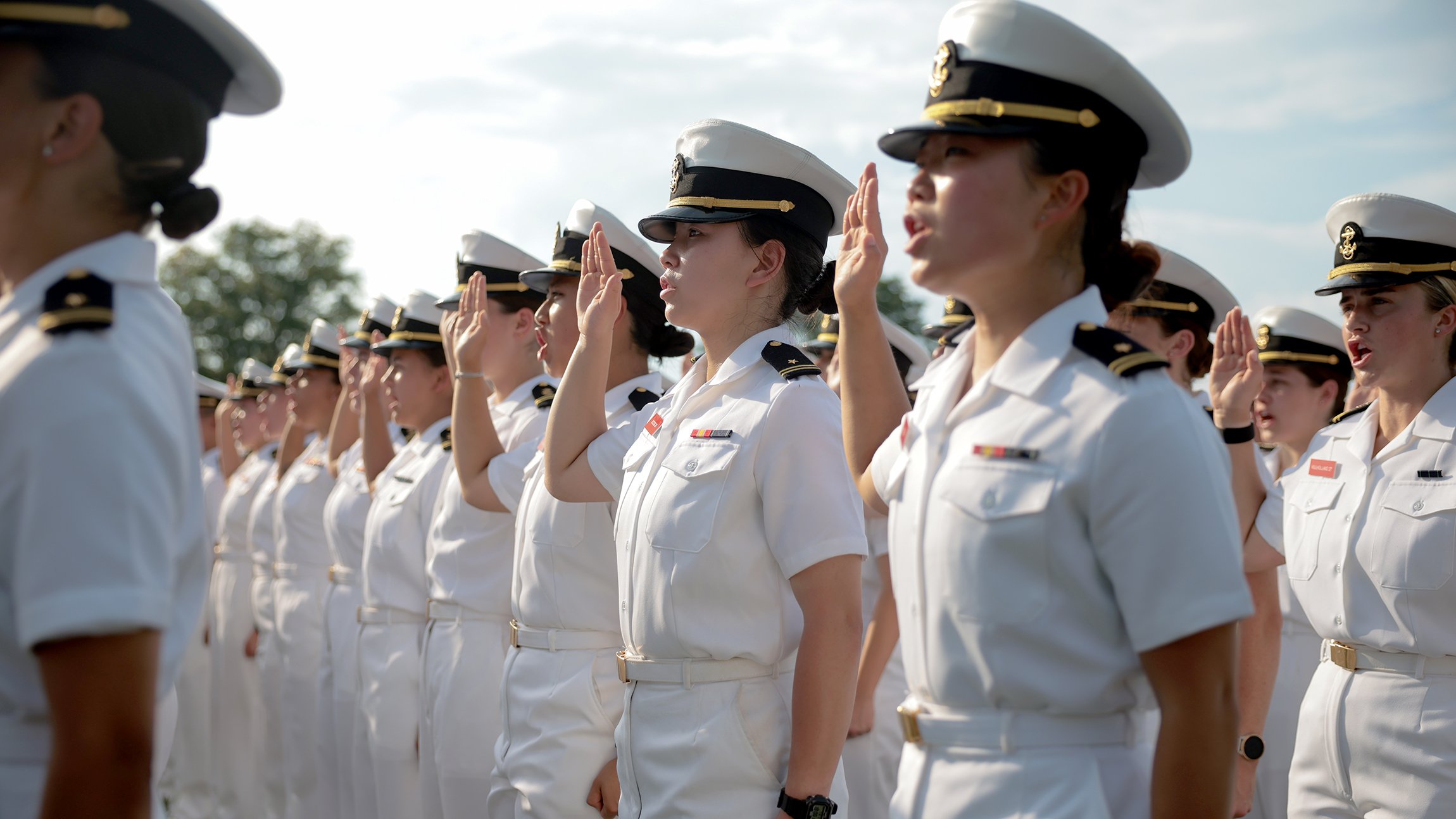
The academy originally required short haircuts when the first class of women entered in July 1976. Among the 1,300 new students that year, 81 were women. For more than 40 years, female midshipmen were required to cut their hair at or below their chin. Academy officials said the practice marked “one of the most visible signs of their transformation from civilian to military life.”
But in 2019, the academy removed the requirement for women, as long as they could maintain it “within Navy grooming standards,” an academy spokesperson said.
“The academy is restoring a common standard so that male and female plebes share the same visible symbol of their commitment to naval service and to the team,” the spokesperson said. “The [Induction Day] haircut marks the moment when civilians begin setting aside individual preferences and start embracing the responsibilities, expectations, and identity of future Navy and Marine Corps officers.”
Although each service has its own standards, haircuts are a regular part of military grooming regulations.

The U.S. Naval Academy is a highly selective school that is a pipeline for the military’s officer corps. Students attend for four years as they would any other college or university, but upon graduating, they receive a commission into the Navy or Marine Corps. As part of their acceptance, students are required to serve for at least five years.
The policy change prompted mixed reactions on service academy forums and social media. Some were shocked and hoped the change was a mistake. Others pointed out that the academy was simply going back to the way things used to be.
Kellie Sbrocchi, a Navy lieutenant commander who posts about her experiences as an active duty officer, shared her thoughts in a video as an academy grad, while reassuring new students that it was a “small chapter” in a “much bigger story.”
“I am not one of those people that thinks everybody should go through what I went through. It’s a part of our identity. I understand. And I remember sitting in that salon chair, feeling sick to my stomach as I watched my hair hit the floor,” Sbrocchi said in an Instagram video Tuesday. “This is your first test, not because the Naval Academy wants you to hate your haircut, but because it’s about learning that you are more than your comfort zone and more than your appearance and more than the things that you think define you.”
Julie Kubal, who graduated from the U.S. Naval Academy in 1996, said she didn’t have an issue with cutting her hair back then because it was an expectation for both men and women at the time.
“It, again, didn’t seem like that big of a deal in the grand scheme of all the things I had to worry about,” Kubal said. “On the flip side, I’ll say that when plebe summer or plebe year was over, and we were officially third-class midshipmen youngsters, I was very much excited to be able to grow my hair at that point, but it felt more like a rite of passage.”
Kubal said for incoming midshipmen who weren’t expecting it, she understands why it could come with strong reactions. She said the policy reversals could seem “punitive” or like something was being taken away, especially in light of debates around whether women are held to the same standards as men.
“In the current environment, where the standards are being questioned, this one in particular may seem like a regression, especially in light of what else is going on,” Kubal said. “It’s kind of like the cherry on top, like add insult to injury to take something away. But I also think as much as it was a non-issue for me to get my hair cut, and that was what all the women had been doing for all the years before me, and for so many years after me.”
Loading comments…
Comments couldn’t be loaded. Please refresh the page.