
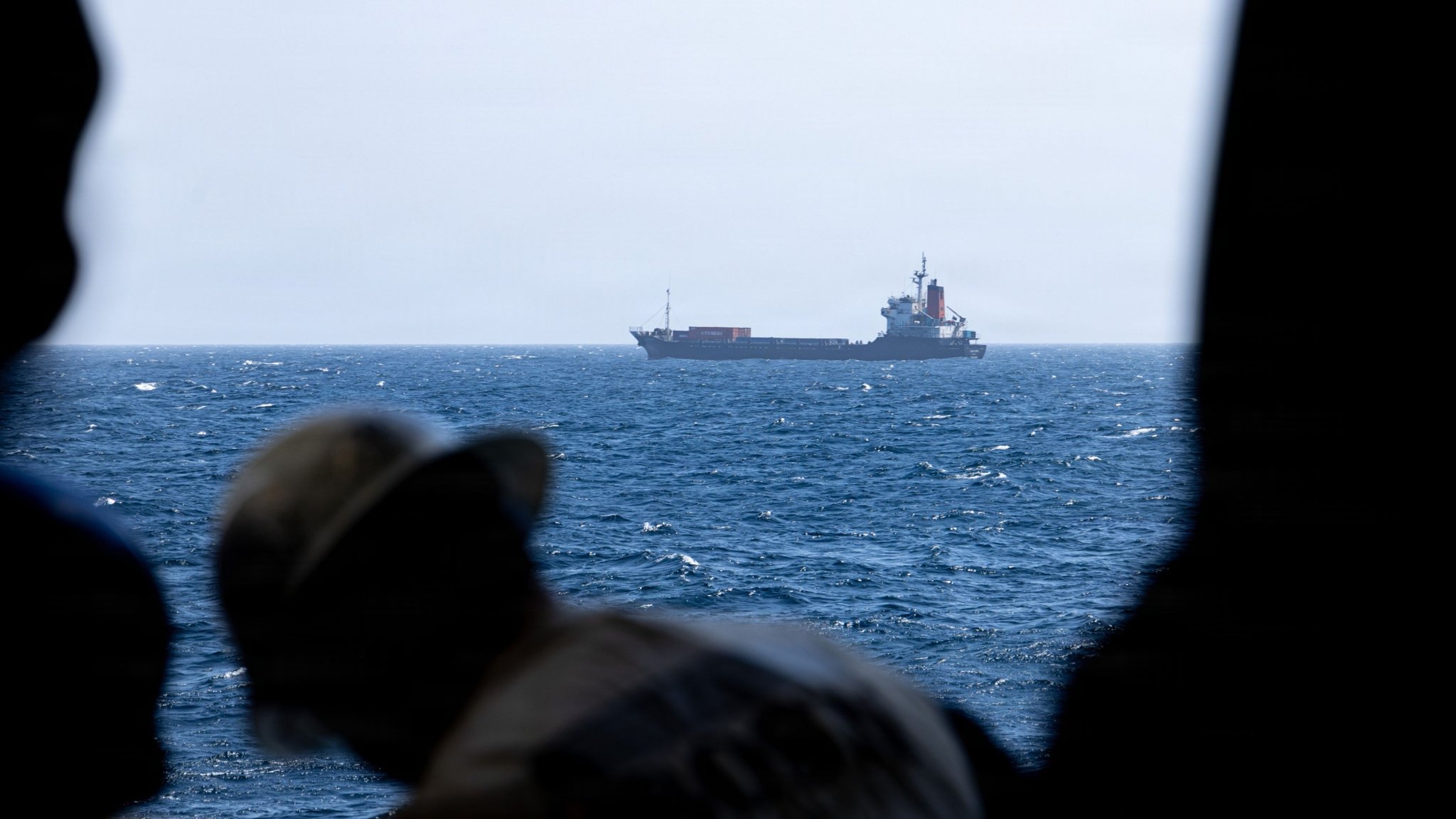
The U.S. military has cleared Iranian sea mines from the transit routes in the Strait of Hormuz, the head of U.S. Central Command said Friday. In a video address. Adm. Brad Cooper announced that a combination of forces, led by Navy divers and SEALs, has removed mines laid by Iran’s Islamic Revolutionary Guard Corps in the spring.
“The circumstances were challenging and dangerous, to say the least, but we got the job done,” Cooper said.
The Strait of Hormuz is a vital but narrow waterway where ships ferrying oil and other important chemicals pass daily, in normal circumstances. Since the start of the Iran war, Tehran has closed off some transit, prompting the U.S. to impose its own blockade on Iranian ports. In early April, Iran began laying sea mines in the strait, along the major routes that commercial vessels use.
Iran soon issued a warning of mines and advised an alternative route on April 9. Two days later, the U.S. announced that two destroyers, the USS Michael Murphy and USS Frank E. Petersen, were transiting the strait to start a mine clearance operation. In April, CENTCOM said that more American forces, including underwater drones, would take part but did not give a timeline for the mission. Since then, there have been few updates on the progress of mine clearance. Cooper said that during that time U.S. forces “meticulously and quietly” cleared the routes of Iranian sea mines. The effort involved a mix of Navy divers, Navy SEALs and a combination of Army, Navy, Air Force and Marine aircraft.
Cooper did not say how many mines were removed or disabled in total from the two major routes, and it is unclear if there are mines in the rest of the strait. President Donald Trump posted earlier this week to social media, saying that all mines had been removed or detonated from the international waters of the strait. Iran’s deputy foreign minister had dismissed Trump’s claims prior to Cooper’s announcement. Kazem Gharibabadi said on Aug. 26 that “no one except Iran knows the locations of these mines.”
The United Kingdom Maritime Trade Operations center, which tracks merchant ship traffic and issues advisories and notices of danger to or outright attacks on vessels, issued a new report on traffic in the region on Friday. The report also included a map of the strait, including the area known to have Iranian mines in it. The general area coincided with the UKMTO’s map of noted recent incidents for commercial ships in the area.
According to the UKMTO the last incident was on Aug. 26, when an “unknown projectile” hit an oil tanker; no one was injured.
Despite the successful mine clearance, Cooper said that the U.S. blockade of the Strait of Hormuz remains in effect. More than 20 warships are participating and they have turned around 75 ships and disabled three vessels since the blockade was restarted in July.
Cooper’s statement coincided with the six-month mark of the Iran war. The memorandum of understanding, which announced a 60-day pause in fighting to discuss a permanent peace deal, lapsed this month. Significant fighting restarted in July despite the memorandum of understanding, with the U.S. attacking Iranian sites for several days. The last reported strike was on July 30.
Loading comments…
Comments couldn’t be loaded. Please refresh the page.