
The U.S. military will reimpose a blockade on the Strait of Hormuz Tuesday following a week of renewed fighting with Iran, U.S. Central Command announced Monday afternoon.
CENTCOM officials confirmed the blockade hours after President Donald Trump announced the measure, along with a note that the U.S. would charge all cargo traffic passing through the waterway a toll for providing what the president termed “the job of providing safety and security” in the waterway. The blockade of traffic “entering and exiting Iranian ports” will restart at 4 p.m. Eastern Time on Tuesday, July 14, CENTCOM officials said.
“We are reinstating the THE IRANIAN BLOCKADE, so named because it is only stopping Iran’s ships or customers from entering or leaving,” Trump wrote on social media. “All other countries will have fair and open use of the Strait.”
But Trump also said the U.S. would, in an unprecedented action, collect a hefty toll from non-Iranian cargo as a sort of protection fee.
“As a matter of FAIRNESS,” Trump posted, the U.S. “will be reimbursed, at the rate of 20% on all cargo shipped, for any and all costs necessary to do the job of providing safety and security.
CENTCOM officials did not address any tariff that might be included in the blockade operation.
During normal operations, about 20 million barrels of oil pass through Hormuz every day, which would be worth $1.6 billion at the July 13 market prices of about $80 per barrel.
“All mariners are advised to monitor Notice to Mariners broadcasts and contact U.S. naval forces on bridge-to-bridge channel 16 when operating in the Gulf of Oman and Strait of Hormuz approaches,” a CENTCOM message said in its announcement. More information for commercial mariners will come through a formal notice, it added.
Top Stories This Week
Fighting restarted last week after Iranian forces fired on three commercial ships in the Gulf of Oman. The Islamic Revolutionary Guard Corps said that the vessels tried to pass through the strait without permission. The United States launched the first of four rounds of strikes on Iran in response. Trump later said that he considered the ceasefire that came with the memorandum of understanding to be “over.” Since last Monday, the United States has struck more than 300 targets across multiple locations in Iran, including the port of Bandar Abbas and Qeshm Island. Strikes over the weekend killed multiple people in southern Iran, Iranian media reported.
Iran in turn has targeted American bases in Jordan and several Gulf countries, firing drones and missiles at them.
Trump framed the new blockade as being only aimed at “Iran’s ships or customers.” The U.S. started its first blockade in mid-April, after Iran already closed much of the traffic through the waterway. The dual blockades continued for two months as both sides argued over ending hostilities and reopening the previously free-flowing maritime passage. The American blockade was specifically said to be aimed at ships traveling to or from Iranian ports, but in practice stopped traffic through the strait, through which much of the world’s oil and other energy flows.
After fighting restarted, Tehran said it would temporarily close the strait to traffic. Both Trump and CENTCOM have repeatedly insisted the Strait of Hormuz is still open.
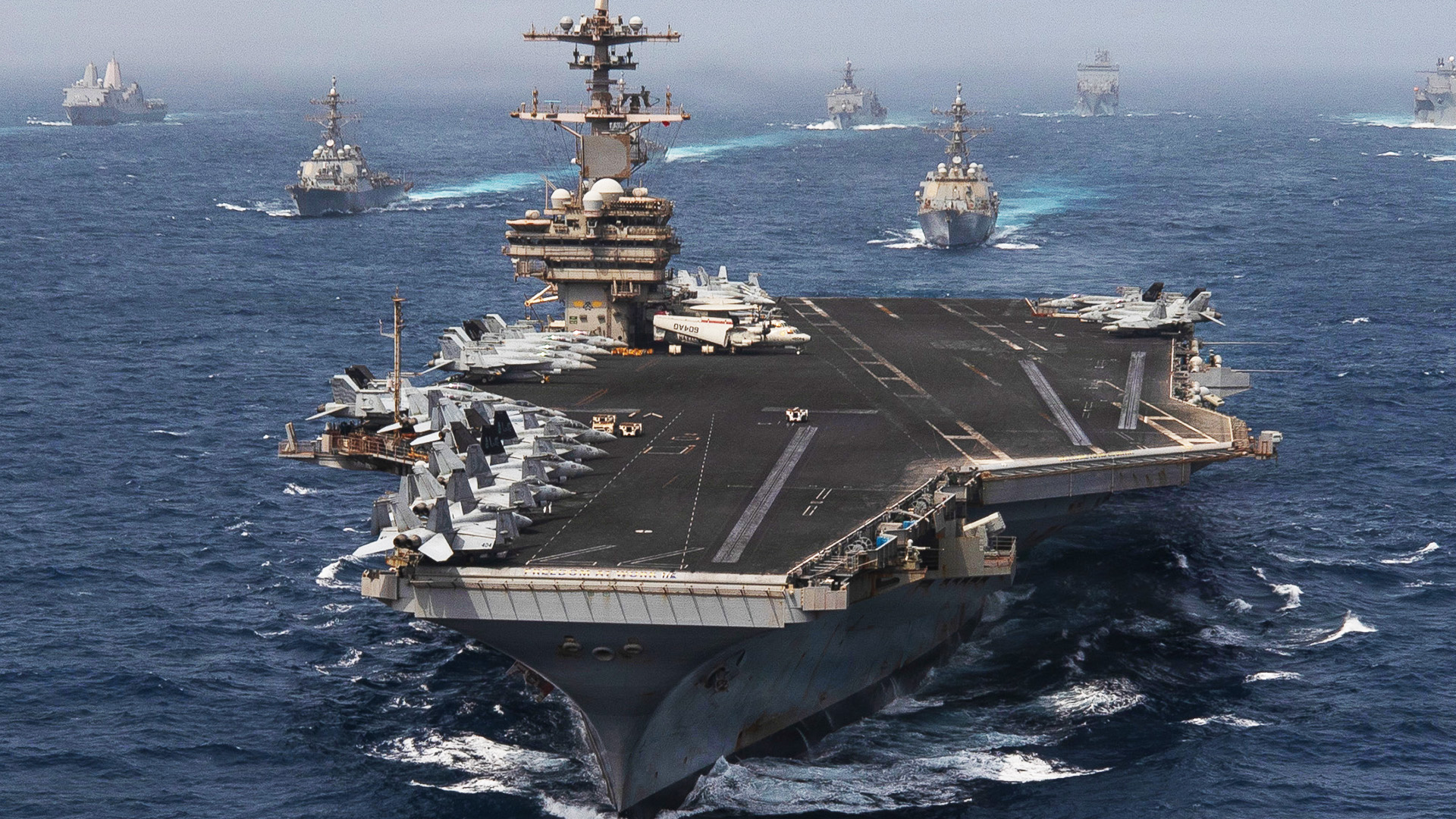
Alongside air and ground forces in the region, the Navy maintains a large presence around the strait. Both the USS Abraham Lincoln and USS George H.W. Bush carrier strike groups are operating in the Arabian Sea, as well as several independent destroyers. The Boxer Amphibious Ready Group, carrying more than 2,000 Marines from the 11th Marine Expeditionary Unit, arrived in the CENTCOM area of responsibility earlier this month, replacing the Tripoli Amphibious Ready Group.
During the previous blockade, the U.S. military redirected 142 commercial ships that tried to pass through it. It also fired at and disabled nine ships that tried to run the blockade and ignored warnings from the military. One of the last instances before the ceasefire saw the U.S. kill three Indian sailors when an American aircraft fired “precision munitions” into the MT Settebello’s engine room.
Loading comments…
Comments couldn’t be loaded. Please refresh the page.