

The Pentagon announced that service members will get access to testosterone replacement therapy. Experts say that treating health issues associated with hormonal deficiencies is more complex than giving troops access to straight testosterone, which comes with its own risks.
On Wednesday, Defense Secretary Pete Hegseth announced that routine annual health assessment for troops over 30 would now include testosterone screening, which younger troops could also request. In a video posted to X, Hegseth said if providers recommend treatment, “it’s entirely your choice to receive testosterone replacement therapy.”
Hegseth’s announcement echoes an emerging focus on testosterone-related health issue in the special operations world in recent years, widely discussed among veterans and medical experts as “operator syndrome.” The phenomenon, which Hegseth referenced in a memo Wednesday announcing the new program, was first noted in a 2020 research paper in the International Journal of Psychiatry Medical by Chris Frueh.
Frueh described operator syndrome as a widely reported series of similar health issues and hormonal deficiencies among special operators over 30, a pattern he noticed while working with active duty and veteran special operators across the U.S. and other countries. Some police and firefighters, Frueh said, have also reported similar health issues.
“The high op tempos, the sleep deprivation, the circadian disruption, the repetitive repeated blast exposures, all of these have a profound effect on hormones,” Frueh told Task & Purpose. “If you’re not sleeping, your hormones aren’t being properly released and regulated. But it has a bidirectional effect, so it hurts sleep, it hurts brain health, it hurts metabolic functioning if your hormones aren’t in alignment.”
Often more needed than just a shot
Experts told Task & Purpose that treating a testosterone imbalance is more complex than just giving service members access to oral or injectable testosterone. They also said treatment should address other health factors like sleep, stress, substance use, diet and more.
“Our medical care is siloed. My sleep doctor has never spoken to my oncologist, has never spoken to my podiatrist. Everything gets treated in isolation,” Frueh said, adding that “the whole point of what we’ve been calling operator syndrome” is that these health issues are “interconnected” and require a more holistic treatment.
As veteran and active troops have looked outside traditional medical paths, a cottage industry has emerged for non-traditional treatment plans. Dr. Mark Gordon studies neuroendocrinology and translates his research into treatments for special operations troops and veterans who come to him on their own dime.
Top Stories This Week
“Just looking at testosterone is like only filling up one tire on your car with air and the other three being flat, you need to have all the key hormones optimized,” Gordon told Task & Purpose in an interview for a story in 2024. “This is why in some people when they get testosterone replacement therapy, or TRT, they don’t get better because we’ve totally missed other hormones.”
Testosterone replacement therapy, or TRT, carries risks, including reduced sperm count (it has been studied for use as a male contraceptive) and a reduction in the body’s ability to produce it naturally.
Gordon said that he “rarely” recommends testosterone. If someone accepts a testosterone-based treatment protocol, they’re “on the hook for the lifetime of that individual as opposed to fixing the cause for the deficiency.”
Dr. Richard Auchus, an endocrinology section chief at the VA Ann Arbor Healthcare System who sits on the board of the Seal Future Foundation, said there’s long been “tension” between expanding the use of testosterone versus addressing the underlying causes of conditions that might cause low readings, like sleep apnea.
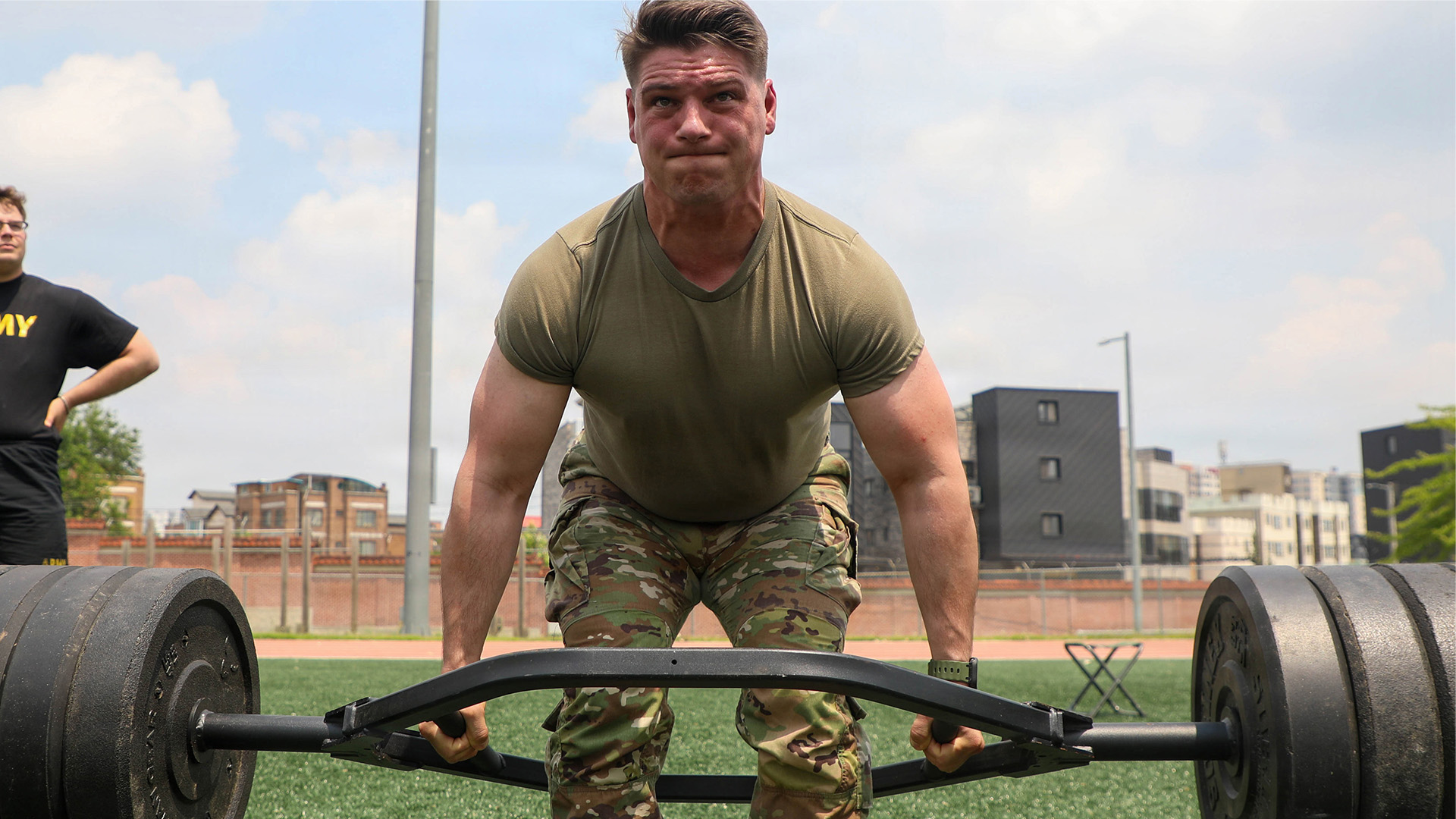
“If you put them on CPAP and they get a good night’s sleep and they can get into REM sleep and recover their pulsing, then their testosterone comes back to normal. That’s an example of a reversible cause, and it would be a disservice to this individual to treat them with testosterone rather than treating them with treating the underlying cause,” he said. “Just giving them testosterone is not going to restore them to normal health because they still have sleep apnea, and actually can make sleep apnea worse.”
Looming in the background of the Pentagon’s new screening and treatment program is the history of special operators, which has included cases of abuse of steroids and performance enhancing substances.
Regular drug tests in the military do not test for these substances, though Navy commanders can order tests that do if they suspect abuse. All services ban unregulated steroid use and service members, and users can face punishment under the Uniformed Code of Military Justice.
“People dope with testosterone all the time because it’s performance enhancing,” he said. “It’s a very gray line between where it’s restored to normal health and where doping comes in when you’re using testosterone.”
Auchus, who was in the Air Force medical corps, said part of his job was evaluating whether troops were abusing androgens, which include testosterone He said service members might not always be forthcoming about their past use but that it’s important for the best care.
“There’s the risk of taking androgens in and of itself. And then if you don’t come clean about that, I mean, I can’t help you,” he said. “If you’re not honest with me, then it just it’s going to perpetuate the problem.
Loading comments…
Comments couldn’t be loaded. Please refresh the page.