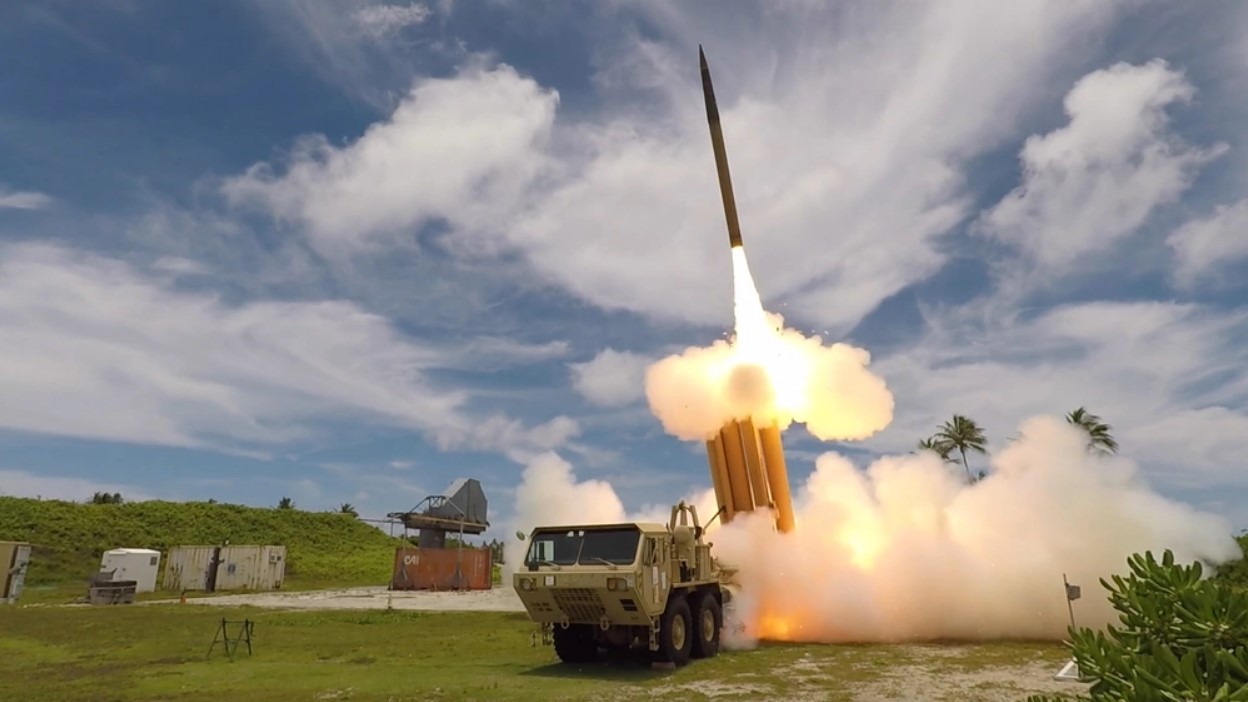
The U.S. Army burned through nearly a quarter of its stockpile of interceptors for its Terminal High Altitude Aerial Defense systems during Israel’s 12-day war with Iran. The heavy use of expensive munitions highlighted the high cost of air defense in recent battles.
The June conflict, where Iran and Israel traded large-scale missile barrages and airstrikes, saw the United States intervene to support air defense efforts on the side of Israel. During the 12-day conflict, the United States military expended more than 150 THAAD interceptors, according to the Wall Street Journal. The newspaper reported last week on the missile expenditures, citing defense officials familiar with the situation. The interceptors, fired from the THAAD system, are among the U.S. military’s most advanced ballistic missile counters. Per the Wall Street Journal, the military also fired multiple interceptors from Navy ships, including 80 SM-3s. The report highlighted the limited number of these costly munitions and how quickly they can be expended in a large-scale conflict.
The United States currently operates seven THAAD systems. Each system is operated by the U.S. Army although they fall under the purview of the Missile Defense Agency. The Missile Defense Agency notes that the military has budgeted for, although not acquired all of, 646 THAAD interceptors.
The first THAAD system was sent to Israel in October 2024. A second arrived in the spring of 2025, redirected from the Pacific region in light of escalating tensions with Iran. Each system is operated by roughly 100 soldiers. There are also multiple Patriot missile defense batteries deployed in the CENTCOM area of responsibility. They were used heavily over the last two years, including the June conflict, to take out missiles fired towards Israel. They were also used in defense of the Al Udeid Air Base in Qatar when it was attacked by Iran on June 23.
On the naval front, the SM-3s were used in combat for the first time last spring, when the U.S. previously stepped in to provide air defense assistance for Israel against Iran.
Top Stories This Week
The high usage of THAAD and SM-3 interceptors is the latest instance of the U.S. military expending a high amount of expensive munitions to take out cheaper weapons from adversaries. During the initial Red Sea conflict between the United States and Yemen from the fall of 2023 to early 2024, the U.S. Navy fired nearly 400 missiles, including SM-3s, SM-2s and SM-6s. In those cases, the vast majority of anti-air confrontations were against much cheaper missiles and drones.
Standard Missiles cost several million dollars, depending on the variant, while some of the drones they fired cost only a few thousand dollars. The U.S. military has been exploring less expensive means of countering low-cost enemy weapons, but has been relying on tools like Patriot batteries and Standard Missiles in the meantime.