
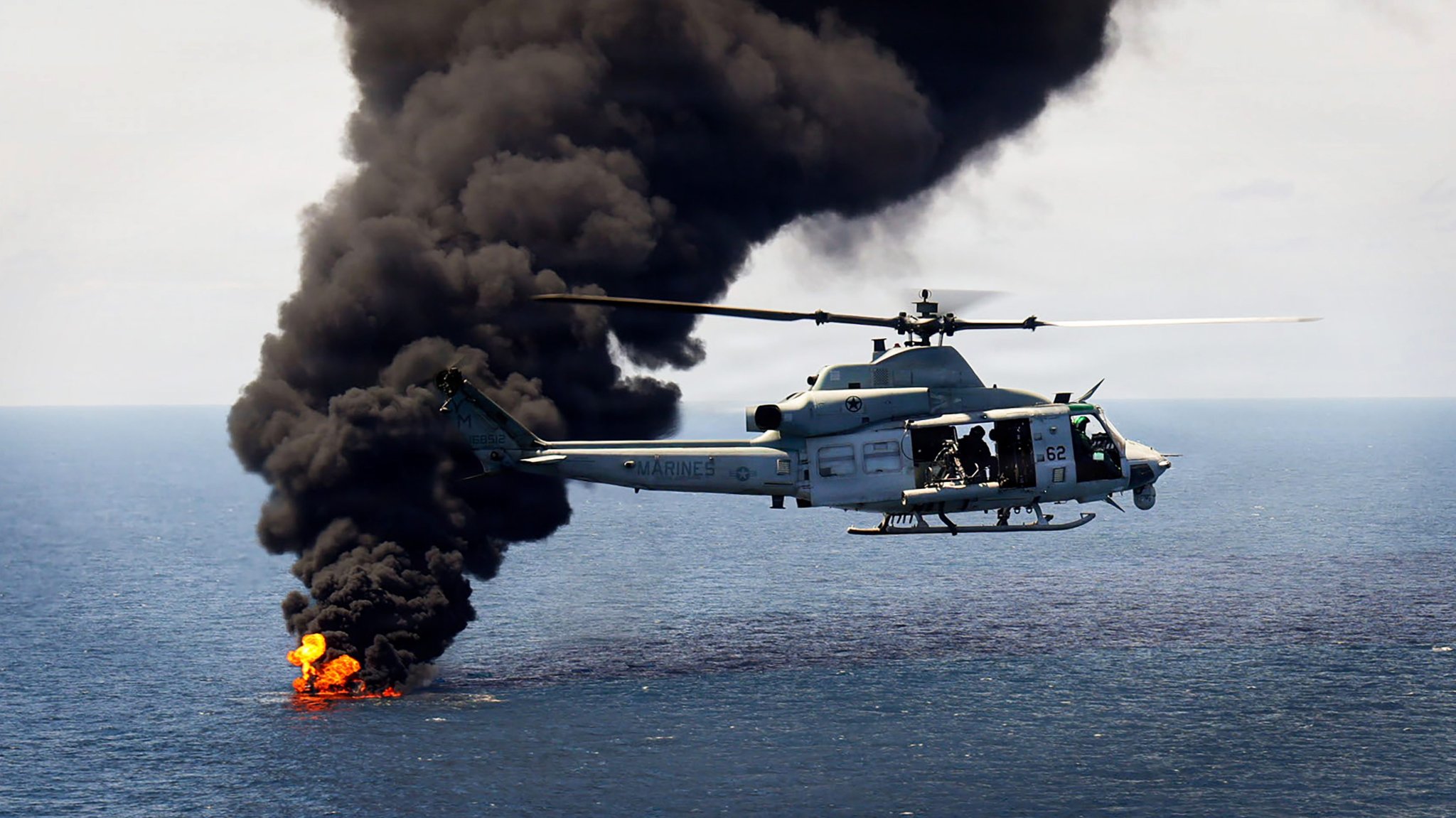
U.S. troops carrying out strikes against alleged drug-trafficking boats are facing renewed questions about the legality of their orders after a United Nations expert found the attacks may constitute crimes against humanity.
Ben Saul, the U.N. special rapporteur on counterterrorism and human rights, examined the U.S. military campaign that has killed 223 people in at least 68 strikes in the Caribbean and Pacific since September 2025.
Saul found there were reasonable grounds to believe the U.S. strikes were murders under international law and that the campaign of killings could constitute crimes against humanity. He also rejected the argument that targeting alleged members of designated terrorist groups alone gives the United States a right to use military force in self-defense.
The Trump administration has maintained that the strikes are lawful and that the United States is engaged in an armed conflict with drug-trafficking organizations the government has designated as terrorist groups.
For those service members carrying out the strikes, the growing legal challenge could put them in a difficult position. In theory, military personnel could one day be held responsible for carrying out an order they know to be manifestly unlawful, under this week’s U.N. finding. But for individual service members, some likely to be junior in rank and used to following orders without hesitation, refusing an order the military considers lawful can bring immediate punishment and end a service member’s career.

‘People want to look at this as very black and white, but it’s not’
Wes Bryant, a former Air Force special operator who later led civilian harm assessments at the Pentagon, said the reality for troops carrying out those missions is more complicated than a junior service member simply being ordered to pull a trigger.
Bryant spent his Air Force career as a terminal air controller in combat operations and said he personally controlled hundreds of strikes and helped coordinate thousands more. In a deliberate strike, intelligence personnel, strike controllers, commanders and military lawyers can all be involved before a weapon is fired.
“Everyone has a stake in the targeting process,” Bryant said. “Anyone can stand up, anyone can raise a hand, raise a voice and say, ‘No, this is wrong. I’m not comfortable with it. Here’s why.’”
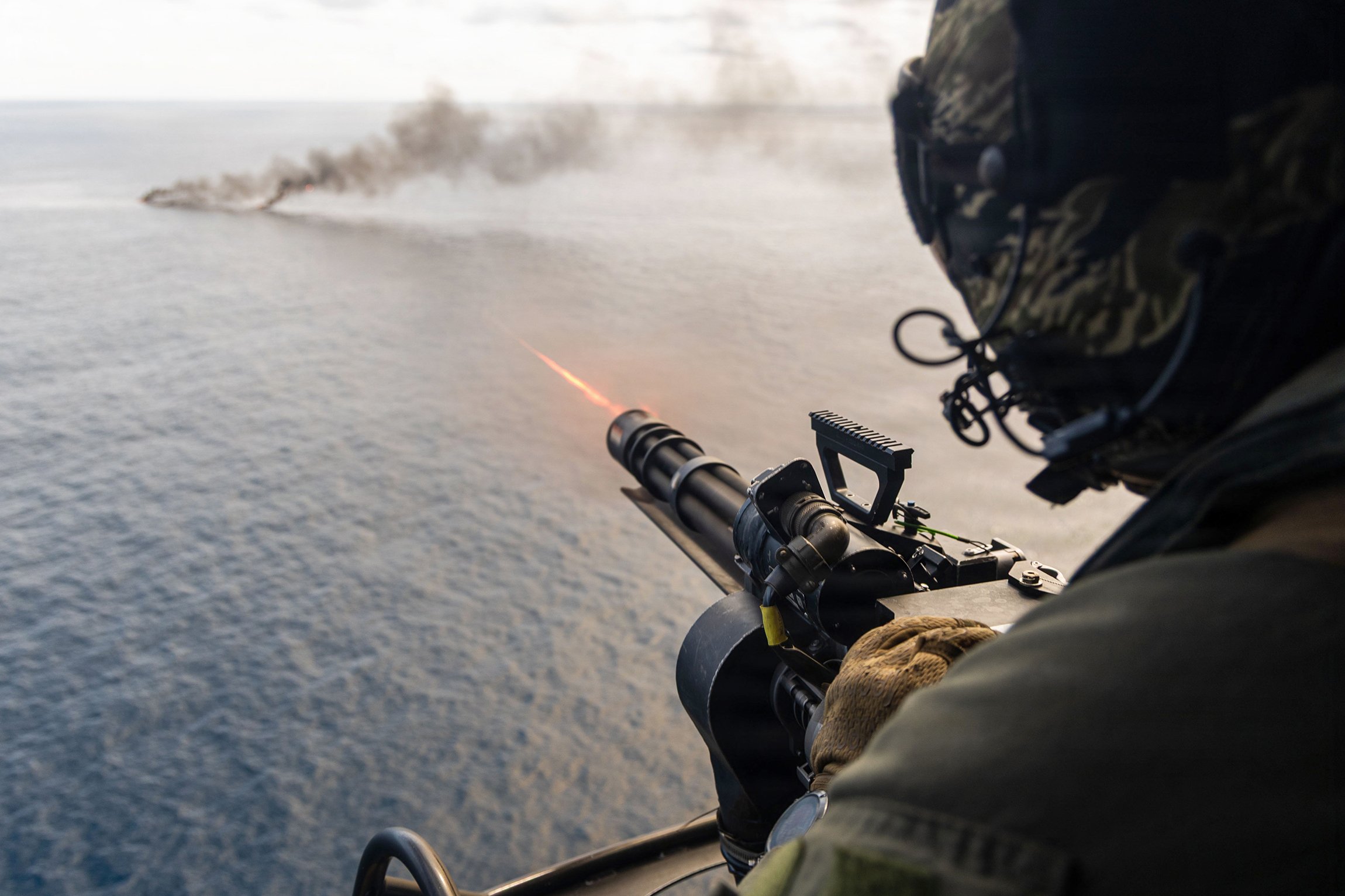
However, the situation can quickly move into the grey. For instance, Bryant said a helicopter door gunner in a time-sensitive maritime operation might know little about the intelligence behind the mission.
“That door gunner may […] know barely anything about what’s going on,” Bryant said. “They know they’re going after some kind of drug traffickers, and that’s it.”
Those troops also would not necessarily be making the decision to destroy a vessel themselves. Bryant said officers commanding the air and maritime elements would be in direct communication with a more senior task force commander aboard the ship. An order to destroy an empty vessel after its occupants were removed would likely come from that level, either before the mission or while it was underway.
Bryant argued that the public record surrounding the boat strikes, now combined with Saul’s findings, should be enough for service members to refuse to participate. But he acknowledged that what appears clear from outside the military can become far less clear for the person receiving the order.
He contrasted the boat strikes with an order to attack a village filled with women and children. In that scenario, Bryant said, service members would recognize something was wrong, and people would be more likely to object. The boat missions may present a murkier situation because troops have been told the people being targeted are drug traffickers and members of terrorist organizations.
“Ultimately, these guys that they at least believe that they’re going after are nefarious in some way,” Bryant said.
The service member may also assume that the intelligence personnel, commanders and military lawyers above them have already determined the operation is lawful.
“It’s not as people want it to be,” Bryant said. “Some people want to look at this as very black and white, but it’s not.”
Under military law, orders are generally presumed lawful, and troops who refuse them risk punishment under the Uniform Code of Military Justice.
Rachel VanLandingham, a retired Air Force lieutenant colonel and former chief of international law at U.S. Central Command, said the legal position of most rank-and-file troops is more complicated.
“For the vast majority of service members, except perhaps the senior-most commanders, there is both no safe recourse for them to disobey orders related to the illegal boat strikes and at the same time, there is no exposure to criminal liability for them either,” VanLandingham said.
VanLandingham said troops have a duty to refuse orders that are clearly unlawful or that they know are unlawful. But refusing an order can lead to a court-martial or, more likely, career-ending administrative action without the order’s legality ever being tested by a military judge.
But she said the administration’s legal review of the boat strikes complicates that standard. Service members are being told through their chain of command that the operations have been legally reviewed and are lawful, making it extremely difficult to establish that an individual service member knew otherwise.
“Yes, the growing international condemnation makes it clearer that these strikes are unlawful, but doesn’t overcome the White House’s own legal sanitization process and doesn’t create a legal duty for any service member to disobey their boat strike-related orders,” VanLandingham said.
Would an American face war crime punishment?
Historically, the few times the U.S. government has allowed U.S. service members to be tried for war crimes, it has been through American justice systems, not through international tribunals or the U.N.
U.S. Southern Command disputed the U.N. expert’s conclusions in a statement to Task & Purpose, saying all of its operations “have been conducted lawfully, fully complying with the law of armed conflict.”
The command said targeting decisions are reviewed through “established processes” and asserted that every person killed was a confirmed member of a designated terrorist organization who was actively transporting illicit materials.
The Trump administration’s “process,” though, has yet to include Congress, which has not authorized military force against the traffickers, according to the Lead Inspector General overseeing Operation Southern Spear, the official title for the ongoing military campaign.
Spokespeople for the combatant command did not answer Task & Purpose’s questions about what legal guidance is provided to service members regarding their obligation to refuse unlawful orders or whether any troops have raised legal concerns or declined to participate in the operations.
The strikes have continued since the period examined by Saul, the U.N.’s legal expert. On Sept. 18, U.S. forces killed four people aboard a vessel in the Caribbean, according to SOUTHCOM. USNI News reported it was the 70th strike of the campaign, bringing the overall death toll to 234.
Service members are performing hands-on roles elsewhere in the expanding counterdrug campaign. Last week, sailors and Marines boarded two suspected floating drug-refueling stations, removed the people aboard and sank the vessels, according to SOUTHCOM.
As Task & Purpose previously reported, SOUTHCOM declined to provide the Lead Inspector General with a public accounting of personnel and air assets deployed for the mission or explain how it determines whether a suspected drug boat receives a lethal strike or nonlethal interdiction.
Loading comments…
Comments couldn’t be loaded. Please refresh the page.