
As we like to say in our videos, “logistics wins wars.” From Hannibal crossing the Alps to attack Rome to Napoleon’s army starving just weeks into his invasion of Russia, the ability to get supplies to your troops is vital. Russia is learning this lesson the hard way in occupied eastern Ukraine and Crimea.
Ukrainian drone operators have been picking off Russian supply trucks and support systems, including air defense platforms, in strikes 30 to 180 kilometers behind the front lines. They’re calling the campaign “Logistics Lockdown,” and it has heavily strained Russian supply lines.
These intermediate strikes, also referred to as middle strikes, have been made even more effective thanks to Ukraine’s long-distance attacks on critical infrastructure deep inside Russia, including oil refineries in Moscow. The long-range strikes have forced Russia to pull critical air defense systems, which are already in short supply, back from the front, creating even more opportunities for Ukrainian drones.
In turn, fuel and munition shortages have slowed Russian advances in the region, and in some areas, they’re losing ground.
Top Stories This Week
Ukraine’s campaign isn’t just showing weak points in the Russian war machine; it offers a preview of what the U.S. military should expect in a future fight against a drone-heavy army.
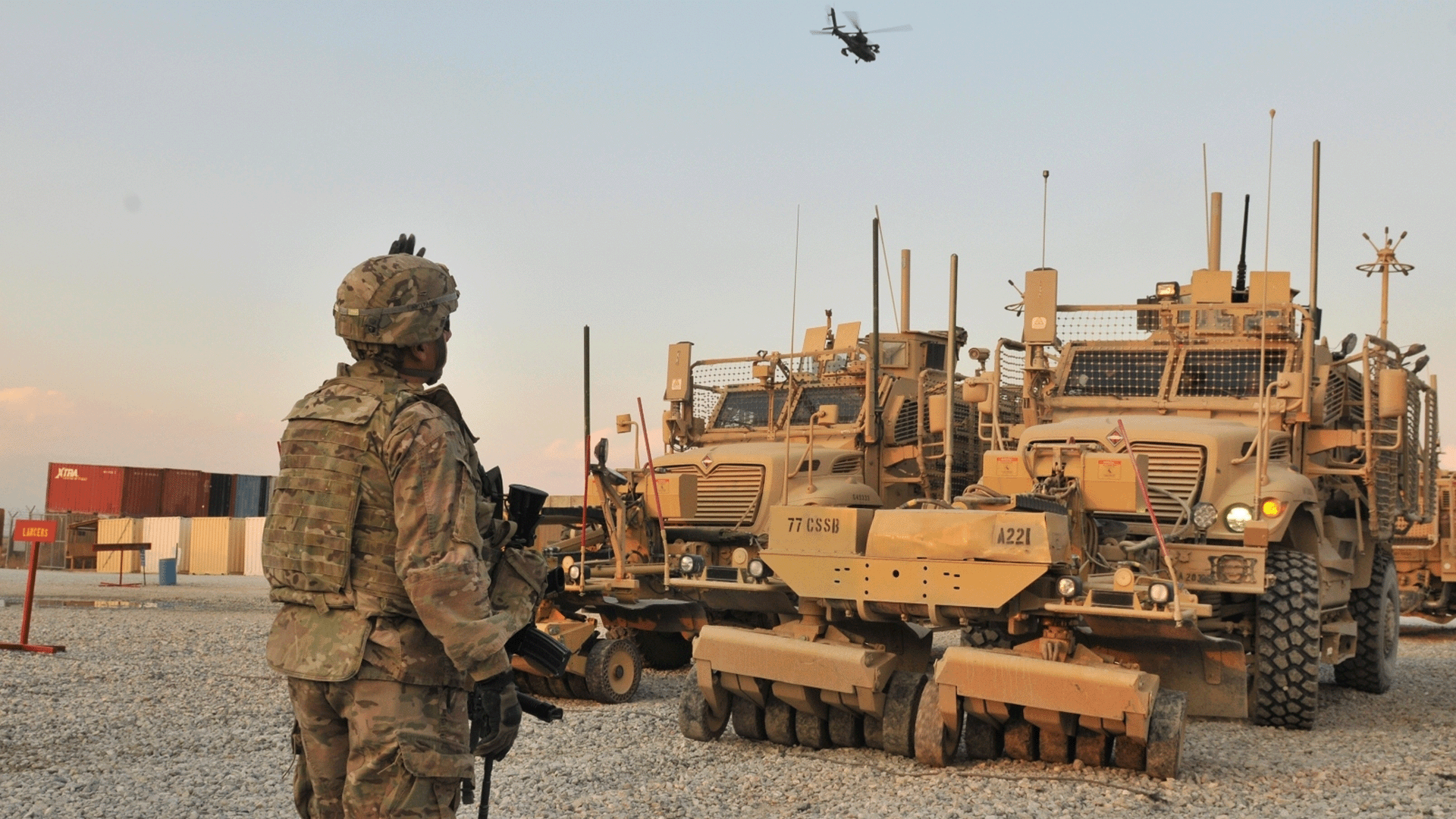
During the Global War on Terror, U.S. forces operated vast logistics networks that stretched into the furthest reaches of Afghanistan, Iraq, Syria, and elsewhere. Isolated forward operating bases and combat outposts relied on convoys of trucks or a steady stream of helicopters to deliver vital supplies.
Those trucks and helicopters carrying supplies would often begin their journey in sprawling bases like Camp Leatherneck in Afghanistan and Al Asad Air Base in Iraq, where the primary threats were indirect fire from rockets and mortars.
Once on the road, the primary threat to supply lines became roadside improvised explosive devices and enemy ambushes. Troops didn’t spend much time looking up until much later in the Global War on Terrorism era.
But a fight against a force armed with long-range, cheap, and plentiful drones would look very different.
Perhaps one of the greatest impacts that drones have had on the battlefield isn’t their ability to strike targets, but their ability to perform persistent intelligence, surveillance, and reconnaissance, or ISR. In a modern conflict, like Ukraine, one has to assume that if it is out in the open, it is being watched.
Supply convoys, largely defenseless against aerial threats for most of the wars in Iraq and Afghanistan, and massive bases with very few fortified structures will be sitting ducks for enemy drones that can not only hit them, but can be used to call in artillery fire, airstrikes, or relay coordinates for a ballistic missile.
Ukraine is offering a pretty clear picture of what happens when you don’t adapt to this threat in real time. They’re not just destroying Russian supply convoys; they’re forcing them to redistribute critical assets and pull others further from the front.
In our YouTube video, we further discuss what the United States should take away from Ukraine’s middle strikes, but also how they’re carrying these out and with what systems. You can check that out here.
Loading comments…
Comments couldn’t be loaded. Please refresh the page.