
The United States Navy is the most powerful in history. For decades, it has dominated the seas, and at the heart of that domination, at least through World War II, was the battleship. But today, the U.S. Navy’s only battleships are floating museums, and its largest warships, aircraft carriers, have few guns on their decks. So what happened? How did the once-prolific warship fade into history and why hasn’t it been reinvented?
The short answer is that modern warfare killed the battleship concept. The longer answer is a story of changing doctrine, new technologies, and the harsh realities of the missile age.
The beginning of the end
Battleships were pivotal in the Allied victory in World War I despite only one major naval battle at Jutland in 1916 between the British Grand Fleet and the German High Seas Fleet, with victory claimed by both sides. Their power came in the ability — in this case, the ability of the British — to blockade the North Sea and prevent the flow of supplies into Germany. Following the war, the Washington Naval Treaty of 1922 limited the number and size of these “capital ships,” putting a pause in not just their construction but development. Still, they remained the centerpieces of naval power.
In the early stages of World War II, aircraft carriers had already begun to eclipse battleships as the decisive tools in naval warfare. At the Battle of Taranto in 1940, British torpedo bombers attacked and devastated the Italian fleet as it sat in port. At Pearl Harbor in 1941, Japanese carrier-based aircraft nearly wiped out the United States Pacific fleet while only losing 29 aircraft.
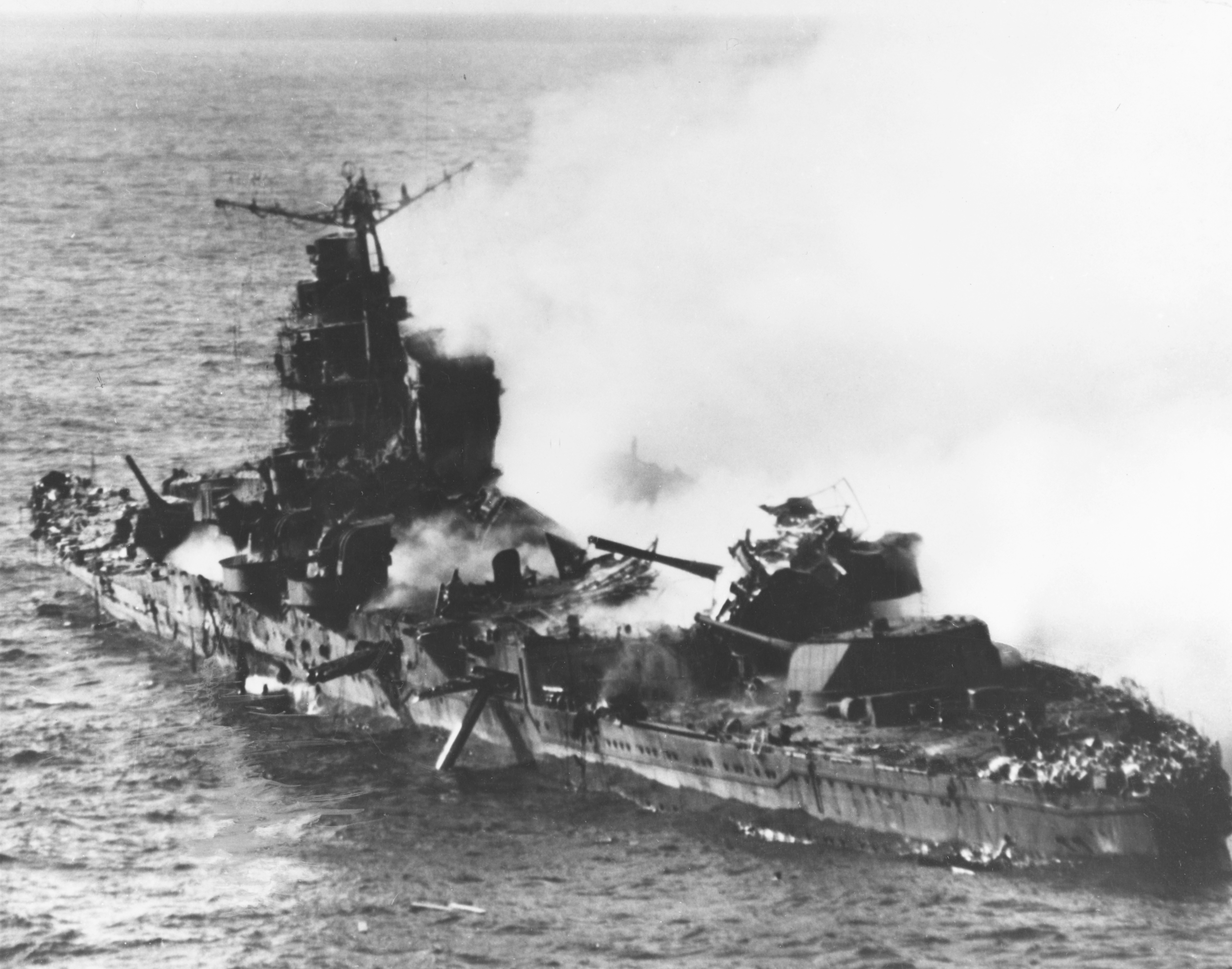
Carriers could strike hundreds of miles away, well beyond the range of even the largest naval guns. Major naval battles such as Coral Sea, Midway, and the Philippine Sea were fought and won almost exclusively by carrier and land-based aircraft. Battleships were still effective and impactful, but their role shifted to shore bombardment, anti-aircraft, and carrier escorts.
The Navy kept the Iowa-class battleships around into the Cold War because they were fast, reliable, and could deliver devastating naval gunfire support. But even then, the writing was on the wall. In Korea, Vietnam, and the Gulf War, battleships were used as floating artillery and remained largely unchanged, while destroyers, cruisers, submarines, and aircraft carriers continued to evolve.
Attempts to modernize
There were multiple attempts to bring the battleship into the age of modern missile warfare. In the 1950s and 1960s, the Navy experimented with adding nuclear reactors to battleships but abandoned the idea and opted to install them on submarines, aircraft carriers, and cruisers. There were also proposals to remove all the 16-inch guns from the Iowa-class battleships to replace them with missiles for anti-aircraft and anti-submarine warfare. This proved to be too cumbersome and expensive, with estimates that the ships would need 2,000 sailors to operate and $1.5 billion in 1958 dollars (about $16 billion today) to convert.
Smaller ships like cruisers and submarines could do everything these modernized battleships could do, but were far cheaper and had much smaller crews. The math just wasn’t coming out in favor of huge warships. The Iowa-class battleships underwent a series of decommissionings in 1958 and recommisssionings in 1968, only to be decommissioned a year later.
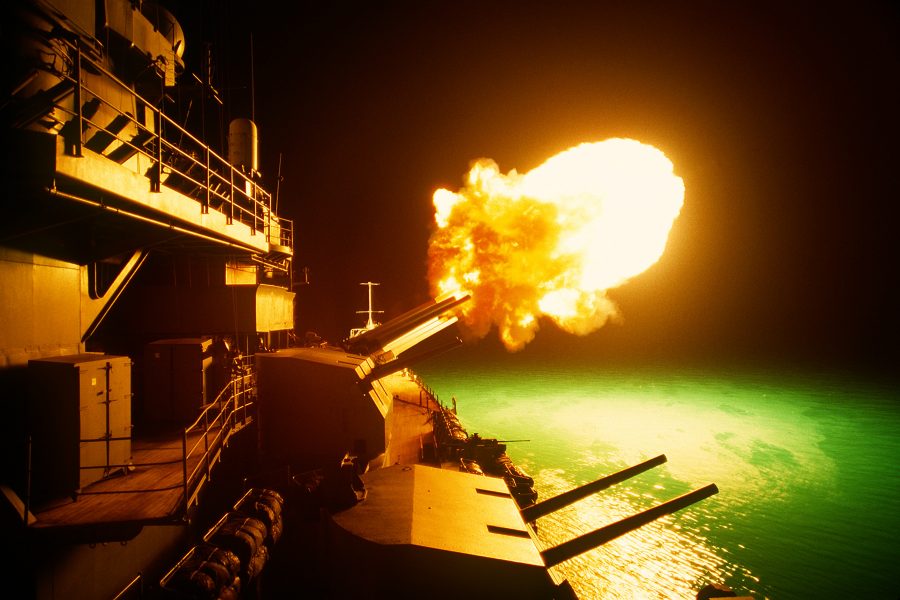
In 1981, with President Ronald Reagan’s push for a 600-ship navy, Congress authorized another effort to modernize the Iowa-class, with USS Wisconsin, New Jersey, Missouri, and Iowa pulled out of mothballs and outfitted with Tomahawk cruise missiles, Harpoon anti-ship missiles, Phalanx close-in-weapons systems, and the upgraded electronics to go with them. This proved to be an expensive and mostly symbolic effort with more political significance than strategic.
The last great hurrah of the Iowa-class came during the Gulf War, when USS Missouri and USS Wisconsin were used to shell Iraqi forces in support of coalition troops. They proved highly effective, delivering 2.1 million pounds of ordnance on Iraqi positions. It still wasn’t enough to keep the ships sailing, and in 1991, USS Wisconsin was decommissioned, with USS Missouri following the next year.
Arsenal ships
In the 1990s, after the Iowa-class battleships were finally retired, the U.S. Navy teamed up with DARPA to develop an “arsenal ship” that was to have 512 vertical launch system (VLS) cells and a crew of just 50 sailors. The VLS cells would hold Tomahawk cruise missiles for land-strike and SM-2 missiles to take out aircraft. This would give the present-day battleship the range and protection needed for modern warfare, but it proved difficult to make a reality. In the fiscal year 1998 budget, Congress pulled the plug amidst post-Cold War cuts and concerns that the large, slow ships would be nothing more than massive targets.
Today, there is talk once again of resurrecting battleships in some form, with President Donald Trump calling for a “Golden Fleet” with massive ships once again prowling the seas. But that dream isn’t likely to come true, and we discuss it in depth on our YouTube channel, which you can watch here.
