The U.S. military has a long history of developing vehicles it never actually fields. The Army’s Future Combat Systems died on the vine. The Ground Combat Vehicle was canceled before production. The Optionally Manned Fighting Vehicle program has been stopped and started more times than most troops will change duty stations in a career. And of course, the M10 Booker, the not-light-tank the Army had to have, was killed off after about 80 were delivered.
It is no wonder that whenever we cover the topic of U.S. vehicles on our YouTube channel, the comments are flooded with the same question: “Why doesn’t the U.S. just buy the CV90?”
That is a valid query. The CV90 is a proven infantry fighting vehicle used by several NATO allies. It is modular, combat-tested and recently underwent a significant upgrade. So why can’t the Pentagon stop with the seemingly endless programs that never actually produce a viable vehicle and just buy the Swedish CV90?
The answer has little to do with whether the vehicle is any good and a lot to do with how the U.S. buys weapons, what it prioritizes in doctrine, and how the military-industrial complex operates.
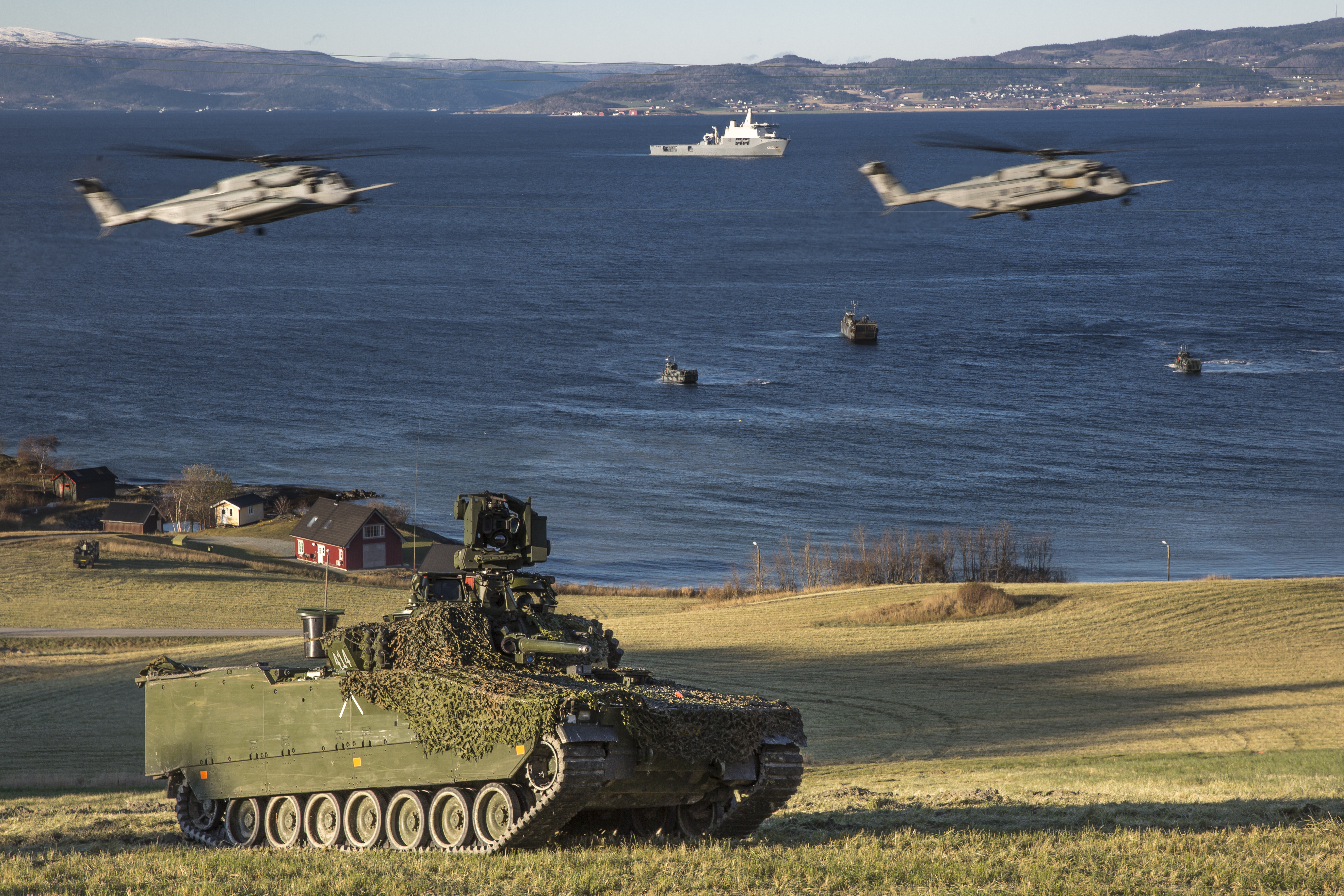
The CV90 was developed in the 1980s by Sweden’s Hägglunds, now part of BAE Systems. It was designed with fighting the Soviet Union in mind to be fast, survivable and capable in a variety of terrains. Since entering service in 1994, it’s become one of the most widely adopted infantry fighting vehicles in NATO.
It comes in multiple variants, ranging from the traditional infantry fighting vehicle with an autocannon on it to command and control, mortar carrier, reconnaissance models, and many more, depending on the customer’s requirements. The CV90 even comes with a variety of main weapons, starting at 30mm and going all the way up to 120mm. On paper, it checks a lot of boxes on the Pentagon’s wishlist for an armored vehicle. So why not just buy it and move on?
The most unsexy answer: money and politics. The Pentagon doesn’t just buy vehicles, it buys programs. Those multi-billion dollar contracts aren’t just for tanks or jets, they are for replacement parts, depot maintenance, technical manuals, training curriculum, simulators, everything necessary to keep a weapon functioning. This translates into jobs and decades of sustainment work.
Buying the CV90 off the shelf would mean outsourcing production and all those program benefits to Europe. The U.S. could license the design to be built here in the United States, like we do with the UH-72 Lakota helicopters, but that would require significant investment into a weapon we don’t have control over.
Doctrine must also be considered. When the Pentagon buys a new weapon, it usually builds the vehicle around current doctrine, not the other way around. For instance, U.S. armored formations are built around combined arms maneuver. Bradleys are designed to fight alongside Abrams tanks, supported by artillery, drones and airpower, all feeding into a massive command-and-control network. That network assumes certain levels of system cooperation, speed, and firepower that aren’t always a perfect match with off-the-shelf foreign vehicles, no matter how good they are.
This brings us to the issue of interoperability with U.S. systems. The CV90 is built around NATO standards, but the U.S. military often takes that a step further with its own encrypted communications suites, battlefield management systems, Blue Force Tracker integration, electronic warfare and signals intelligence kits, and remote weapon stations that are all custom-fitted to American platforms. Retrofitting those systems into a CV90 isn’t impossible — it’s just time-consuming, expensive, and requires creating a new U.S.-only variant. At that point, you might as well be developing a new vehicle from scratch.
Finally, we can’t forget that the Bradley does exist and its capabilities overlap heavily with the CV90. Military planners aren’t going to buy a foreign system that is very similar to the domestic one they already have hundreds of.
In the latest YouTube video, we go over these reasons and many more that apply not just to the CV90, but other foreign weapon platforms that we admire, but will never purchase.
The latest on Task & Purpose
- Sergeant Major of the Marine Corps learns an old lesson: Don’t mess with Audie Murphy
- A breakdown of safety procedures ‘directly contributed’ to an 82nd Airborne paratrooper’s death
- WWII Marine Raider who fought at Iwo Jima, Guadalcanal wants cards for 100th birthday
- Navy identifies special warfare sailor killed while parachuting
- Pentagon appears to pause renaming of Navy ships