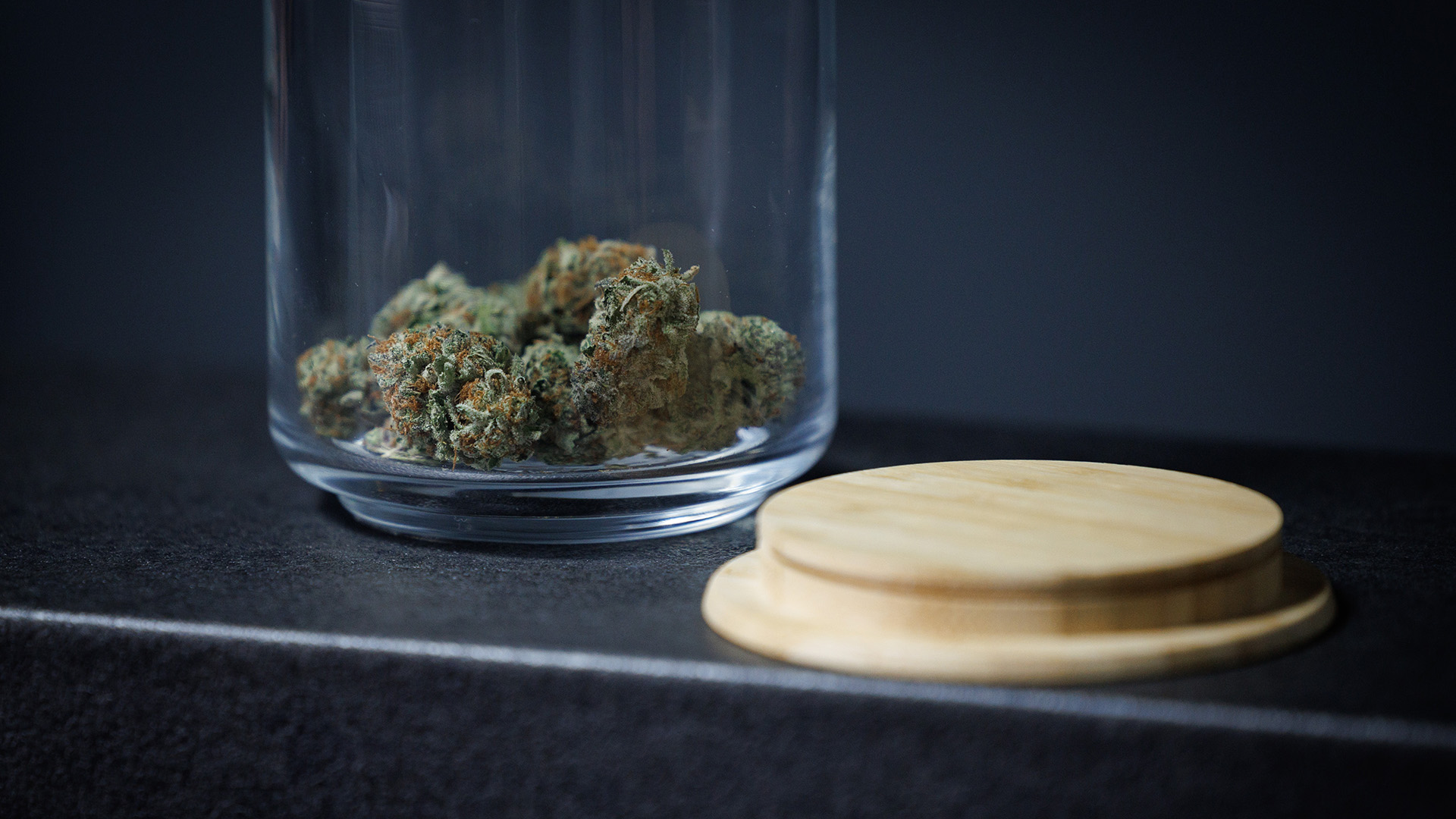
A major in the Army Reserve was investigated, taken into custody, had his promotion to lieutenant colonel rescinded, and then was formally reprimanded because he is one of the owners of a state-licensed marijuana dispensary in New York.
But that officer, Maj. William Norgard, is arguing his business ventures outside of the Army are not in violation of military regulations, and he’s gearing up to challenge the service — a fight that his lawyer says is likely to end up in court.
Even though New York state has legalized cannabis for adults who are at least 21 years old, it is still illegal for troops to possess, distribute, or manufacture marijuana under Article 112a of the Uniform Code of Military Justice. Separately, a Defense Department policy also prohibits service members from “unlawfully possessing, dispensing, selling, or using illicit drugs” and other substances in accordance with federal laws. While many states have legalized cannabis for medicinal or recreational use, it is in the process of being classified as a Schedule 3 drug under federal law.
Top Stories This Week
When asked if the Army has a policy that addresses whether soldiers can own state-licensed marijuana dispensaries, Christopher Surridge, a spokesperson for the service, provided Task & Purpose with the following statement: “Any member of the U.S. Army who wrongfully uses, manufactures, and/or distributes marijuana could face action under the [Uniform Code of Military Justice], up to a court-martial proceeding, for violating UCMJ §912a. Art. 112a. (Wrongful use, possession, etc., of controlled substances).”
Norgard’s chain of command became aware of his stake in the dispensary’s ownership while he was deployed to Germany last year, he said. He was placed under investigation for allegedly wrongfully possessing and distributing marijuana; his position was “eliminated,” and he was sent home early, Norgard said.
Ultimately, he received a General Officer Memorandum of Reprimand from the commanding general of the Military District of Washington, where he is currently assigned as a reservist, and his promotion to lieutenant colonel was rescinded, said Norgard, who is challenging both actions. Called a GOMOR, the reprimand can become part of a service member’s permanent military record and can carry serious career repercussions.
“We were operating legally within the bounds of the state in New York, and we do not cross federal lines in business,” Norgard told Task & Purpose. “So, I don’t know how you could claim that it’s only illegal for somebody who’s maybe in the Guard and Reserve, but it’s not illegal for any other U.S. citizen.”

The Army Reserve deferred questions about Norgard to the Military District of Washington. A spokeswoman for the command said it could not comment on the matter due to the Privacy Act.
At the moment, Norgard is filing a response to the letter of reprimand, and if that fails, he will turn to the Army Board for Correction of Military Records, said his attorney Christopher Nuneviller. Should both challenges fail, Norgard will file a federal lawsuit against the Army, Nuneviller said.
“I think we’re going to end up in court,” Nuneviller told Task & Purpose. “I don’t see the Army is backing down. But it could be two or three years from now because we have to exhaust our administrative remedies before the courts will allow us to even file suit.”
One of several owners of the marijuana dispensary
Norgard, who has been an Army Reserve officer since 2009, says he is neither a proselytizer nor an advocate for cannabis. But he said he realized he qualified for a cannabis license as a service-disabled veteran under New York law, explaining that he has a 60% disability rating from the Department of Veterans Affairs for service-connected neck, back, and hearing issues.
He received a license as part of a settlement from a lawsuit that he and other veterans brought against New York state. Since 2024, he has owned 51% of a dispensary in Times Square, but he is not the sole owner, and he does not have any role in hiring, firing, inventory, or the shop’s other day-to-day operations, he said.
The shop’s other owners include the lender and landlord, a group of 14 other shareholders, and one other service disabled veteran, Norgard said.
Norgard said he expected to face “some scrutiny” from the military for owning the marijuana shop, “I didn’t think that it would ever be to this level of question on if this is right or wrong.”
“I’m unaware of any situation that doesn’t allow members of the military — and specifically the Guard and Reserve — to participate at the same level as their fellow citizens in matters of commerce in the United States,” Norgard said. “So, I don’t know how anyone could say this is illegal.”
The Army thought otherwise.
‘A crime that doesn’t exist in the Army’
In October, Norgard was taken into custody for allegedly violating the Uniform Code of Military Justice, although he was never charged and the Army decided to punish him administratively, said Nuneviller, his attorney.
“They’re trying to administratively punish him, so they’re trying to give him this reprimand, but they’re using the [Uniform Code of Military Justice] as the basis for the administrative reprimand,” Nuneviller said.
Norgard’s name was also entered into the title block of an investigation, and that appears on his civilian record as an arrest for possessing and distributing marijuana, Nuneviller said.
Then, in February, Norgard received an official letter of reprimand from Maj. Gen. Antoinette Gant, commander of the Military District of Washington, for wrongfully possessing and distributing marijuana through his business, according to a copy of the letter, which Norgard provided to Task & Purpose.
“While New York has legalized recreational use of marijuana, the federal government continues to label marijuana as a Schedule 3 controlled substance,” Gant wrote in the letter. “Your ownership of a marijuana dispensary is in violation of Article 112a, Uniform Code of Military Justice (UCMJ).”

But Nuneviller said that his client is being punished for “a crime that doesn’t exist in the Army.”
“There’s no case law that says that the Army can prosecute or discipline a soldier for owning a marijuana dispensary in his civilian capacity when he’s an Army reservist,” Nuneviller said.
Military law makes it a crime for service members to either physically possess marijuana or have it under their control, such as in their locker or trunk, said Nuneviller, who noted that Norgard was in Germany when his ownership stake in the dispensary came to his chain of command’s attention.
Nuneviller added that the reason the Army did not charge Norgard is that prosecutors would have had “a very difficult time proving that he actually possessed and distributed marijuana from Germany in Times Square.”
‘I love my service in the United States Army’
For now, Norgard is stuck in limbo.
“I haven’t been able to do anything with the office I’m attached to at the Pentagon,” Norgard said. “I’m not still on active duty. I’m currently on Reserve status, but I am not drilling. I’ve not been afforded the opportunity to go anywhere, earn any points, or earn any money.”
The lender for his dispensary has also told him they don’t want him to return after he tried to work there at the salary he was being paid prior to deploying to Germany, so he is working at a part-time job to make money, he said.
In the meantime, he expects that his challenges to the Army’s decision could take years to resolve.
But Norgard said he is still committed to challenging the administrative action taken against him because he is “fiercely proud” to be a soldier.
“I love my service in the United States Army,” Norgard said. “Being a service member to this country is the single most important thing to me. People might say: ‘Well, hey, if you knew that, then why did you do that?’ Because both things can happen at the same time. One does not actually affect the other. Being involved in some sort of commercial enterprise in my state — that maybe some still find morally reprehensible — is still legal in my state, and I’ve done nothing wrong.”