The Army is extending tours in South Korea as the Pentagon aims to limit station moves and cut costs. Officials say the longer tours should give soldiers and their families more stability with less frequent moves.
Soldiers have typically been assigned to units in South Korea for one year with an option to extend tours to two or three years if they are accompanied by family. Now, single soldiers will get two-year tours while those with families will get three-year assignments, according to a new policy reviewed by Task & Purpose.
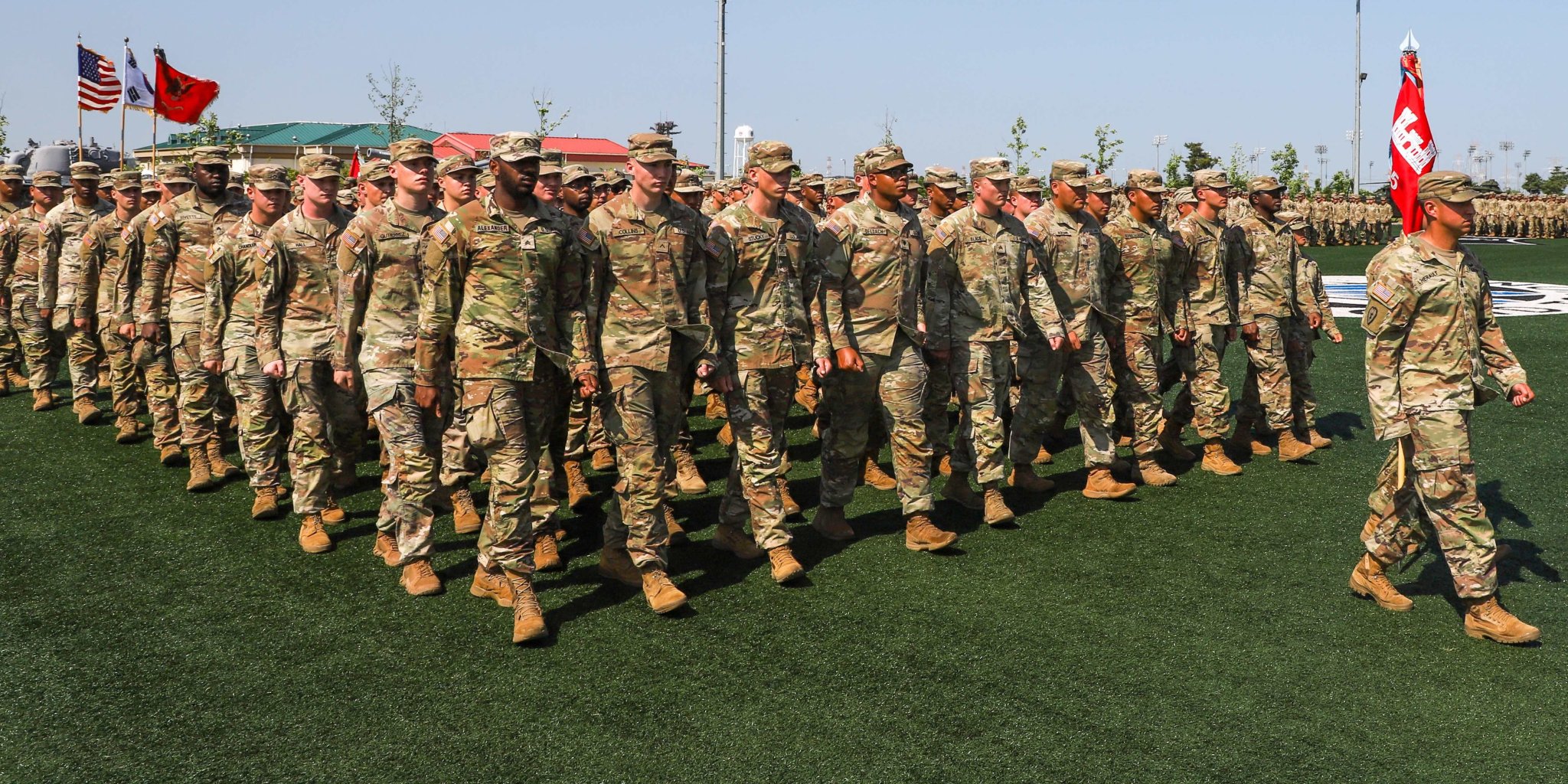
The policy brings South Korea assignments in line with other overseas postings in countries like Germany, Japan, or Italy, which have long offered two-year unaccompanied and three-year accompanied tours. Soldiers can be assigned to several bases in South Korea, the largest of which is Camp Humphreys. About 40,000 active duty troops, civilians and family members are assigned to the base 40 miles south of Seoul.
Col. Arron Lummer, the assistant chief of staff for 8th Army, said in a statement to Task & Purpose that increasing tour lengths will make South Korea a “more fulfilling assignment” by reducing the stress that comes with frequent moves and giving families more stability at work and in their personal lives.
Frequent moves is an issue long highlighted by military spouses as a hardship of military life. Many say changing jobs every few years and the difficulty of finding childcare in new states or countries make military life more difficult than the civilian world.
In May, Pentagon officials asked each of the military services to come up with plans that consider reducing the number of permanent change of station, or PCS, moves that troops are forced to make as an avenue to reduce stress on troops and their families and to cut costs. Lummer said that discussions to change tour lengths in South Korea began before the Pentagon announced its own initiative across the services but that it has the same goals.
“Moving soldiers and families is expensive, in terms of dollars, unit readiness, and personnel availability. Increasing tour lengths in Korea directly reduces the frequency of moves, which equates to cost-savings for the services and increased readiness for the soldier, unit, and family,” Lummer said.
The policy goes into effect for soldiers PCSing to South Korea on or after Oct. 1. Soldiers currently stationed in South Korea will complete their tours and any extensions will be voluntary, unless there’s an operational need, officials said.
The Army may still keep “limited” cases of 12-month solo tours for soldiers assigned to South Korea units. In those situations, they will receive family separation pay, officials said.

“We recognize not every service member may initially prefer longer tours. However, most [international] assignments already operate on longer timelines,” Lummer said, adding that a South Korea tour can offer “exceptional benefits” like quality schools and cultural benefits “that make it a highly attractive assignment.”
The new PCS policy applies to permanently assigned personnel and does not impact rotational units like the 1-4 Stryker Brigade Combat Team regularly sends troops to South Korea for nine-month deployments.
Army officials said the PCS tour changes will not change the number of troops stationed or deployed in South Korea, a number mandated by Congress. The 2026 annual defense bill calls for 28,500 troops in the country.
However, reporting by the Wall Street Journal in May indicated that the Trump administration is considering withdrawing thousands of troops from South Korea. The possibility of withdrawing troops from South Korea comes at a time when the military is ‘pivoting’ its strategy towards the Pacific in preparation for any larger conflict with China and amid broader discussions on American force posture changes around the world.