
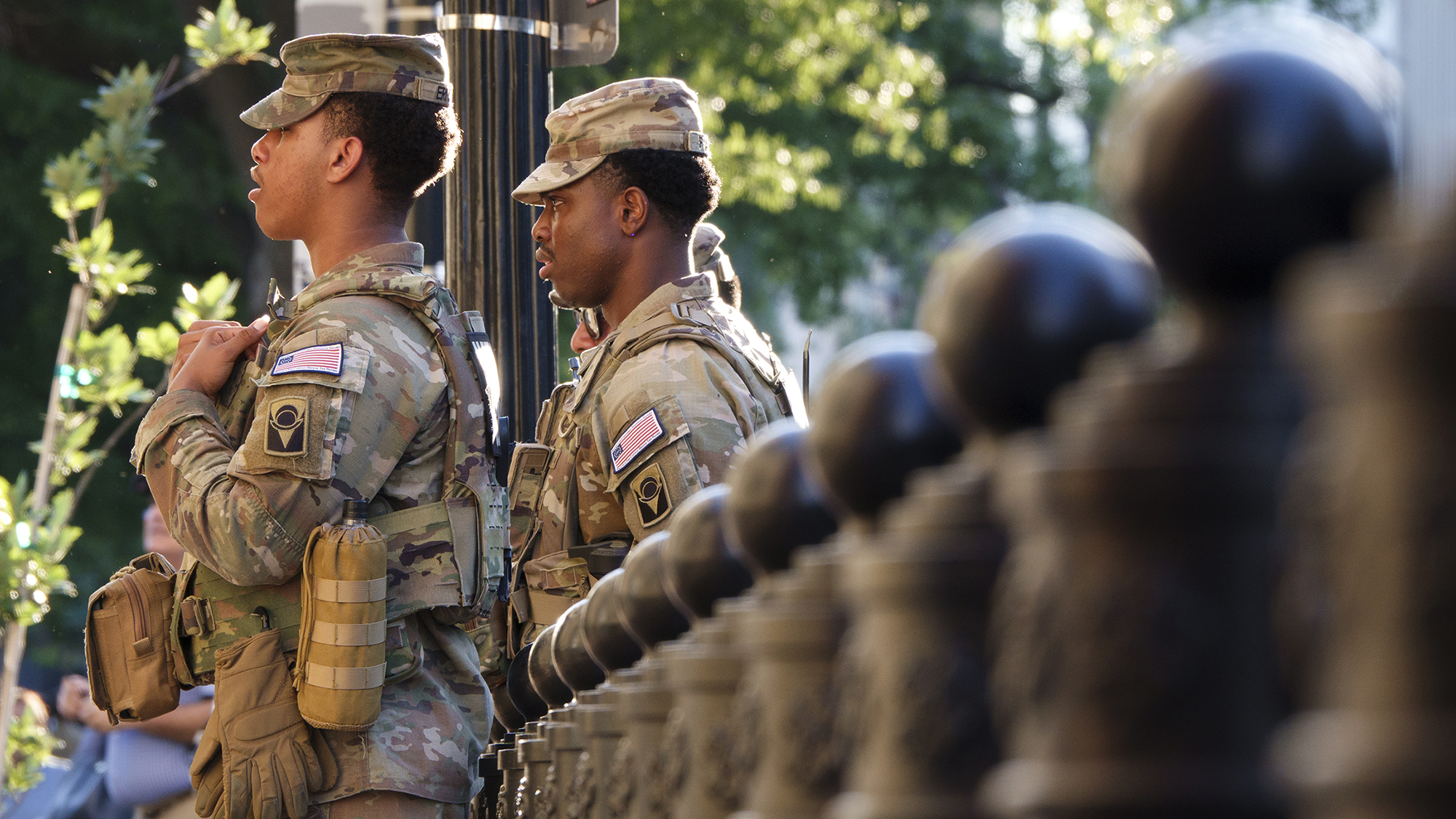
A new bill introduced in the Senate aims to clean up the convoluted process that governs what benefits and pay National Guard and Reserve troops are eligible for when they’re called up.
When National Guardsmen were mobilized to cities across the U.S., many took to social media joking that they would be given 29-day orders on purpose. For the average civilian, it might not mean much. But for part-time troops, the type of mission they are assigned to can impact their paycheck and other benefits.
“If you’re a guardsman and you’re on orders for less than 30 days, you do not receive health care or housing benefits,” said Julian Plamann, deputy director government affairs at the National Guard Association of the U.S. “Once your orders go over 30 days — and kind of depending on what type of mission that is — then you qualify for housing, for health care, for different retirement points, and for education benefits.”
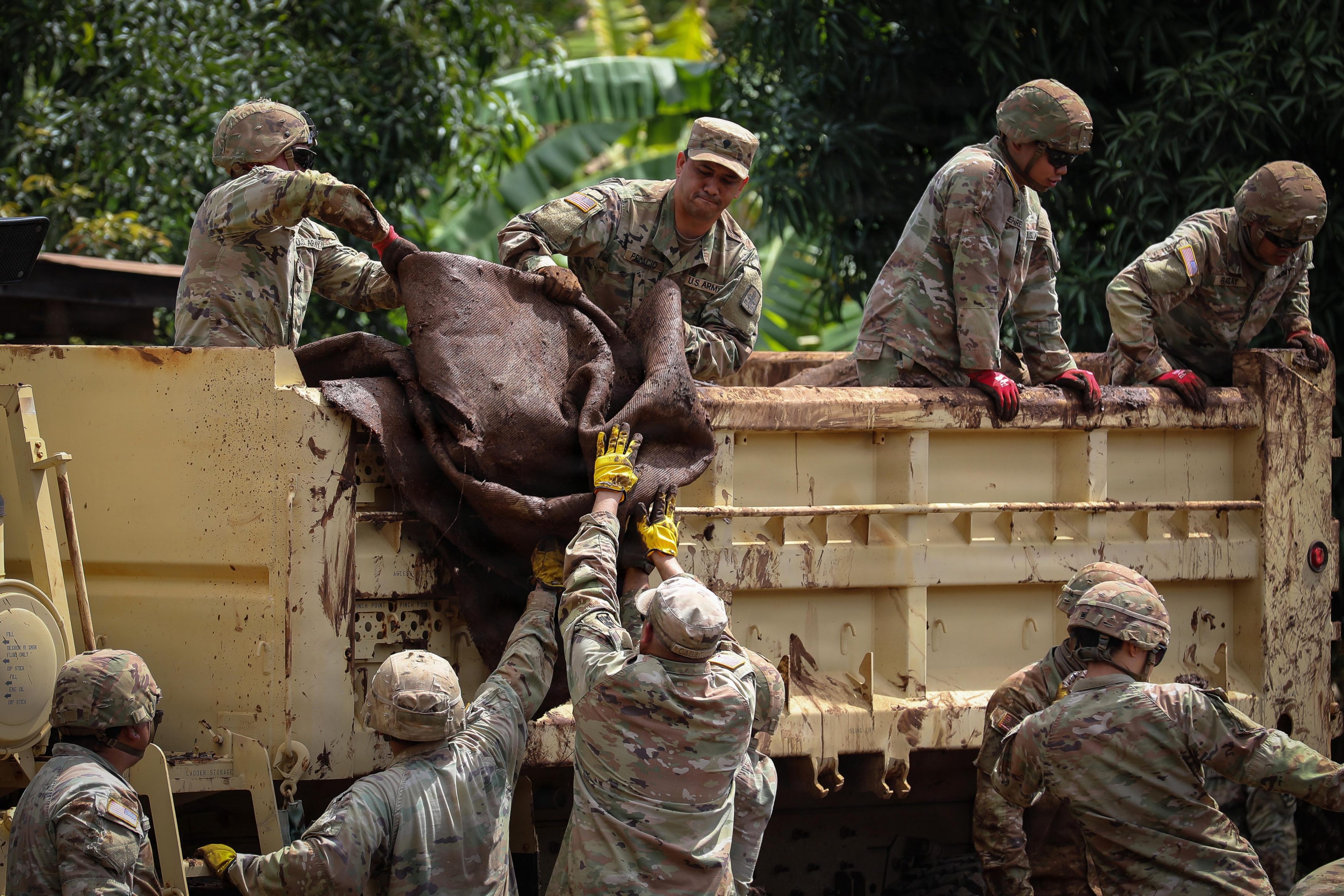
Over the last two decades, a number of expert panels, commissions and studies have called for reforms to the duty status system. More recently, the issue of different benefits for guardsmen got attention in March when President Donald Trump said during a visit to Memphis, Tennessee, that some National Guardsmen deployed to U.S. cities would receive the deployment pay and benefits like troops on active duty.
In an effort to simplify the system, Congress is proposing the Duty Status Reform Act. The bill would cut the more than 30 duty statuses that National Guard or Reserve troops can be put on, like Title 10, Title 32, and State Active Duty, down to four broad categories.
“As the Guard’s mission has evolved, the duty status system has become increasingly complex. This legislation will simplify the structure and strengthen the Guard’s ability to carry out its missions by standardizing pay and benefits,” Sen. Jerry Moran (R-Kan.) said in a release about the Senate bill introduced Wednesday. The House version was introduced in January.
If the bill becomes law, it would slash dozens of duty statuses and establish four broad categories of orders. They are:
- Category I Active duty: For war, national emergency, disaster response, cyber/weapons of mass destruction, presidential call-ups and pre-planned missions;
- Category II Active duty: disciplinary jurisdiction, missing status, required active-duty training, active Guard and Reserve functions;
- Category III Reserve Component: annual training, musters, and drills;
- Category III Remote Assignments: online learning and non-supervised duties.
The bill would standardize pay and benefits, and give more clarity on duties, mission eligibility requirements and transitions between orders, according to a Senate release.
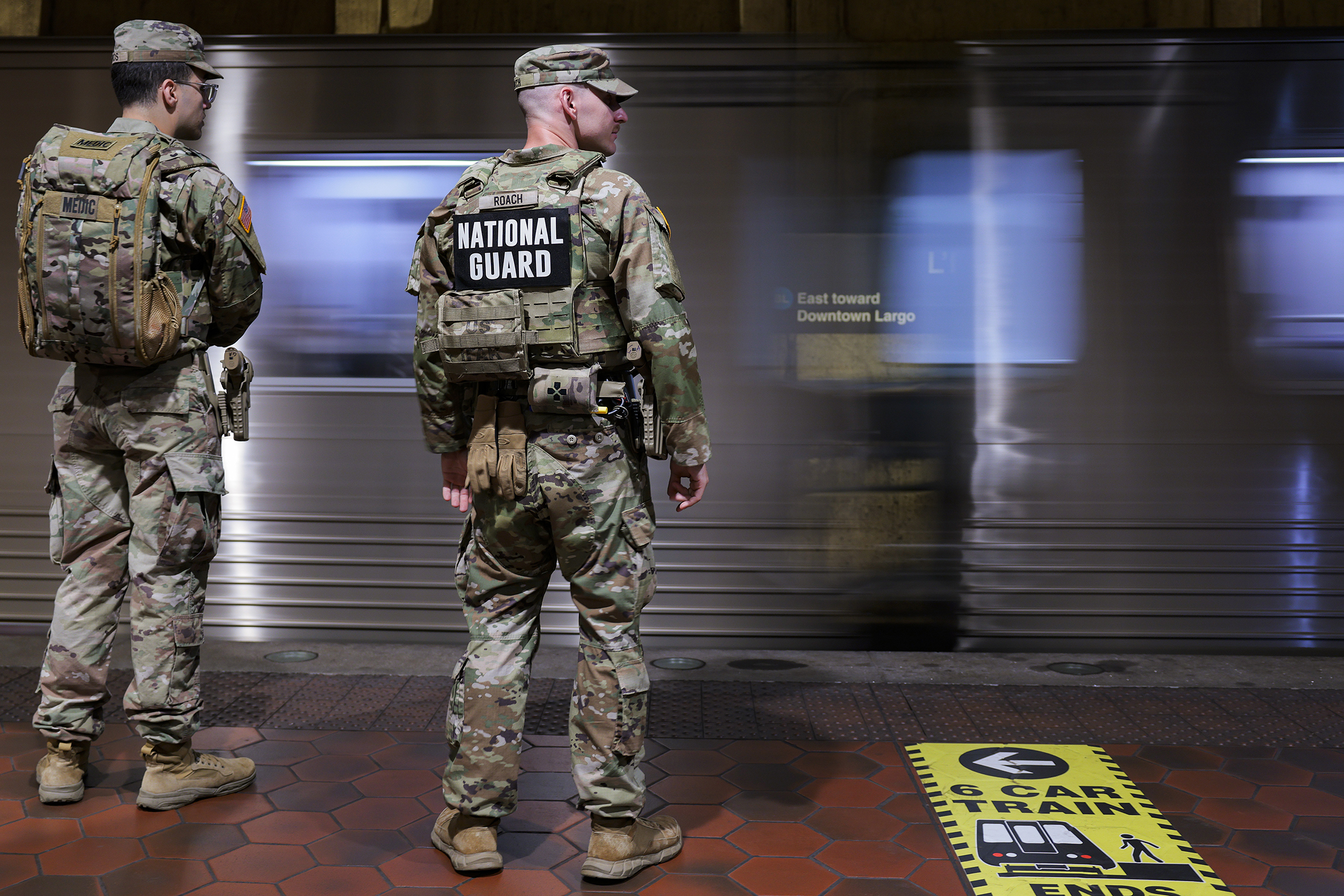
Plamann said the biggest challenge to getting reforms passed has been “the sheer size of this,” adding that an overhaul would mean amending hundreds of laws and policies in financial management, joint travel and other federal regulations.
“The can of worms that this is, is so massive it really has stagnated progress,” she added.
One issue that advocates have highlighted is that reservists and guardsmen are sometimes given different orders, even if they are assigned to the same mission. In 2020, during the COVID-19 pandemic response in New York, Navy reservists on the USNS Comfort were on Title 10 status, but Army National Guard soldiers at the Javits Center were on Title 32 status.
According to an August 2025 RAND Corporation report, the current system creates confusion for both commanders and their troops. In some cases, the “inflexibility” of the process prevents leaders from employing the Guard or Reserve, or deters troops from volunteering for assignments.
For example, if National Guardsmen are called up for orders that are 30 days or less, part-time troops get limited health insurance coverage. After 31 days, they and their entire family qualify for coverage on par with active duty troops.
“Picture a Guardsman or reservist called up for back-to-back 29-day stretches: they are working nearly continuously, but because each set of orders stays just under the line, they don’t get stable health coverage,” said Matt Schwartzman, a policy director for the Reserve Organization of America, said that the loopholes built into the system. “Not to mention the disruptions when certain health care coverage lapses because the order terminates. Same soldier, same work, completely different protection, decided entirely by where someone drew the date.”
He added that “the system rewards how orders are written over the duty actually performed, and members can serve almost full-time yet keep falling through the cracks on housing and health care. That’s the core problem.”

RAND experts also reported that the current structure also affects military families. In March 2015, a helicopter crashed in the Gulf of Mexico, killing four Guard members and seven Marines. The Guard troops were on “inactive duty training,” and so their families received less in survivor payments than the families of the fallen Marines. Experts at the research group wrote that the 2017 annual defense bill corrected some inequities for survivor payments, but noted that other payment discrepancies remain for “inactive-duty training” deaths.
The bill adds two new categories, like cyber response and remote orders, which advocates said are more useful for today’s reservists.
Plamann, who serves in the Maryland National Guard as a Major and company commander, said her troops are often asked to do remote training between drills, but it’s not so clear-cut on the administrative side for how they should be categorized.
“There’s so much that we do in between drills,” she said. “Some units are better than others in getting the individual pay or retirement points for all the remote requirements that we have. But this will be nice to actually have something to point to in a structure that allows us to get some sort of compensation for that.”
Loading comments…
Comments couldn’t be loaded. Please refresh the page.