

For two months, Congress has failed to fund the Department of Homeland Security, which oversees the Coast Guard. The resulting partial government shutdown has caused fear and uncertainty for many Coast Guardsmen and their families.
Adm. Kevin Lunday, the commandant of the Coast Guard, warned Congress during an April 16 hearing that the service has been unable to pay 5,000 utility bills due to the shutdown. He added that more than 100 providers have “threatened to cut off electricity and water to our Coast Guard stations and air stations.”
Since then, the Senate has advanced a budget plan that could help lead to an end to the shutdown. However, it remains unclear how long Congress might take to fully fund the Department of Homeland Security, which the Coast Guard falls under.
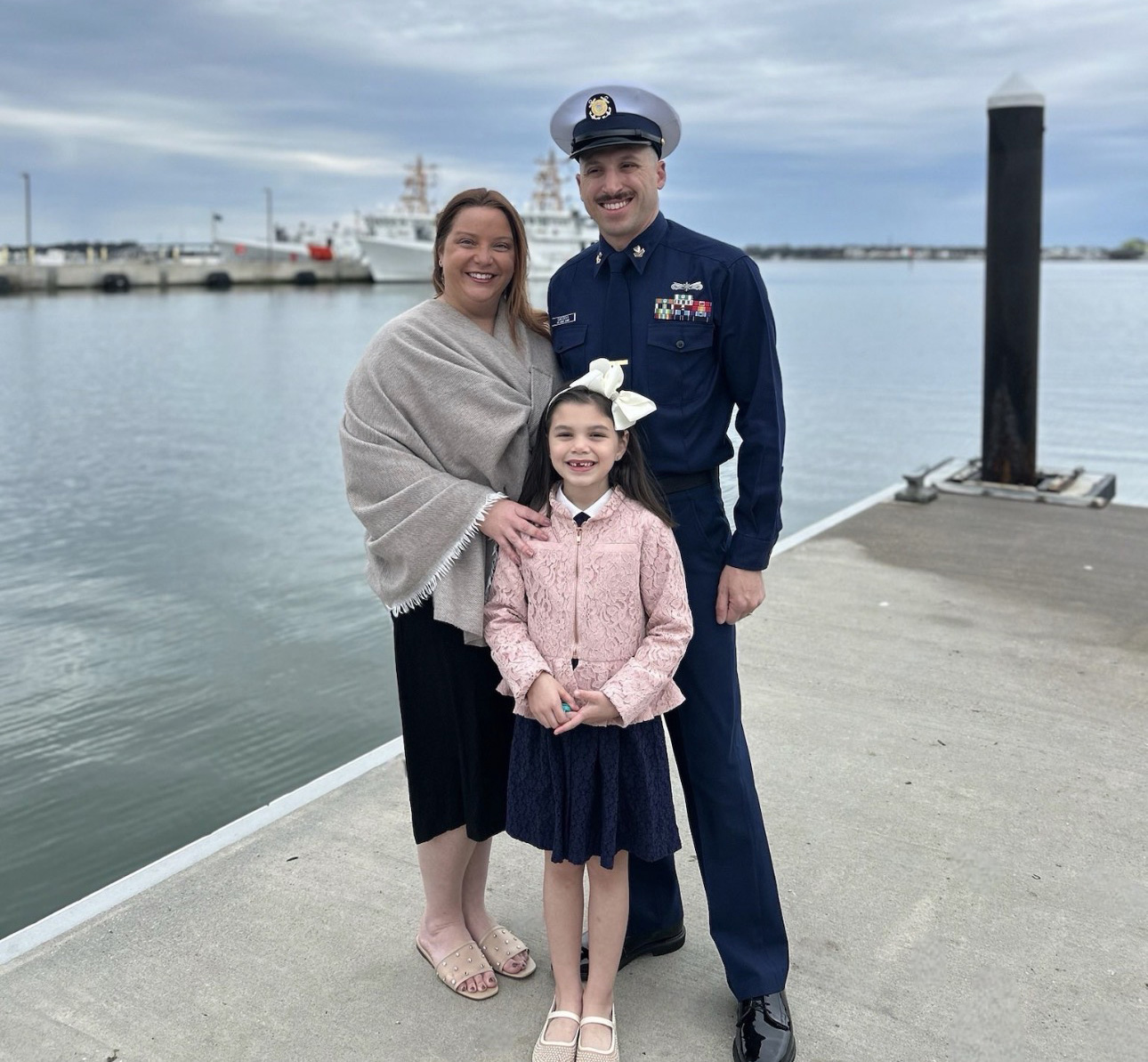
Task & Purpose spoke with four Coast Guard spouses, who said their families have faced financial hardships and other difficulties as a result of the shutdown. Two of the spouses asked to be identified by their first name, and a third requested to be unnamed.
“I think by far and large, the largest pain point is just feeling forgotten,” said Alena, a Coast Guard spouse. “Nobody’s talking about how our families are still in a shutdown and pay is uncertain, and that’s really hard.”
Fear of the next paycheck not coming
Although active-duty Coast Guardsmen have been paid since the funding lapse began on Feb. 14, they and their families are concerned about whether the service will continue to pay its personnel as the shutdown drags on, Alena told Task & Purpose.
She noted that the Coast Guard’s civilian employees went more than six weeks without getting a paycheck.
“We really would like to sign our children up for sports camp, but can we afford the fees if my husband doesn’t get his paycheck?” Alena told Task & Purpose. My daughter needs braces. Can we make that decision? We haven’t missed pay in 2026, but it’s always that ‘what if’ question, and that uncertainty just weighs so heavily, particularly as we’re looking at going into [permanent change of station] season.”

She said that part of this uncertainty stems from a lack of communication from the Coast Guard’s leadership about whether pay will continue during the shutdown, adding, “The only information that we have received is when we’re refreshing our bank apps to see: did it come today?”
In response to a question about military families’ concerns, Lunday provided Task & Purpose with the following statement: “The American people depend on the Coast Guard every day. They are furious that the Coast Guard, as a branch of the armed forces defending the nation, has not been funded for 69 days and our personnel and their families are worried about whether they’ll be paid next month. We continue to serve the American people by saving lives, securing the border from threats, facilitating commerce, and responding to crises. This lapse is needlessly harming our people and degrading Service readiness. We need Congress to fund [the Department of Homeland Security] and the Coast Guard now.”
Out-of-pocket expenses
Even though active-duty Coast Guardsmen have been paid during the shutdown, they are having to pay for things that would normally be covered, like tuition and moving expenses, two spouses told Task & Purpose
Brittany, the wife of an active-duty Coast Guardsman, said that her husband is taking graduate school classes for a degree he needs in order to be promoted, but his Tuition Assistance — an education benefit for military personnel — was suddenly cut off as a result of the shutdown.
Her husband has paid $1,400 for the classes, and he will have to pay the same amount soon to continue attending graduate school, Brittany told Task & Purpose.
She said her family is also scheduled to move in June, but the Coast Guard has told them that the service cannot provide them with money in advance to cover the majority of moving expenses. While they can reimburse those costs, it could take up to a year before they are reimbursed, she said, adding that during their last move, they spent about $3,000 on hotels, gas, and other expenses.
Top Stories This Week
The added costs have cut into their family’s budget for groceries and made it difficult to afford childcare, meaning that Brittany has been taking care of her three children while trying to attend college, she said. The family also faces the prospect of having to take money from their savings to pay for their next move, especially if any emergencies arise.
“There’s no security left for us,” Brittany said. “It means not being able to buy a house one day. It means education having to be put on pause, which is ultimately my future career and more stability for the family.”
Another Coast Guard spouse, who asked not to be named, said they also face the possibility of spending thousands of dollars out of pocket for an upcoming move, in part because the military housing at the base they are going to won’t be available until nearly two months after they arrive.
That means they will likely have to spend money for lodging and storing household goods and then hope the Coast Guard will reimburse those expenses, they said.
Rear Adm. Chuck Fosse, the Coast Guard’s deputy commandant for personnel, acknowledged that the government shutdown has limited the service’s ability to provide advances for moving expenses. He added that Coast Guard personnel will be reimbursed for out-of-pocket expenses once Congress fully funds the service.
“We recognize the financial strain this places on our members and their families. The Coast Guard is working to maximize available resources and prioritize support, particularly for junior personnel and those with the greatest needs,” Fosse said in a statement to Task & Purpose.
To help ease the burden on personnel, the Coast Guard has increased the limits on spending for Government Travel Charge Cards, which can be used to expense moving costs, Fosse said.
‘Heartbreaking’ effects for Coast Guard civilian employees
Coming right after last year’s government shutdown, the current funding lapse has hit the Coast Guard’s roughly 8,900 civilians especially hard. They went more than six weeks without pay until President Donald Trump signed an April 3 memo directing that all Department of Homeland Security employees receive pay and benefits during the shutdown.
Many of those civilians had worked without pay until Trump issued the memo, Lunday told Congress during his April 16 testimony.
“Our people and their families have been struggling with the severe hardship and uncertainty over their pay,” Lunday said.
Coast Guard Mutual Assistance, the service’s official aid society, has received requests for more than $2.3 million in assistance from more than 700 civilian employees who went without pay, according to the group. So far, the aid society has provided Coast Guard civilian employees with more than $1.7 million in support to help families cover costs for food, housing, transportation, and other needs.
The shutdown’s effects on Coast Guard civilian employees have been “heartbreaking’ to watch, said Donnie Brzuska, a spokesman for Coast Guard Mutual Assistance.
“We had a situation where a woman was days away from being evicted from her home,” Brzuska told Task & Purpose. “We had a situation where a civilian employee who works refurbishing helicopters for our Coasties was working full time during the day, working part time at night, and still couldn’t afford to put food on the table, was going to food pantries. So this has kind of changed the financial behaviors of the civilian workforce, and it will have implications for years to come.”
Beyond the financial costs, the shutdown has taken a tremendous mental toll on all members of the Coast Guard and their families, said Andrea Cacciola, whose husband is serving in the Coast Guard.
“We have these men and women that are showing up to work every day, right, protecting our country,” Cacciola told Task & Purpose. “The constant weight of the uncertainty and wondering if their families are going to be okay, that’s, I think, the hardest thing. They’re still serving; they’re still standing the watch, answering the call, and I think we all deserve that stability.”
Loading comments…
Comments couldn’t be loaded. Please refresh the page.