
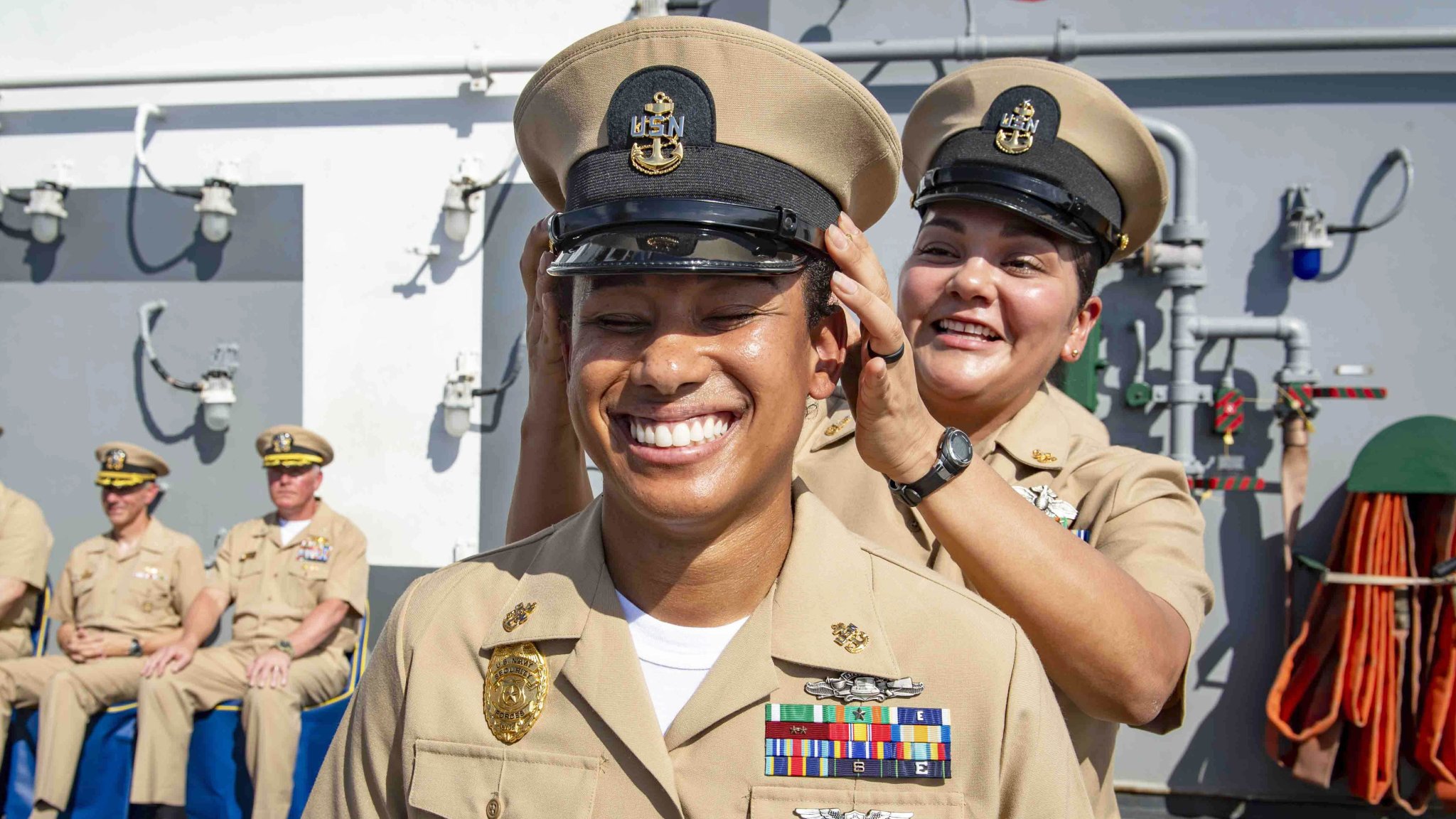
The Navy is planning a major change in how enlisted sailors are evaluated for promotion, directing leaders to consider how good a sailor is at technical job skills over their community work or involvement in organizations like the Chief Petty Officer Mess.
To move up in the ranks, sailors are currently assessed not only by their job skills, but also for volunteer work and for “collateral duties” outside their primary rate. Membership in the First Class or Chief Petty Officer Mess is also considered for more senior enlisted sailors.
An April 13 memo from the Chief of Navy Personnel office said those criteria would now count for less in promotions. “While valuable, these activities do not directly contribute to a sailor’s technical mastery of their specific rate,” the memo said, which circulated this week on social media and was confirmed by Task & Purpose.
By 2027, the memo said, enlisted promotions will focus primarily on how well sailors perform their on-the-job duties, whether their rate be in aviation, air traffic control, electronics, or special warfare. The memo is in line with a push by Master Chief Petty Officer John Perryman to emphasize “technical mastery” among enlisted sailors. Chief of Naval Operations Adm. Daryl Caudle has also said he wants sailors to focus on “deep rating knowledge.”
“This initiative is a direct investment in that principle. While collateral duties and community involvement remain valuable for leadership development and unit success, this adjustment ensures our promotion system is squarely focused on rewarding and advancing the most technically proficient sailors who give our Navy its critical edge, ensuring we can dominate in any conflict,” Navy Lt. Rebecca Moore, a spokesperson for the Chief of Naval Personnel, told Task & Purpose.
Top Stories This Week
Hendrick Simoes, a retired senior chief petty officer, said the memo shows the Navy is trying to shift the culture away from promoting sailors for “all these things that don’t actually have anything to do with being technical experts in their career field.”
While the changes will impact the Navy’s entire enlisted force, it’ll be most pertinent for promotions to Chief Petty Officer, which is the first time that sailors are evaluated by a promotion board, Simoes said.
“At the selection boards, instead of focusing on the sailors that are technical experts in their field, what tends to happen a lot is these evals selection boards start to look at: this sailor is good in his field, but what collateral duties are they doing? What other associations are they involved with? Are they involved in the First Class Petty Officer Association? Are they the safety officer?” Simoes said.
Collateral duties include being part of a ship’s safety committee, overseeing unit physical fitness tests, or managing drug and alcohol programs or sexual assault prevention and response training.
Simoes said that there are only so many spots for each promotion category, so using other factors “has this downstream effect.”
The changes will not affect sailors this year. According to the memo, the new standards will be used for enlisted selection boards beginning in fiscal year 2028, which begins Oct. 1, 2027.
The Navy may also update the formal training documents that lay out the steps that all Navy rates, or job specialties, must follow to move up in their career. Those documents, the memo said, will be scrubbed of “all verbiage that does not directly support an enlisted rating’s Occupational Standards from the Enlisted Career Paths.”
For instance, current documents would advise an E-6 cryptologic technician to be choosy with their collateral duties. “Take a good, hard look at the type of collateral duties you are assigned,” their career guide states. “Take the tough command duties that provide the most involvement in the command as a whole and that have direct sailor support.”
Loading comments…
Comments couldn’t be loaded. Please refresh the page.