
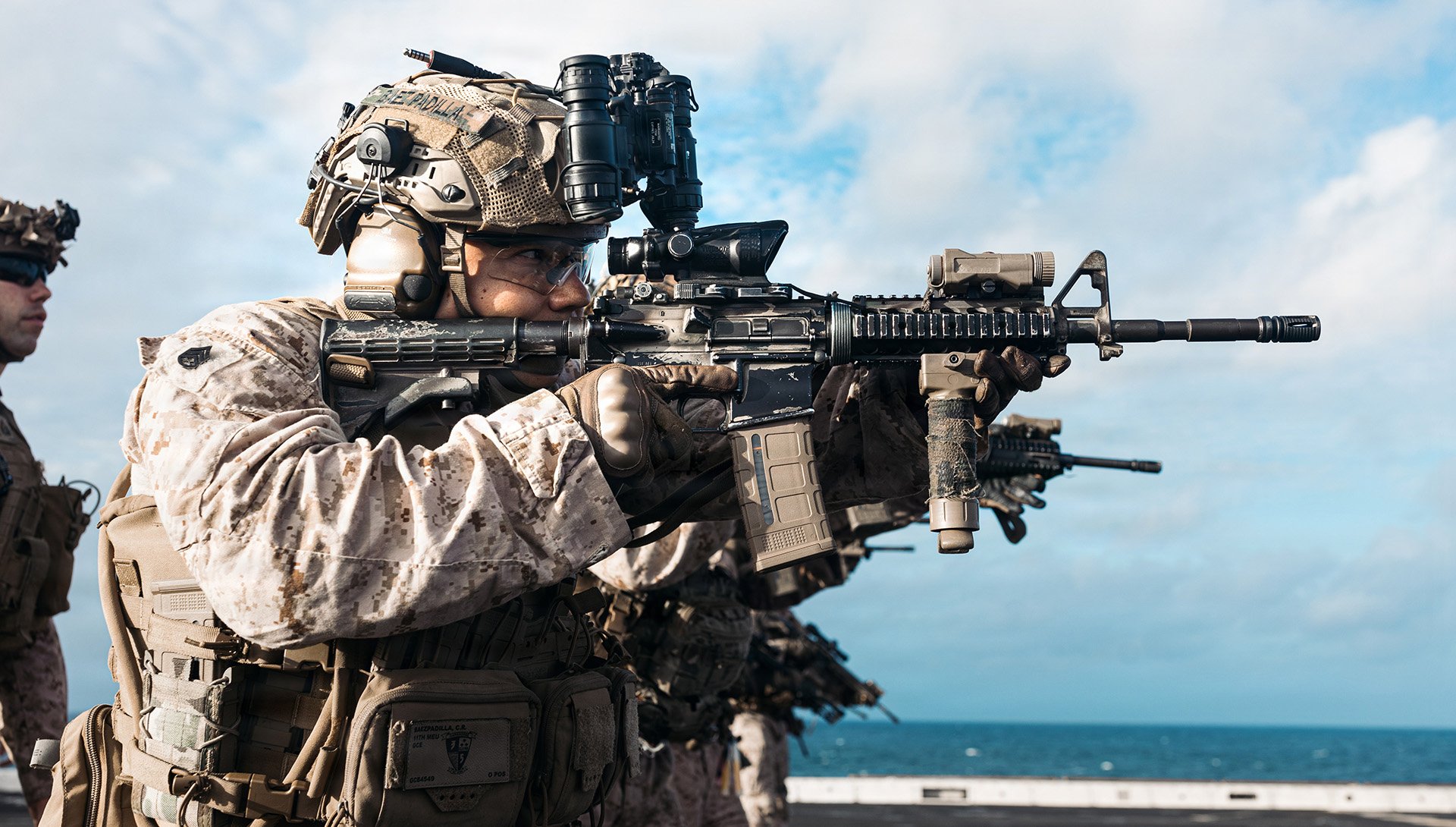
Marines will get a new type of ammunition that can be fired from their M4 carbines and M27 Infantry Automatic Rifles and is designed to help them shoot down small drones, a Marine Corps acquisition spokesperson said.
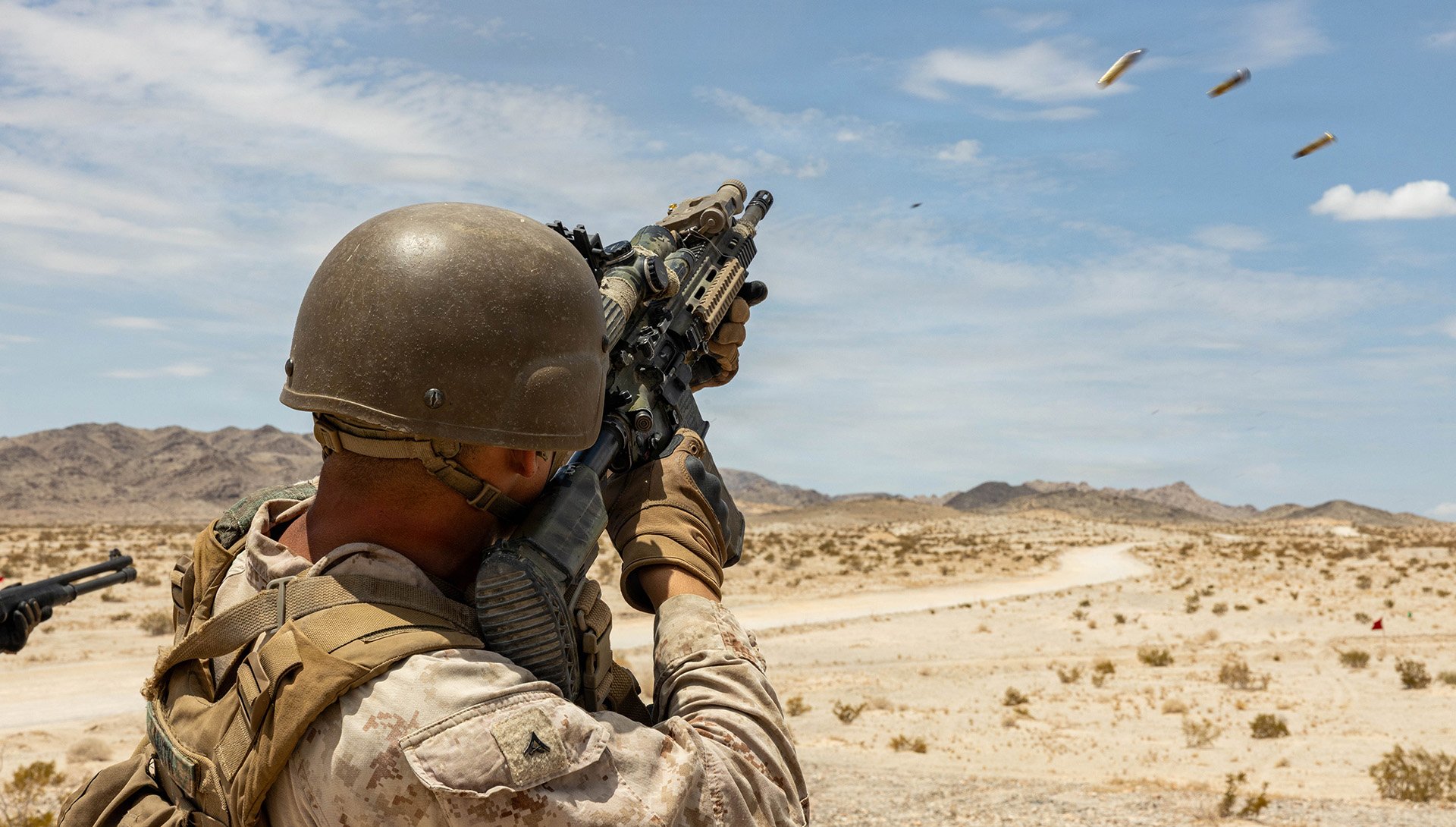
The Drone Round 5.56 L Variant separates into five distinct projectiles after being fired to provide shooters with a better chance of hitting small drones, according to Drone Round, the company that makes the ammunition.
So far, the Marine Corps has bought 400,000 of the rounds, and it intends to purchase another 1 million cartridges in fiscal year 2027, which begins on Oct. 1, the spokesperson told Task & Purpose.
The Marines have begun delivering the cartridges to ammunition supply points, said the spokesperson, who added that all the deliveries are expected to be completed in September.
Marine Expeditionary Force commanders will decide which units will receive the anti-drone round first, the spokesperson said.
The L Variant meets the Marine Corps’ requirement for a commercially available option that can disable or destroy smaller reconnaissance and attack drones, said the spokesperson, who added that the Marines tested the anti-drone round in several user evaluations before fielding the ammunition.
The War Zone reported in June that the Marine Corps had announced that it intended to buy the anti-drone round. Separately, soldiers with the 18th Airborne Corps tested the ammunition against small drones in April at Fort Bragg, North Carolina.
Top Stories This Week
The L variant is a 5.56X46mm NATO round that is effective up to 100 meters, said Kirk Fernandez, the CEO of Drone Round. He added that the company plans to offer a 7.62mm variant of the round soon.
The round is designed to be fired from standard 5.56mm NATO weapons without requiring any modifications or specialized equipment, Fernandez told Task & Purpose. It loads into standard magazines and belt-fed systems and is also suppressor-compatible.
The ammunition was built specifically as an anti-drone cartridge that is meant to give shooters “a last line of defense against small drones using the rifle already in their hands,” Fernandez said. As such, it works against drones controlled by fiber optic cables that cannot be jammed.
“The projectiles stay together as they exit the barrel and disperse a few meters downrange,” Fernandez said. “This ensures the round is fully suppressor-safe while still opening into an effective pattern against aerial targets.”
The Marine Corps has launched a sweeping effort to counter the threat of drones, including establishing an attack drone team and other organizations to test new technologies and develop training to protect Marines on the battlefield. Corps officials have also fielded new weapons systems, such as the SMASH 2000L advanced fire control system, that Marines can use against small drones in combat.
Loading comments…
Comments couldn’t be loaded. Please refresh the page.