
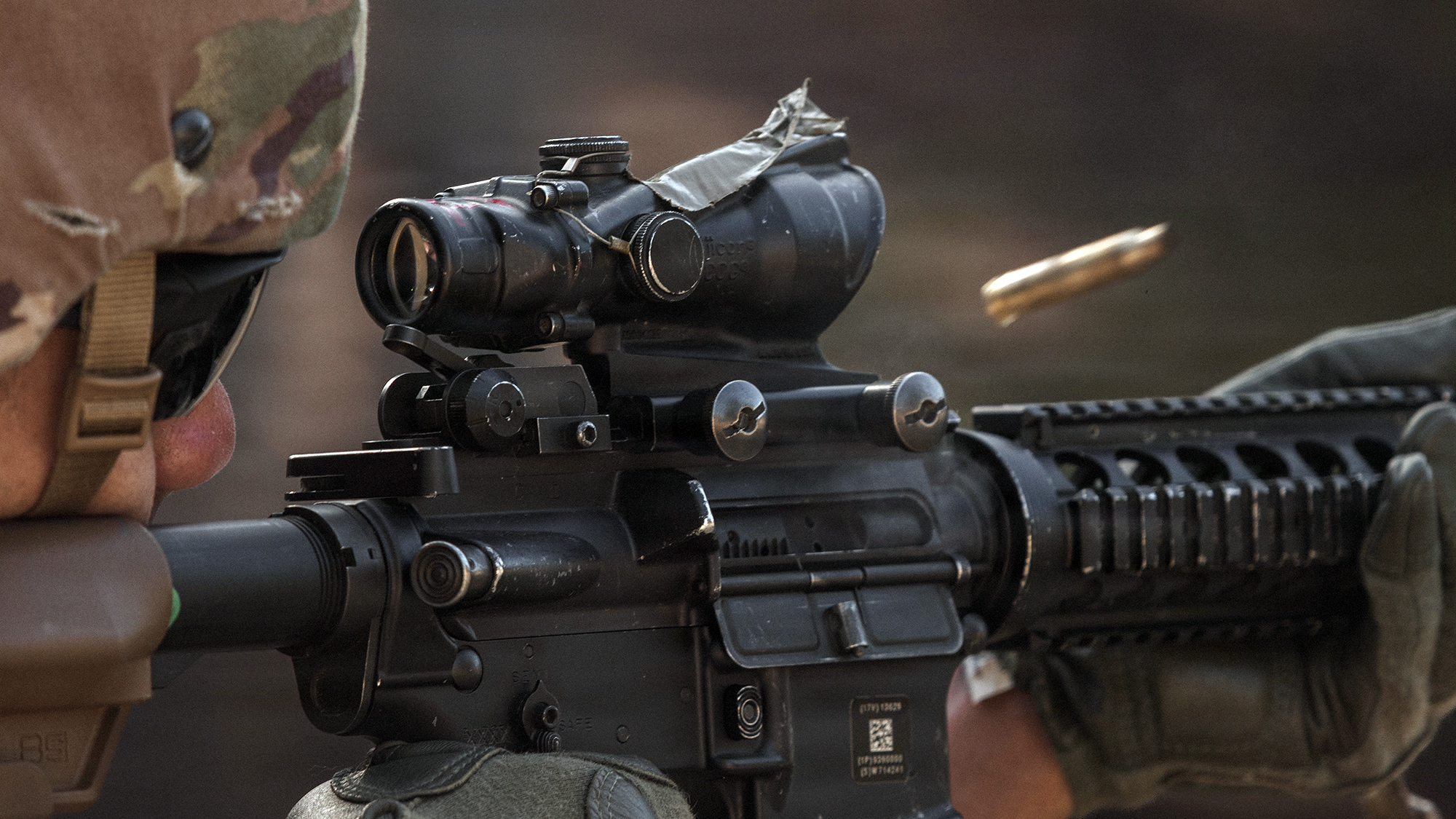
Soldiers from the Army’s XVIII Airborne Corps got a chance to shoot down several First Person View drones with ammunition specifically made to deal with the small unmanned aircraft systems.
The round’s use was first reported by Defence Blog, which noted that soldiers were photographed last week at the Oak Grove Training Center near Fort Bragg, North Carolina, testing out the 5.56mm L-variant made by Drone Round.
The training was meant to “enhance readiness” for taking on small uncrewed aerial systems at close range. The test included firing at small quadcopters, like the kind increasingly used by the U.S. military. In the photos posted to the Defense Visual Information Distribution Service, at least one was blown apart by the soldiers, billowing smoke after crashing. According to the manufacturer, the round gives troops the ability to fight drones without any modifications to their weapons, giving small units the ability to take on swarms of drones — a threat that has proven difficult for ground forces to defend against.
Each round fires out of the rifle like a normal 5.56mm munition, but mid-flight, it breaks into multiple pieces, like buckshot. This can make it easier for infantry forces to take out small, fast-moving drones.
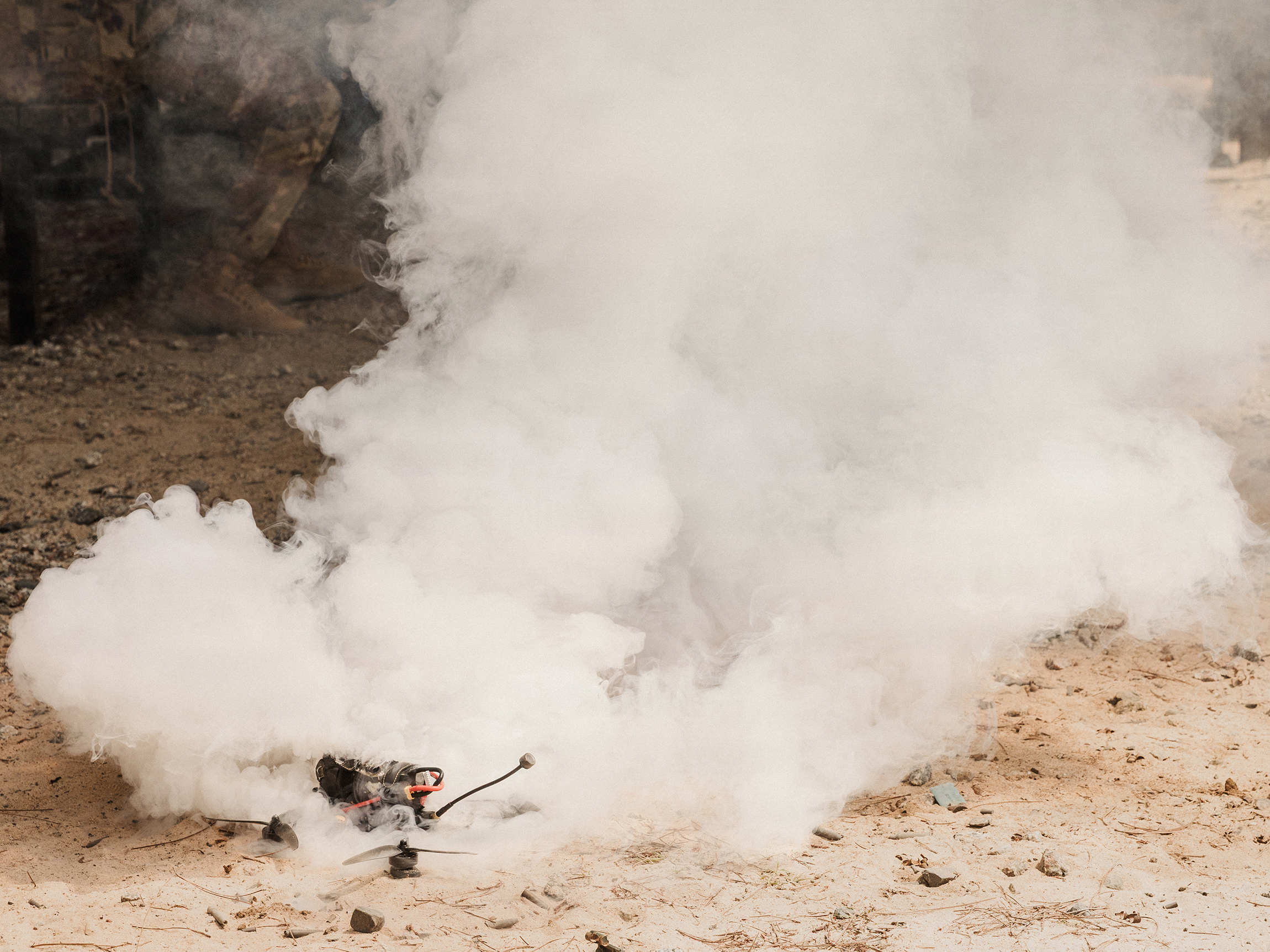
“The 5.56mm L-variant Drone Round serves as the last line of defense in a layered protection system against [small unmanned aircraft systems],” the Army wrote in its captions for the photos.
This isn’t the first anti-drone ammunition that’s been tested, although the concept itself is relatively new. It spun out of the rapid development of defensive tactics and strategies against drones in the Russia-Ukraine war. Where troops on both sides initially tried slapped-together defenses, such as an anti-air turret made out of several Kalashnikovs, they evolved into specially made weapons, including anti-drone rounds fielded by Ukrainian troops. The designs have spread, with Russia also starting to make its own variant for 5.45mm ammunition. Now the United States is looking into it.
Although jamming systems can take out drones, certain types are not impacted by electromagnetic disruptions, but can be destroyed by pure kinetic force. Shotguns, given their spread, have proven somewhat effective against drone swarms, but are often limited by range. The kinds of rounds tested recently at Oak Grove Training Center, which can be fired from any weapon that can carry that caliber, including M4s, could give soldiers the ability to be accurate at greater distances.
The Army, like several other parts of the armed forces, is working to integrate drones into its tactics, for both offense and defense. The multi-service drone task force, JIATF-401, has been testing out numerous drone defenses. Those have ranged from ground-based lasers, recently deployed to the southern border, to new ammunition for Apache helicopters that operate similarly to the rounds used by the XVIII Airborne Corps.
Loading comments…
Comments couldn’t be loaded. Please refresh the page.