
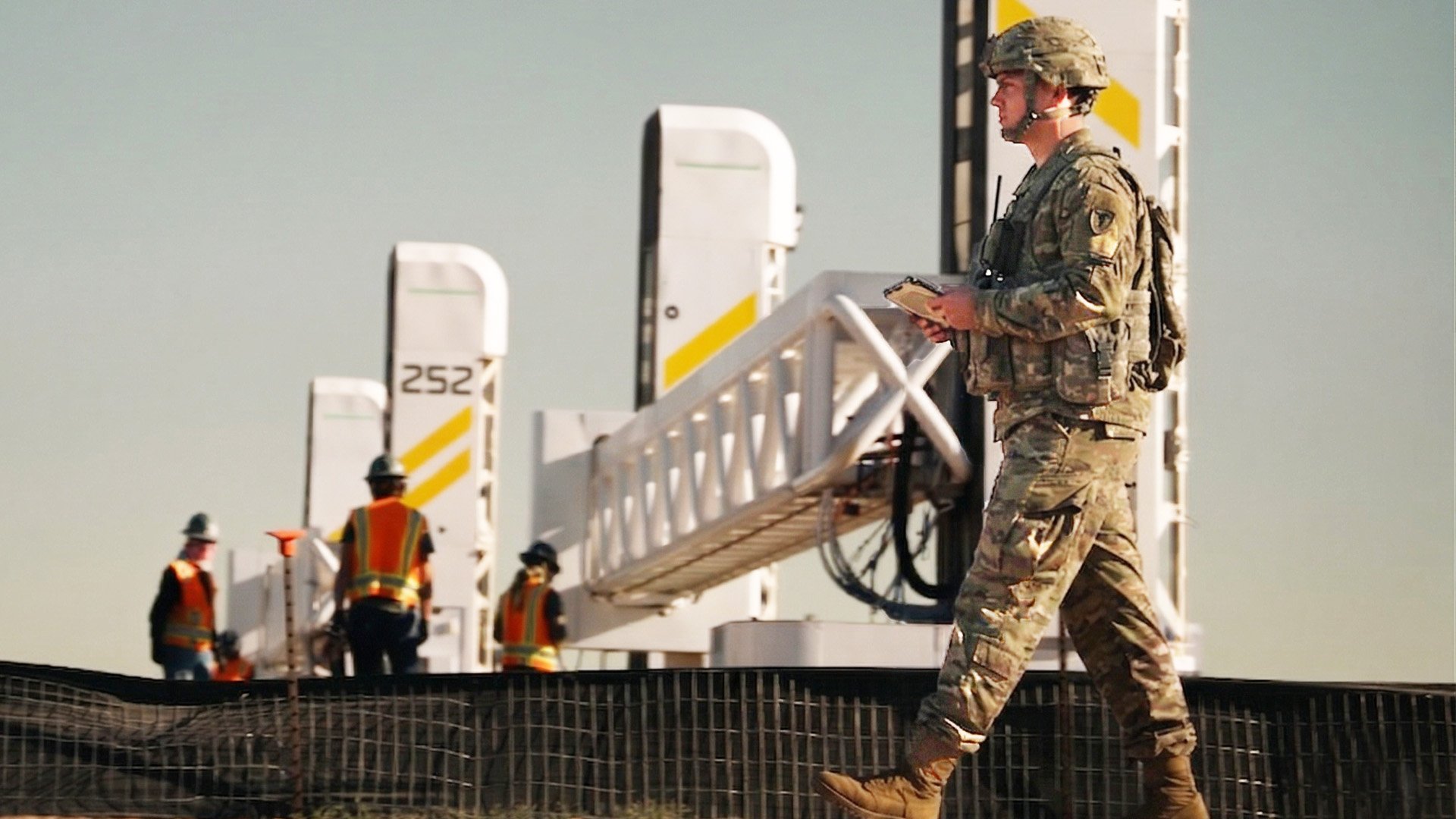
Soldiers from the 101st Airborne Division headed to duty on the U.S.-Mexico border will be among the first to live in new 3D-printed barracks unveiled this week at an Army base in Texas.
Two new 3D-printed barracks buildings at Fort Bliss, Texas, which opened on Tuesday, are built for transient soldiers who are not permanently assigned to the base, Army officials said in a release. The service signed a $62.8 million contract with construction company ICON to build 10 barracks that can hold 560 troops.
Army officials said some of the first residents will include soldiers from the 101st Airborne Division’s 1st Mobile Brigade “Bastogne” unit from Fort Campbell, Kentucky. Their deployment to the southern border was announced in June.
“In the coming weeks, when the next unit finishes a demanding shift on the border, they won’t have to drive an hour into the desert,” Maj. Gen. Curtis Taylor, the commanding general of Fort Bliss, said in the release. “Instead, they will return here, to permanent, energy-resilient, world-class housing just steps away from gyms, dining facilities and recreation areas.”
In a video posted to the base’s social media channels, Fort Bliss Garrison Commander Col. Michael Soyka toured the new barracks, which features two rows of bunk beds arranged in an open bay, similar to the layout at many service bootcamps for new recruits. Top and bottom bunk beds get their own power outlet, which Soyka noted was a frustration for soldiers who previously only had to split one with a bunkmate. Lockers separate beds, adding a bit more privacy between neighboring bunks.
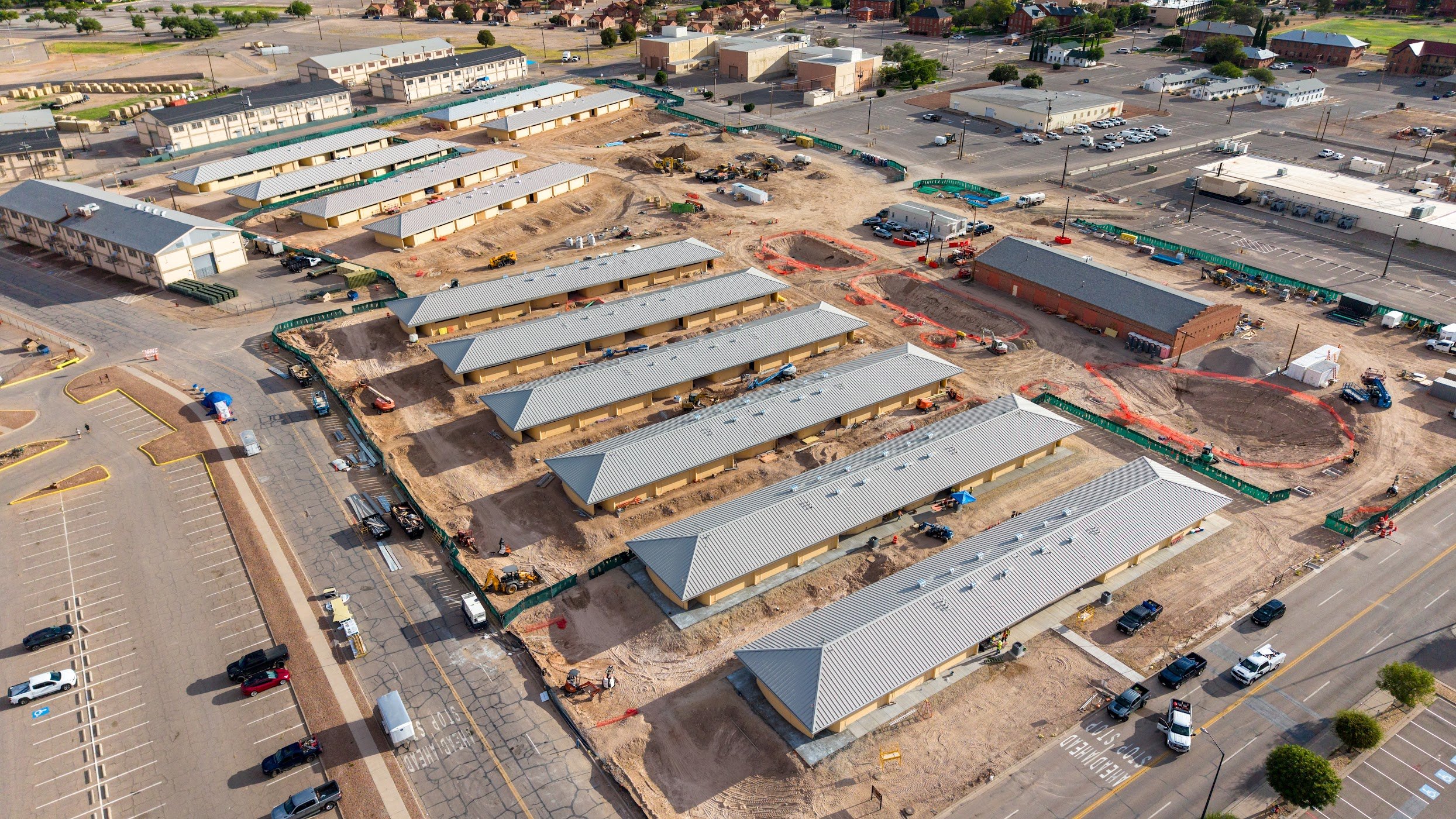
The barracks also increased the number of washers and dryers after earlier rotations found they needed more than other barracks provided, Soyka said.
Along with typical showers, the barracks have a smaller shower stall, similar in size to a dog shower, for soldiers to wash off their gear.
“When you’re out there, you just get hot, you get sweaty,” Soyka said. “We actually added this so that soldiers can be able to wash their gear and be able to get ready for the next day.”
The first two buildings officially opened Tuesday, and officials said the printing phase for all 10 buildings took 58 days. The full project is expected to be completed in the fall, according to the Army release.
In 2025, Fort Bliss opened three other 3D-printed buildings, also built by ICON, to house pre- and post-mobilization troops. The Austin-based company uses a five-ton, 16-by-47-foot-wide Vulcan printer to build barracks with a concrete-based material called lavacrete, which the company said can withstand Texas humidity and temperature.
Loading comments…
Comments couldn’t be loaded. Please refresh the page.