
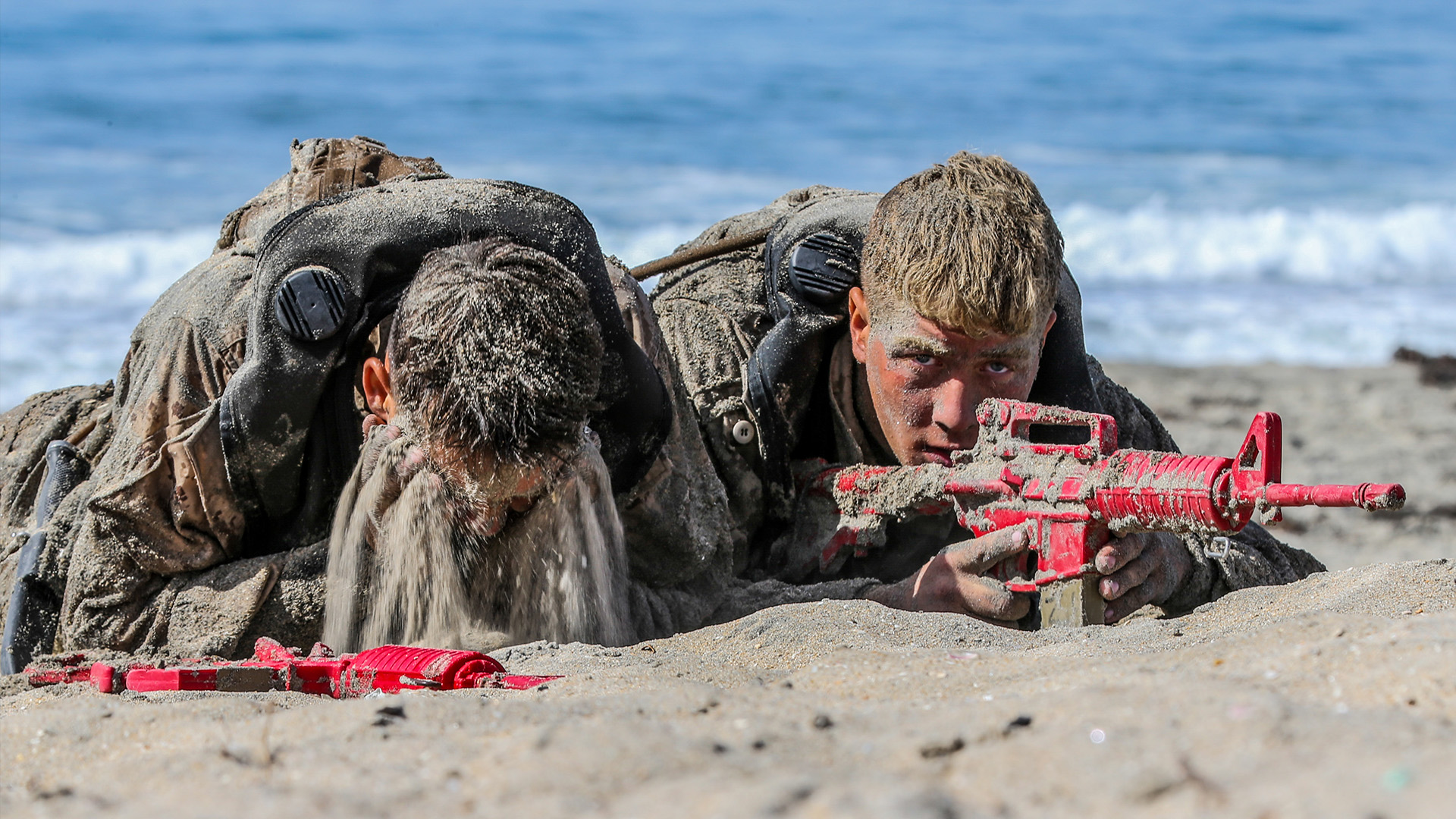
The Marine Corps is rebooting how it trains Reconnaissance Marines, with an overhaul of the program’s notoriously tough training curriculum.
Marines who wish to serve as part of a scout or reconnaissance team will no longer go to a 12-week Basic Recon Course, instead will need to complete two new courses: the Ground Reconnaissance Course and the Amphibious Reconnaissance Course. The first now serves as the initial part of the training curriculum, and its first class reported on Monday, April 27.
The new initial course replacing it will cover land navigation, water survival, surveillance and supporting arms, among other topics, with lectures and hands-on training. According to Marine Corps Training Command, the new course “formalizes scout training” to provide enhanced capabilities for Light Armored Reconnaissance and infantry battalions.
Marine officials said more information on the two new schools, like the length of each course, would be released next week.
Top Stories This Week
The Marine Corps has long had a shortage of Reconnaissance Marines because the training is so difficult, said retired Marine Lt. Col. Worth Parker, a former ground reconnaissance and special operations officer. The swimming and other water-related activities in particular, he said, trip up many candidates.
“I see nothing but goodness as far as providing a more capable, competent scouting capability at the infantry battalion as well as offering a potential source of ‘late bloomers’ who become more capable of getting over the traditional hurdles to success [in the training], those predominantly being aquatic skills,” Parker said.
Additionally, the recon training curriculum is ditching Marine Combat Training as a prerequisite. Instead, Marines must now go through the Infantry Rifleman Course before trying out for Recon. According to the command’s news release, this shift will reduce wait times for training and better prepare them for the Marine Reconnaissance training program.
The Amphibious Reconnaissance Course is meant to build on both of the previous courses. It will, as the name suggests, center around amphibious missions, including training in aquatic areas, as well as the use of sensors and communications tools in those environments. Marines who complete that course will get the 0321 Reconnaissance Marine military occupation specialty.
Previously, the Basic Recon Course put Marines through both land and amphibious recon procedures, training them on individual operations as well as joint missions as a team. Training included land navigation as well as operations in the open ocean. On April 3, 37 Marines, including Medal of Honor recipient Sgt. Dakota Meyer, were among the final to finish the Basic Reconnaissance Course before the curriculum overhaul, according to Sgt. Maj. of the Marine Corps Carlos Ruiz.
After graduating from the two initial schools, Reconnaissance Marines will move on to the Marine Corps Combatant Diver school, the Army’s Basic Airborne Course school, freefall parachute training, and Survival, Evasion, Resistance, and Escape school, Parker told Task & Purpose.
Loading comments…
Comments couldn’t be loaded. Please refresh the page.