
After decades of flying the AV-8B Harrier II and the F/A-18 Hornet, the Marine Corps is going all in on the F-35.
Besides being stealthy, the jet has far more advanced sensing and data-sharing tools than anything the Marine Corps has flown in the past, an asset that service officials say will be vital on future battlefields.
But the F-35 is as complicated as it is capable, and bringing a jet that advanced into the demolition derby of expeditionary warfare requires a shift in how the Marine Corps thinks about aviation logistics.
Ride the Lightning
In the Air Force, fighter aircraft are a means of securing the skies, and in the Navy, they are a means of protecting the fleet. But in the Marine Corps, fighters (and everything else) exist to help the grunts on the ground through reconnaissance, strike missions and close air support.
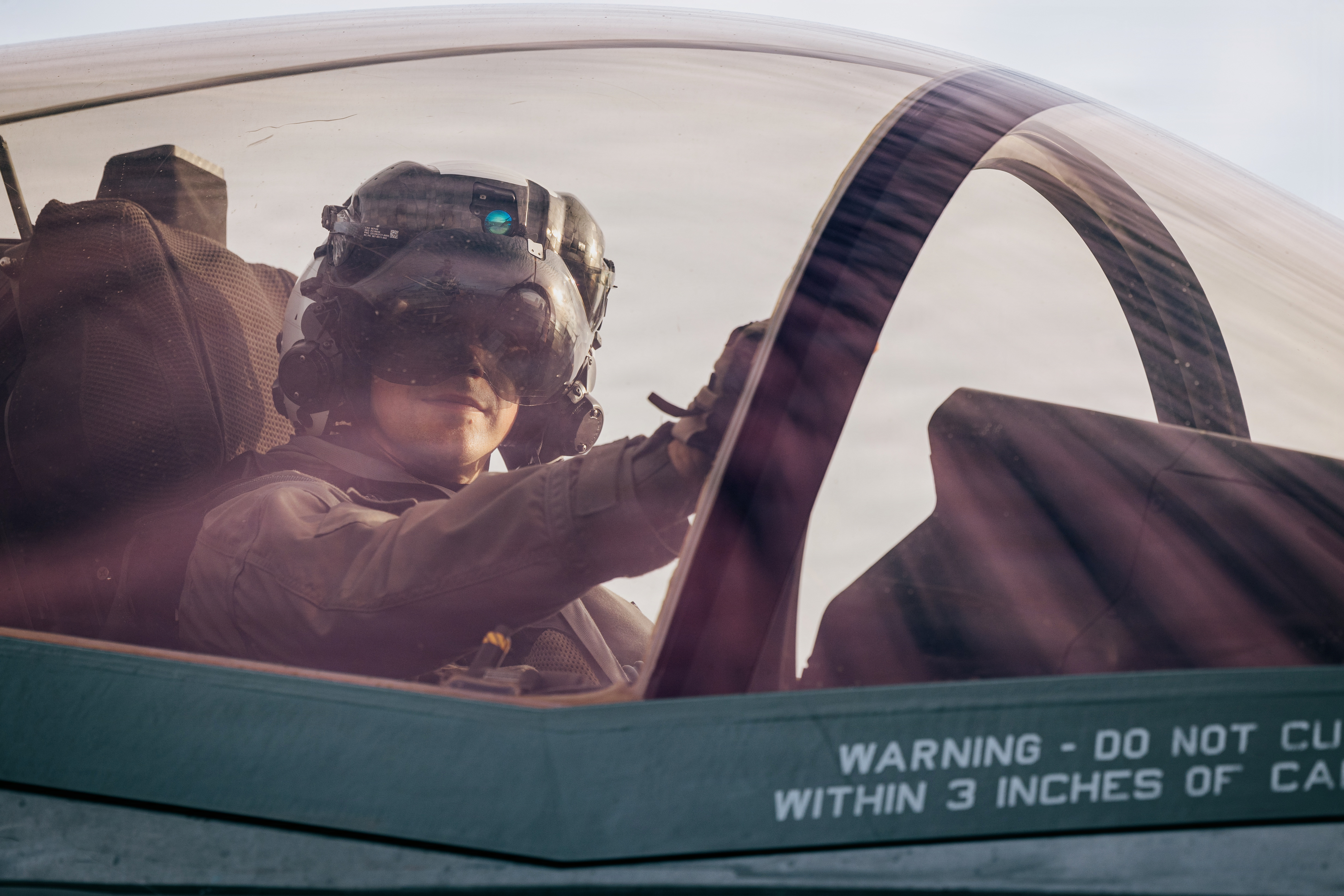
The F-35 is capable of all three of those missions, but perhaps no fighter has ever been as good at collecting and relaying information. The jet is packed with radio, infrared, laser, and electro-optical sensors, and it can fuse all the information from those sensors and send it out.
That’s a game-changer, according to retired Marine Lt. Col. Dave Berke, who, among many other things, was the first operational F-35B pilot. Berke said that if he were to create a hierarchy of things needed to be successful in warfare, information and situational awareness would be at the top.
“It’s almost startling how much information and awareness you have” with the F-35, he said. “And the more information awareness you have, the better suited you are to provide the right type of support to the ground forces when they need it and how they need it.”
Top Stories This Week
In other words, the F-35 acts like a giant snowplow for the fog of war. The jet’s stealth characteristics let it see without being seen, which helps when rival powers such as Russia and China have stacks of radars and anti-air missiles. That stealth, combined with the F-35B’s ability to operate from very short runways, opens up greater access to the battlefield compared to older aircraft, Berke said.
Shoot n’ scoot
These strengths make the F-35B “the centerpiece” of the Marine Corps’ tactical aviation modernization effort, the service told Task & Purpose.
The jet’s arrival comes as the Marines prepare for a shift in aviation tactics. While pilots in the Global War on Terror could jump directly into supporting ground troops, a conflict with China or Russia might require them to clear the airspace first by shooting down enemy aircraft or suppressing air defenses with missiles or electronic warfare.
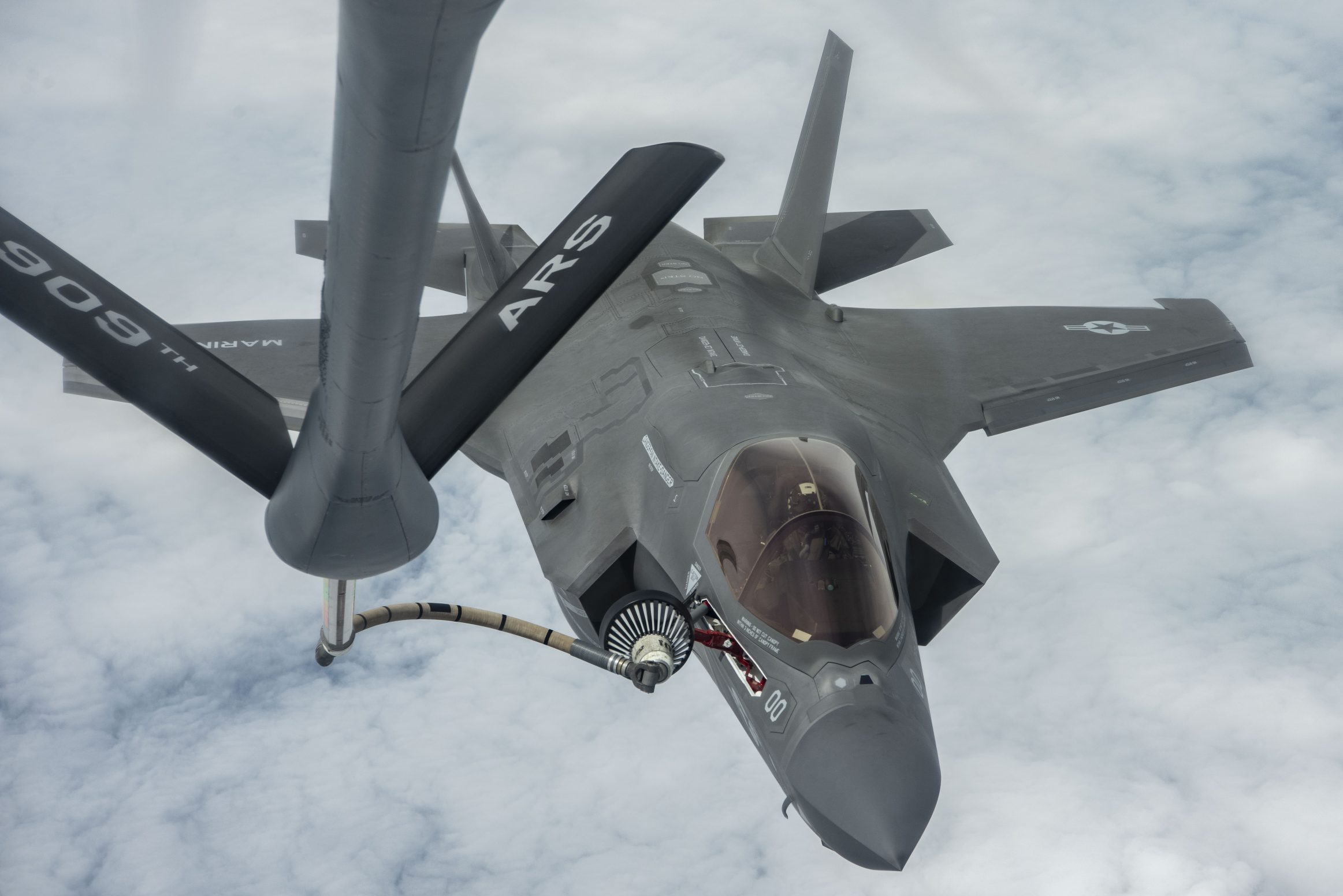
Once the airspace is clear, those pilots might land to gas up and rearm before serving as scouts, strike platforms, or spotters for other aircraft. Then the whole process might start all over again as U.S. troops move out to avoid being targeted by long-range missiles.
Meanwhile, the Marines are also looking into a fleet of uncrewed platforms to help with anything from strikes to transporting cargo to electronic warfare, and the F-35’s data-fusing capabilities could give it a key part to play in any of that.
Challenges
The F-35 is plenty capable, but it is also complicated. In 2023, the Pentagon reported that only 51% of America’s F-35 fleet could perform at least one of its missions at any given time. The historical goal is 65%. Combat-coded squadrons, which generally have newer aircraft and higher priority for spare parts, stood at 61%.
A Pentagon report published in March said “the operational suitability of the F-35 fleet continues to fall short of service expectations,” though it did not provide updated statistics.
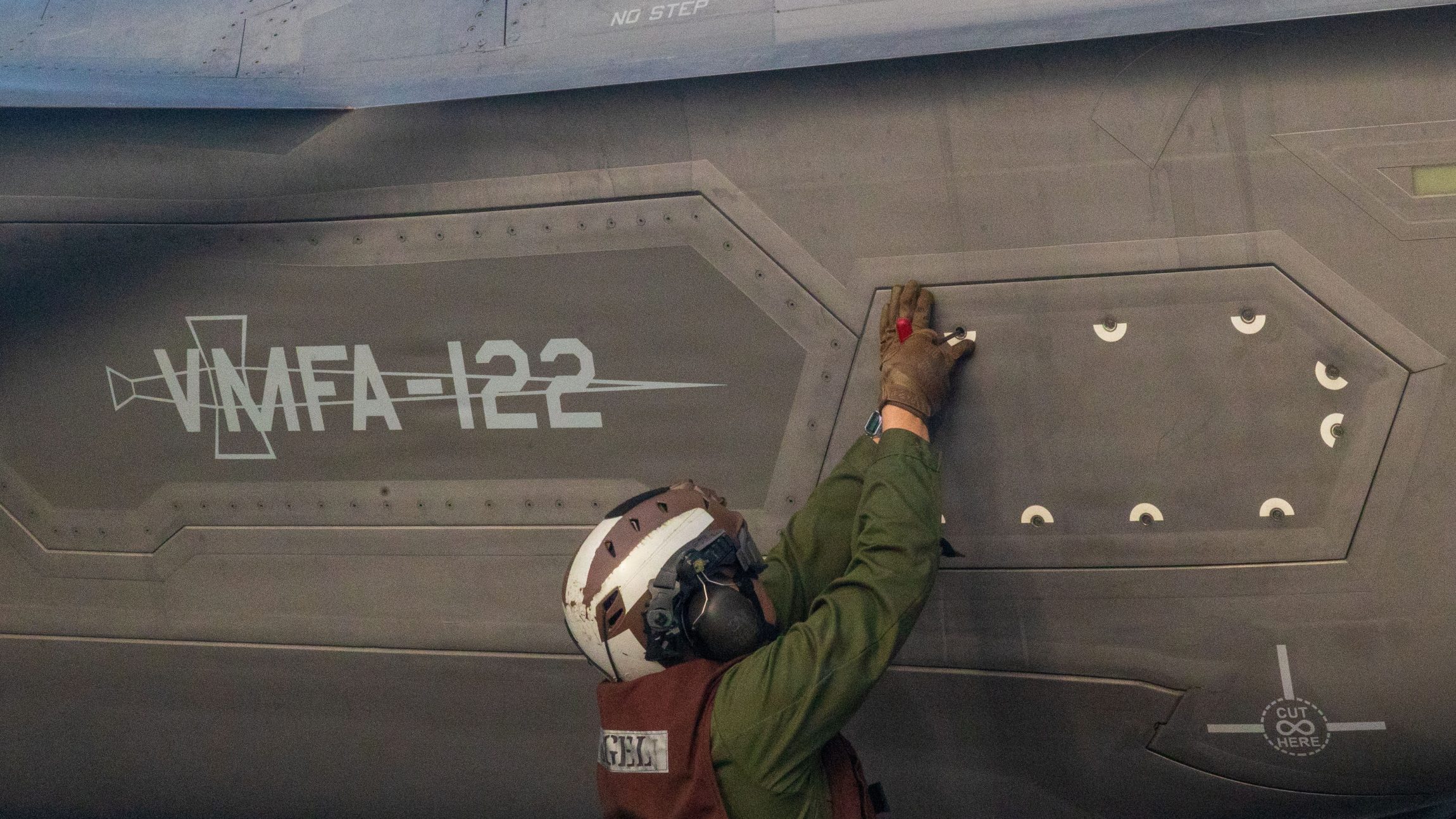
That may not bode well for isolated battlefields like the kind where Marines expect to operate F-35Bs. World War II ground crews struggled to maintain aircraft on isolated islands such as Guadalcanal, and those aircraft were far simpler than the F-35.
The Marines are looking to use artificial intelligence to predict what parts they need, rather than be caught flat-footed when a part breaks in the field.
“Our intent is … to predict when a part is going to fail and then change it at a time of our choosing, so that we don’t have to send that rescue package forward to go and repair that aircraft and bring it back home,” Col. Richard Rusnok, who is helping plan the future of Marine aviation, told Task & Purpose.
Some Marines seem to have a head start. At a training exercise in California last year, The War Zone reported that F-35B squadrons “showed an extraordinary ability to get maintenance done with far fewer tools and equipment than they would normally have” at home station. Learn more about the Marine F-35 transformation by watching our latest YouTube video here.
Loading comments…
Comments couldn’t be loaded. Please refresh the page.