
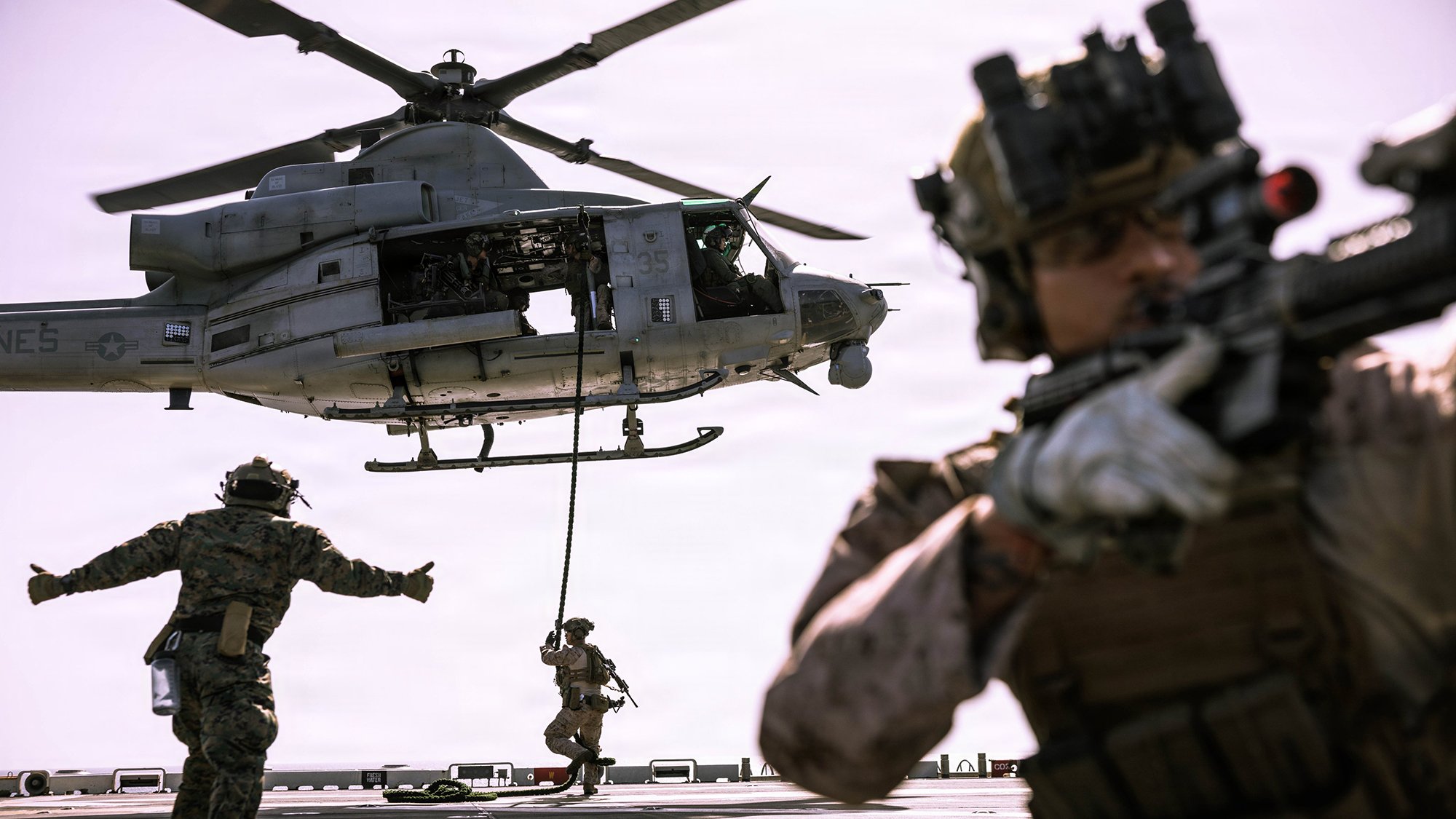
The Post 9/11 wars have shown the limits of America’s military might against insurgents, terrorist groups, and other enemies that fight in the shadows instead of in force-on-force battles.
Yet with the Iran war, the U.S. military is once again waging a largely conventional campaign against an enemy that excels in unconventional tactics, as the Pentagon has long known.
Although Iran’s conventional navy has largely been sunk, it still has managed to inflict economic pain by curtailing commercial shipping in the Strait of Hormuz, through which about 20% of the world’s oil flowed prior to the conflict. Iran has also used relatively low-cost drones to carry out attacks against U.S. troops and partner nations in the Middle East.
Top Stories This Week
The conflict with Iran demonstrates differences between conventional warfare, which measures success through levels of attrition, and asymmetric warfare, which defines victory in other terms, said Jonathan Schroden, an irregular warfare expert with CNA, a Washington, D.C.-based not-for-profit research and analysis organization.
“So, what you’re seeing right now is the U.S. is fighting a conventional war against Iran,” Schroden told Task & Purpose. “We believe that if we strike enough targets in Iran, cause enough damage, destroy enough capability, that they will capitulate. Iran’s theory of success in this war is to impose costs and to outlast the U.S. in time. And so, their theory really centers on economic aspects and time aspects, which translate into politics.”
Schroden noted that the U.S. military has destroyed much of Iran’s conventional military, but the Islamic Revolutionary Guard Corps is a separate entity that focuses on asymmetric warfare, and it remains in control of most of Iran’s fast boats, drones, sea mines, and missiles.
Even though the U.S. military does not have troops deployed to Iran, nor are American service members fighting an insurgency, “there are strong echoes of our experience with fighting asymmetric enemies conventionally in Iraq, in Afghanistan,” Schroden said.
As part of its strategy, Iran will try to kill U.S. troops to create political pressure on President Donald Trump to end the war, he said.
“What are we trying to do to Iran? We’re trying to impose pain,” Schroden said. “What is Iran trying to do to us? They’re trying to impose costs. Those are two different things.”
A defense official declined to provide a statement for this story on whether Iran is using asymmetric tactics against U.S. forces, explaining, “We do not discuss intelligence assessments for operational security reasons.”
The battle for the Strait of Hormuz
At present, the focal point of the Iran war is the Strait of Hormuz, an economically vital waterway. Iran has largely shut commercial traffic down and the U.S. military recently reimposed a blockade of Iranian ports.
On Wednesday, Trump threatened that the U.S. military would destroy Iranian bridges and power plants if Iran continues to attack commercial ships in the strait.
Defense Secretary Pete Hegseth told lawmakers on Tuesday that although military planners made sinking Iran’s conventional navy a top priority at the war’s outset to keep the Strait of Hormuz open, it is impossible to destroy all of Iran’s fast boats and coastal cruise missiles.
He also said that Iran had “decided to become a terror state” by launching attacks against commercial shipping, adding, “one side weaponized the strait.”
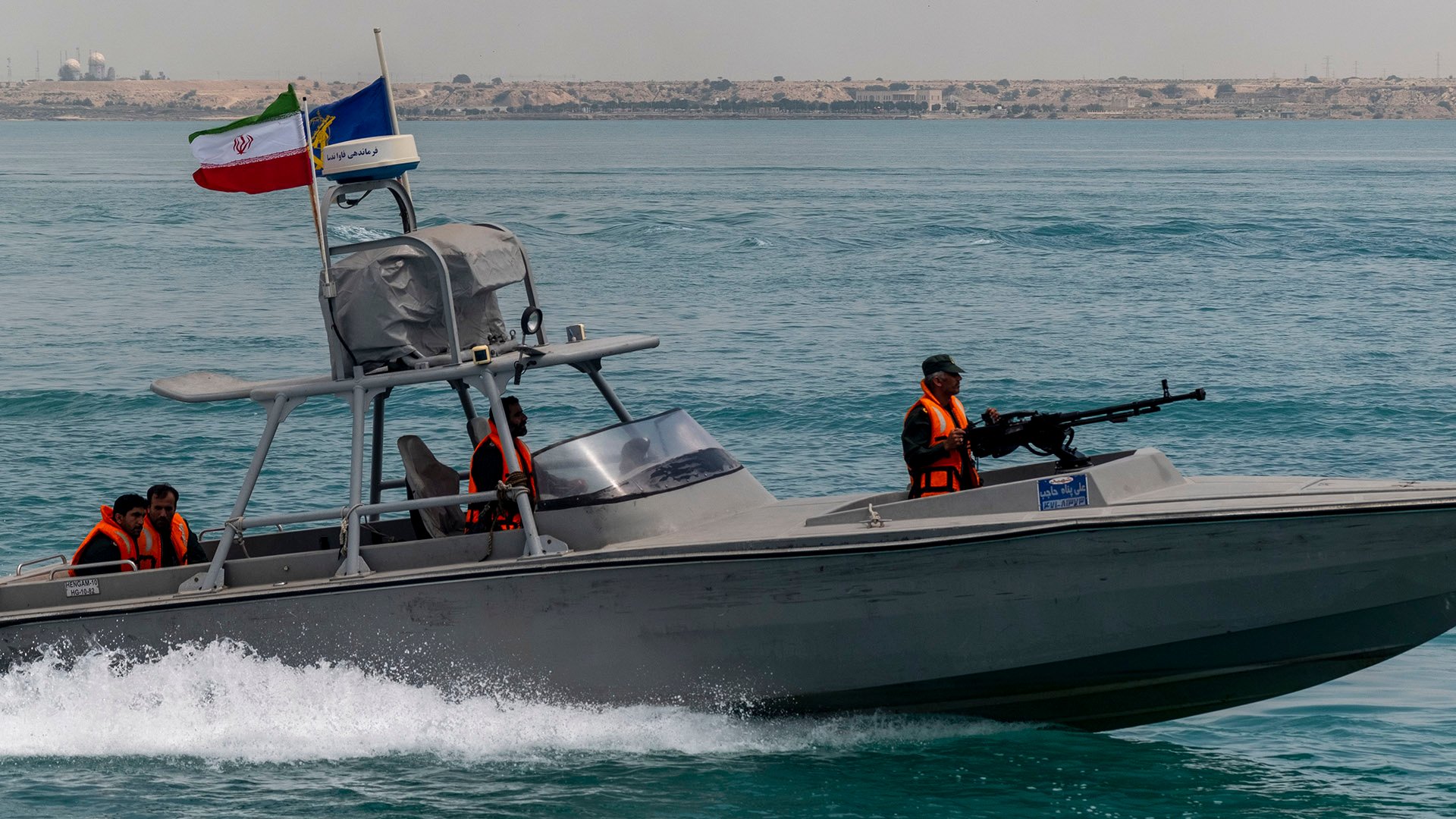
For years, Iran has pursued an asymmetric strategy that has sought to exploit the United States’ weaknesses, said Brian Carter, a fellow focusing on the Middle East with the American Enterprise Institute think tank in Washington, D.C.
“At no point did Iran decide it would rely exclusively on conventional means — by which I mean modern combat aircraft, large surface vessels, etc — to challenge the United States,” Carter told Task & Purpose. “It was always clear that in a fight involving the U.S Navy, the larger Iranian surface vessels were as good as sunk as soon as the first shots were fired.”
The Iranians have long looked to use naval chokepoints such as the Strait of Hormuz to strangle commercial shipping, Carter said. This strategy predates the current conflict, he explained.
Although the U.S. military has destroyed many of Iran’s conventional capabilities, the Iranians can still use missiles, drones and other weapons to strike commercial ships in the strait. Even if they hit one ship per week, Carter said, that will be enough to prevent other vessels from taking the risk of crossing through the waterway.
“The key to stopping the fire will be to make Iran unwilling to do so, but it is unclear to me how the present pattern of strikes will render Iran willing to stop,” Carter said. “The Iranians are now dead set on achieving control of the Strait of Hormuz, and they show no signs that the current strikes are giving them cause for concern.”
Loading comments…
Comments couldn’t be loaded. Please refresh the page.