Navy veteran Geb Galle survived Pearl Harbor and went on to take part in 19 campaigns in the Pacific during World War II.
In 1942 alone, he watched B-25 bombers take off from the aircraft carrier USS Hornet for the Doolittle Raid, and he later saved four other sailors from the cruiser USS Northampton before the ship sank, his daughter Lynda Palmer said.
“One of the guys did thank him, but dad said he didn’t need thanks, it was just what you did during those times,” Palmer told Task & Purpose.
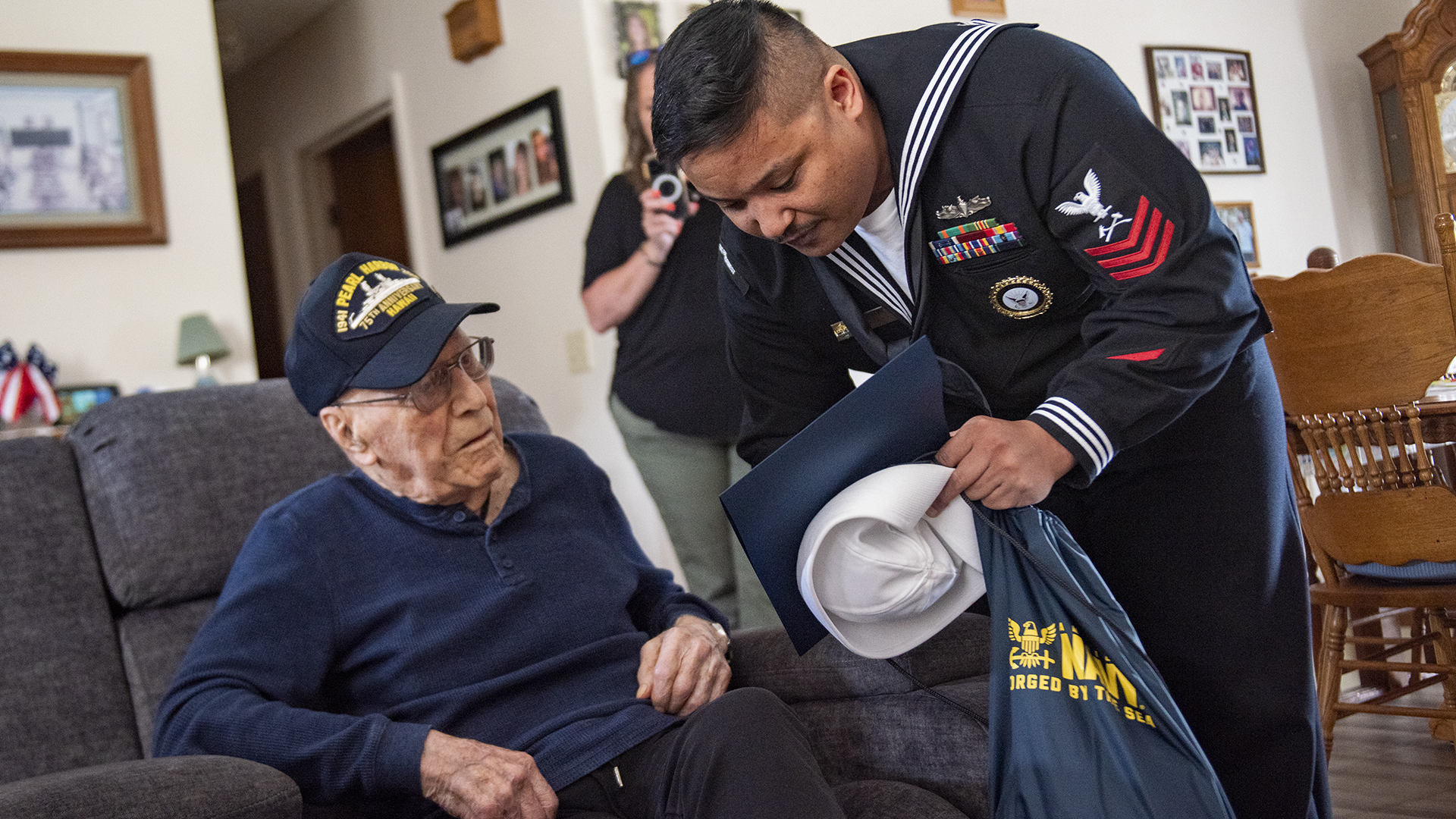
When he turned 104 on July 20, he received a letter from Acting Chief of Naval Operations Adm. James Kilby, Palmer said. The letter was delivered by two sailors, one of whom is a machinist’s mate, just like her father was during the war.
“They sat there and conversed back and forth about what it was like to be a machinist’s mate,” Palmer said. “Here’s dad’s family all standing around while this gentleman was reading this letter to him. It just brought tears to my eyes.”
Kilby reached out to Galle after learning about his 104th birthday from veterans, a Navy spokesperson told Task & Purpose.
“Your remarkable journey is an enduring testament to the strength, sacrifice, and spirit that define our Navy and our nation,” Kilby wrote in his letter, according to a Navy news release. “America endures because of patriots like you — men and women who answered the call with courage, honor, and unwavering devotion.”
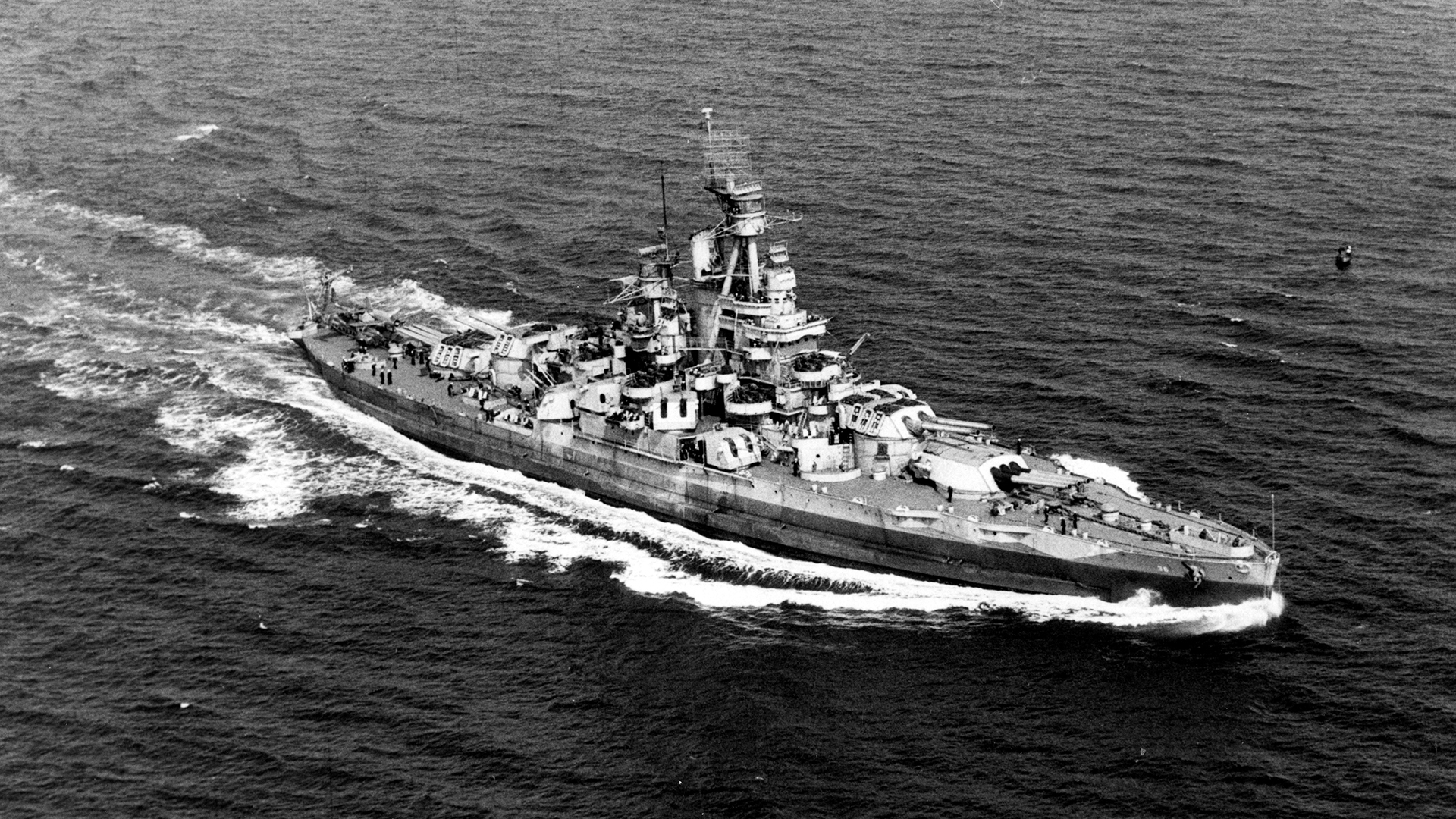
On Dec. 7, 1941, Galle was serving aboard the battleship USS Nevada, the only battleship that was able to get underway during the Japanese attack.
It was on a Sunday. Galle was in his dress whites, and he saw the Japanese planes but initially didn’t recognize their markings, his daughter said.
As soon as the attack started, Galle headed to his battle station in the Nevada’s engine room, where he helped get enough steam for the ship to try to escape.
Palmer said an officer told her father to get the boilers going immediately.
“Dad said, well, it’s going to take a little bit because they’re big steam boilers,” Palmer said. “And the guy told him: ‘I don’t care. Get them going and get them going now. And that’s the only reason why they got the boilers going and started out of the harbor.”
After the Nevada was struck several times, its crew later beached the ship so that it would not sink and block the harbor.
After surviving the attack on Pearl Harbor, Galle served aboard the Northampton, a cruiser that was one of the ships that accompanied the Hornet for the Doolittle Raid in April 1942, his daughter said.
Galle and the other sailors on the Northampton stood on deck and watched the B-25s take off from the Hornet, Palmer said.
“They kept going: ‘Come on, get up! Get up! Get up!” she said. “They were praying and hoping for the guys that were trying to get up in the air that it would be on the upswing of the ship, and so they could take off.”
That October, when the Hornet was severely damaged by Japanese bombs and torpedoes at the battle of the Santa Cruz Islands, the Northampton tried to tow the stricken aircraft carrier to safety, but the Hornet was hit again and ordered to be abandoned.
While taking part in the Guadalcanal campaign, Northampton was struck by Japanese torpedoes at the Battle of Tassafaronga and eventually sank on Dec. 1, 1942.
As the ship was going down, Galle heard four sailors yelling, Palmer said. They were trapped in a compartment behind a water-tight hatch. When Galle started to open the hatch, a senior ordered him to stop.
Top Stories This Week
“Dad didn’t argue with him,” Palmer said. “He said, ‘He had a .45 on his hip, I didn’t argue with him.’ So, he watched the senior officer go up the stairs. Dad went up and looked. He didn’t see him. He went back down, opened the hatch, and let the four men out.”
He then closed the watch and went topside, where he saw sailors in a raft below calling to him. Galle jumped from the sinking ship, swam to the raft and climbed aboard. They spent a day-and-a-half on the life raft.
The men were spotted by a U.S. plane and rescued by PT 109, which Navy Lt. j.g. John F. Kennedy would later command in 1943.
“I asked dad, I said, ‘Was he on there?’” Palmer recalled. “And my dad said: ‘I didn’t care. I just wanted out of the water.’”