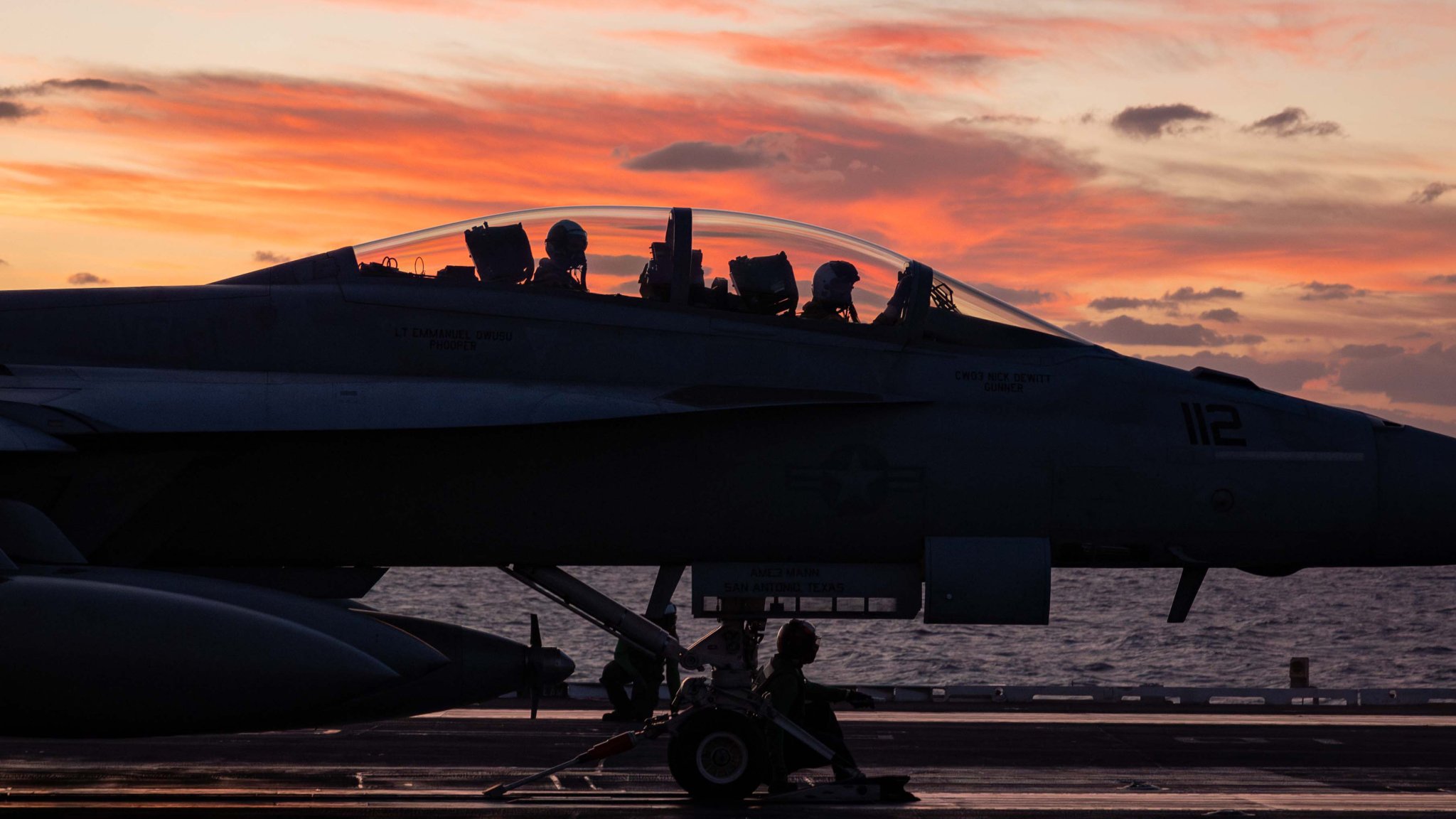
It’s a big deal whenever an aircraft carrier loses a plane during a deployment. In a six-month span while deployed to the Red Sea this year, the USS Harry S. Truman lost three F/A-18 Super Hornets, including one that was accidentally shot down by another Navy ship in a friendly fire incident.
On Thursday, the Navy released investigations into the losses of each aircraft during the Truman’s deployment from September 2024 to June 2025 that revealed a variety of errors and poor decisions that led to the incidents.
Also Thursday, the Navy released a separate investigation into the Feb. 12 collision between the Truman and a merchant vessel, finding that several errors by the crew led to the embarrassing mishap, and that the minimal damage sustained by the ship could have been much worse.
The Truman’s commanding officer was fired during the same deployment a week after the ship collided with a merchant vessel, but a senior Navy official was intentionally vague on Thursday when reporters asked if other crew members had been disciplined for the three aircraft. “I don’t feel an obligation to publish those results to the world,” the official said, noting only that the service had taken “accountability actions” as a result of the investigations.
Of the three lost aircraft, two were lost to accidents aboard the Truman, while the third was shot down by another U.S. ship during a combat mission. The investigation of that mishap blamed the commanding officer of the cruiser USS Gettysburg for the Dec. 22, 2024, incident in which his ship misidentified two F/A-18F Super Hornets and fired anti-aircraft missiles at them, hitting one.
Under the circumstances, the Gettysburg captain’s “decision to engage was neither reasonable nor prudent and could have been prevented by action at multiple levels,” the investigation found.
A second, separate investigation of a Super Hornet falling off the Truman’s flight deck found that poor communication among the crew as the ship was maneuvering to avoid an incoming ballistic missile was partially to blame.
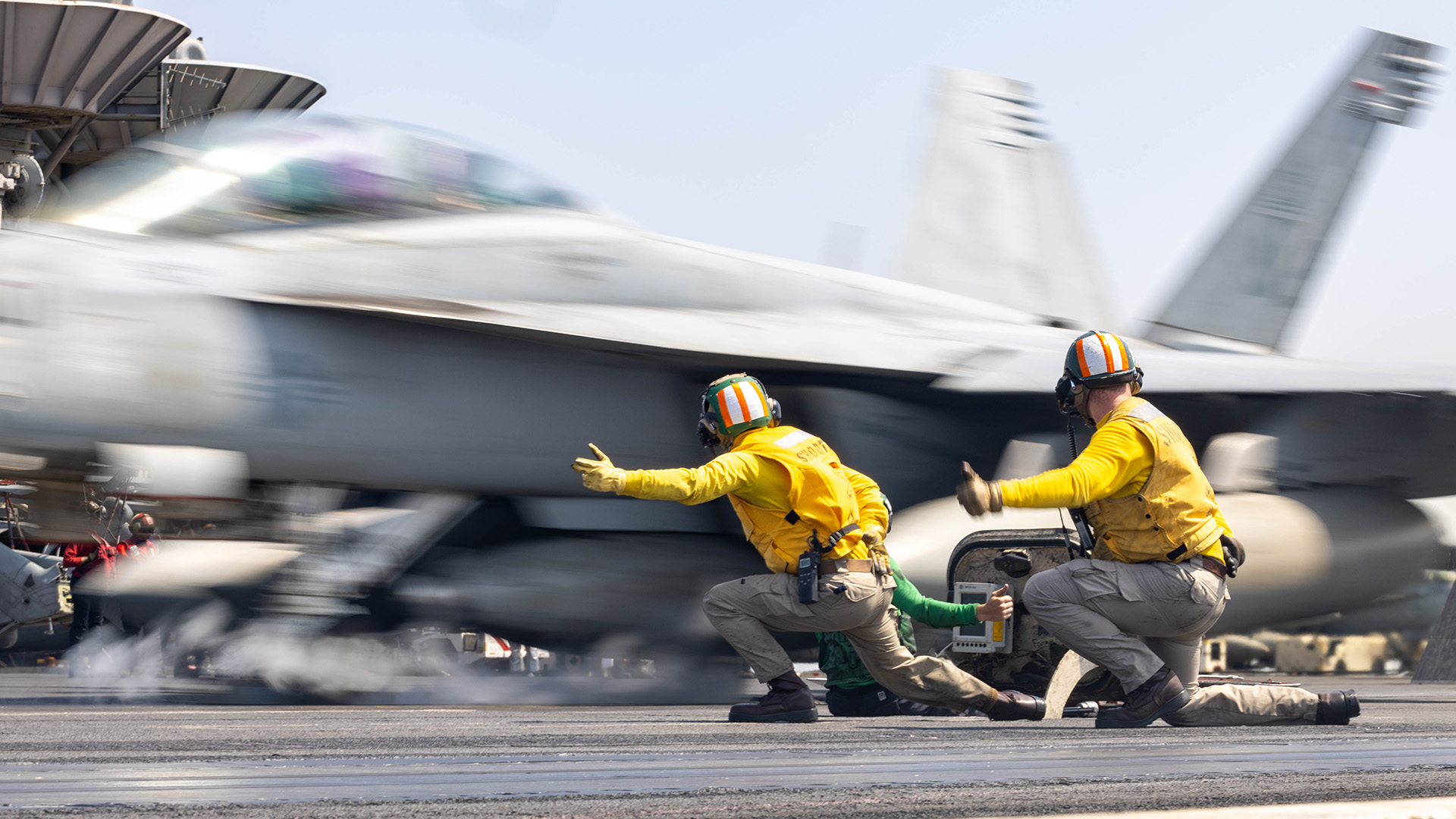
A third investigation of a Super Hornet crash while landing found that poor oversight and training led to the carrier’s arresting gear not being properly assembled, causing the cable to fail and the plane to crash into the sea.
The significance of the three mishaps, said retired Navy Cmdr. Kirk Lippold underscores why the public and lawmakers need to see the Navy investigations to understand the root causes of all three incidents and who was held accountable for them. Lippold was the commanding officer of the destroyer USS Cole when the ship was attacked by al-Qaida in October 2000.
It is also important to find out if funding shortfalls in maintenance, training, and leadership contributed to the loss of three Super Hornets, Lippold told Task & Purpose.
“Losing three aircraft is a huge deal,” Lippold said. “The norm is 0 to 1.”
A preventable ‘Friendly Fire’ Incident
The Truman and its strike group spent most of their deployment taking part in combat operations against the Islamic State group, or ISIS, fighters in Somalia and Iranian-backed Houthi rebels in Yemen.
On Dec. 22, 2024, the Gettysburg mistook two Super Hornets that were returning from airstrikes in Yemen to be anti-ship cruise missiles, according to the investigation, and fired missiles at the jets.
Top Stories This Week
Cruisers such as Gettysburg are designed to serve as air defense command and control platforms, and they are often tasked with defending U.S. Navy surface action groups from enemy missiles, drones, and aircraft.
One of the planes was destroyed as the crew ejected. In a news release on Thursday, the Navy said a Gettysburg missile came close to hitting the second aircraft as well, describing the incident as a “near miss.”
The Gettysburg also tracked a third friendly aircraft but did not fire at it, according to the investigation. U.S. Central Command’s initial release about the incident only mentioned the one aircraft that had been shot down.
The investigation determined that the incident was “preventable,” and that both “physiological and psychological factors” may have diminished the ability of the sailors standing watch in the Gettysburg’s combat information center to understand the unfolding situation.
“Watchstanders across the CSG [carrier strike group] possessed sufficient information and the time required to prevent the incident, but failed to apply formal forceful backup, as expected, trained on, and certified,” the investigation found. “Lack of cohesion across warfare commanders and the CSG staff, compounded by a lack of integrated training, contributed to ineffective communication and informality.”
In other words, Gettysburg’s commanding officer, air defense commander, and strike group staff were not effectively communicating or helping to prevent confusion and misidentification, said retired Navy Capt. Bradley Martin, a senior policy researcher with the RAND Corporation.
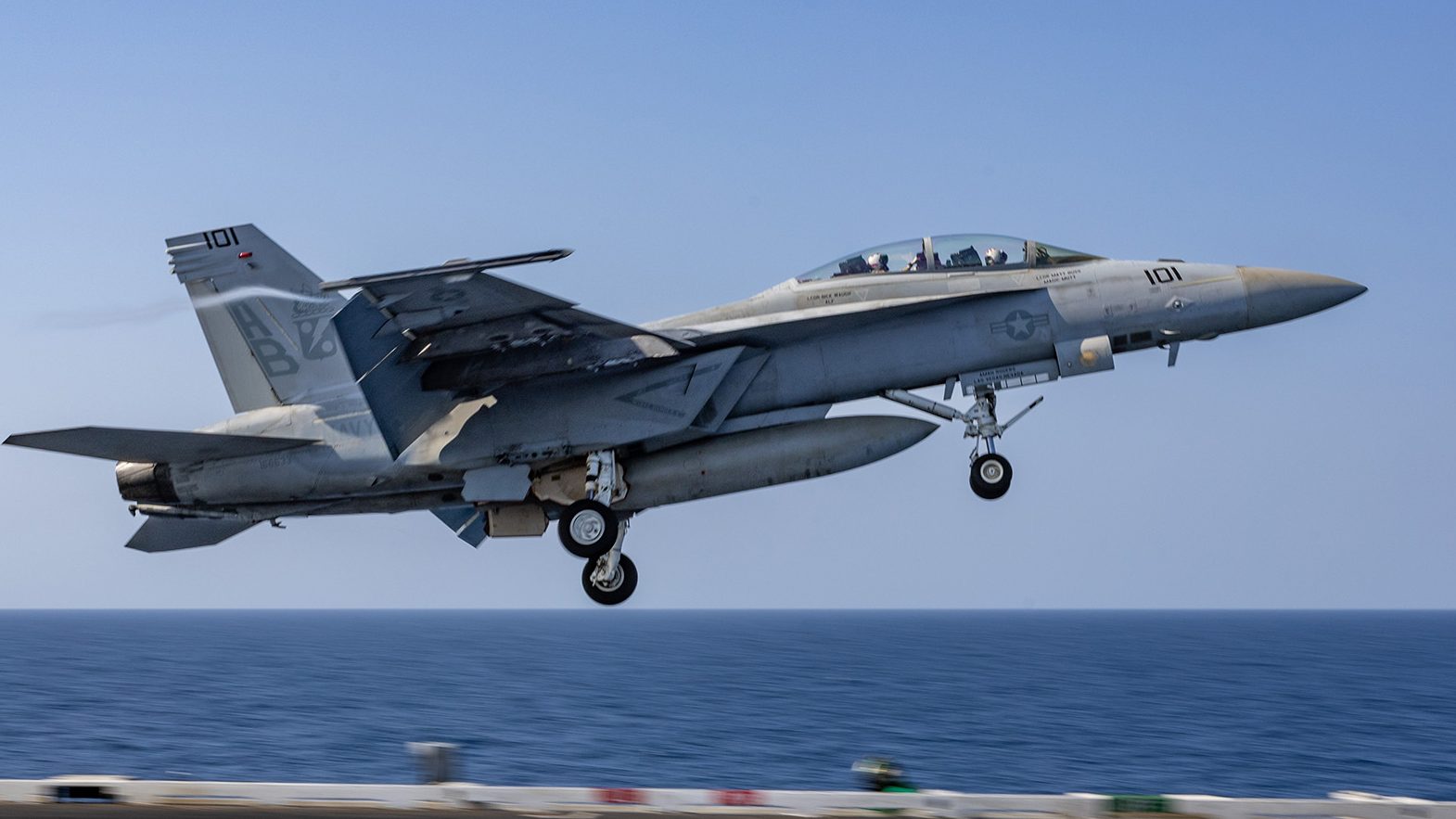
Prior to the deployment, the carrier strike group had fewer training opportunities than expected, and this “adversely impacted interoperability” between the Gettysburg and Carrier Air Wing One, according to the investigation.
The investigation also found that problems with the Gettysburg’s equipment and how well its crew was trained contributed to the confusion leading up to the incident.
“The ship had material deficiencies in its air defense command and control systems, specifically its Identification Friend Foe Equipment and Precise Participant Location and Identification system,” Martin told Task & Purpose in response to questions about the investigation. “This would mean that the ship was not appropriately tracking aircraft in the airspace and might thus misidentify air contacts. In addition, the ship’s watchstanders – who would have manned both unit and force-wide air defense stations – were not adequately trained or proficient. The order to fire on the aircraft was thus inappropriate and could have been prevented.”
Additionally, the admiral in charge of the carrier strike group should have stepped in and stopped the Gettysburg from firing on the second Super Hornet, the investigation found. While subordinate commanders have some leeway to take action, superior officers are obligated to override any orders that could be wrong or dangerous, Martin explained.
Falling into the Ocean
The second loss of a Super Hornet took place on April 28, when an F/A-18E fell from the Truman’s hangar bay into the ocean as the ship was dodging an incoming medium-range ballistic missile, the investigation found. Although the ship had faced missile attacks before, sailors in this case had to move one of the planes because it was preventing a deck door from being closed.
To avoid the missile, the Truman made an “unannounced turn” and increased speed to 30 knots, according to the investigation. Because no announcement had been made prior to the evasive maneuvers, sailors were already moving the Super Hornet when the Truman began to list to one side.
“The now unsecured aircraft 407 rolled backwards towards the deck edge, pulling spotting dolly QCF045 and its operator along with it,” the investigation found. “Despite efforts from multiple move crew personnel, the brake rider, and the spotting dolly operator to stop the momentum, the aircraft continued quickly rolling backwards, which forced the brake rider and spotting dolly operator to abandon their positions just before aircraft 407 and spotting dolly QCF045 departed the hangar bay.”
Vice Adm. John Gumbleton, commander of U.S. Fleet Forces Command, wrote that the primary cause for the incident was that the brake on the aircraft failed. However, Gumbleton also cited a lack of communication between the bridge, flight deck, and hangar bay control as a contributing factor.
The investigation also noted that Truman’s turn to avoid this missile was not excessive, and the ship had taken even greater lists in the past.
“Proper communication would likely have resulted in aircraft 407 remaining tied to the hangar bay deck through HST’s [USS Harry S. Truman’s] evasive turn, as the SOP [standard operating procedure] now codifies,” the investigation found.
Fatigue caused sailors to cut corners
The third and final Super Hornet was lost on May 6 when an arresting cable failed as the plane landed. The F/A-18F did not have enough speed to take off and crashed. Its crew safely ejected.
Evidence revealed that the arresting gear had been improperly reassembled on the morning of the crash, according to the investigation, which found, “There were multiple missed opportunities to prevent the mishap.”
For example, one sailor responsible for checking the arresting gear likely did not conduct a visual inspection that would have allowed him to find the problem, the investigation found.
Overall, the investigation found that many sailors had little understanding of how the arresting gear works due to a lack of oversight by their leadership. This problem was exacerbated by manning shortfalls, the tempo of combat operations, and the fact that sailors became tired after switching from the day to night shift.
“Fatigue was contributory to the crew cutting corners on maintenance, including failures in quality assurance oversight,” investigators wrote.