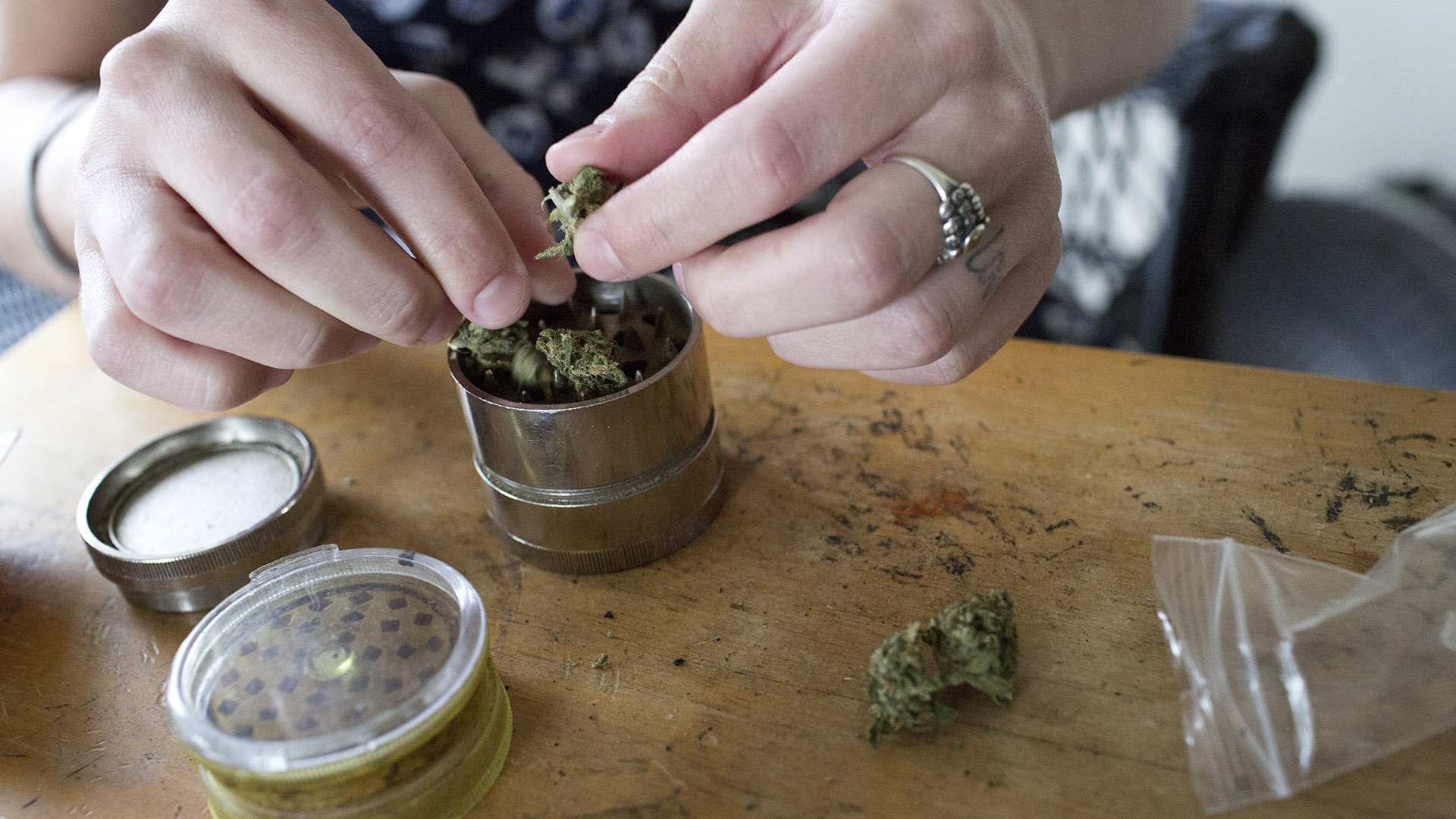
A Congressman who was severely wounded while serving with the Army in Afghanistan wants doctors with the Department of Veterans Affairs to be allowed to talk to patients about cannabis as an alternative treatment to narcotic painkillers in states where medical marijuana is legal
Rep. Brian Mast (R-Fla.) introduced an amendment last month to the VA’s fiscal year 2026 military construction appropriations bill that would prevent the VA from using any money to stop its doctors from talking to patients about legal medical marijuana programs.
A former explosive ordnance disposal technician, Mast served with the Army’s 28th Ordnance Company, which supports special operations forces. He lost both of his legs and a finger after being wounded by an improvised explosive device while deployed to Afghanistan in 2010.
“I know from my own recovery just how devastating the side effects of narcotics can be,” Mast said in a statement to Task & Purpose. “Veterans deserve all options when it comes to healing, and that includes the ability to talk to their doctor about medical cannabis. States across the country have approved medical marijuana, and if this can help veterans recovering from injuries stay off prescription narcotics, it will be a godsend. It’s not a catch-all cure, but rather, a potentially life-changing option that I believe our veterans should have.”
Although 40 states, three territories, and Washington, D.C., have legalized medical marijuana, the federal government has not.
“Marijuana is classified as a Schedule I substance under the Controlled Substances Act,” said VA spokesman Peter Kasperowicz. “Therefore, VA health care providers cannot recommend it or help veterans obtain it.”
According to the U.S. Drug Enforcement Administration, a Schedule 1 substance, “Has a high potential for abuse, no currently accepted medical use in treatment in the United States, and a lack of accepted safety for use under medical supervision.”
During President Donald Trump’s first term, the VA decided not to look into how medical marijuana might be used to treat post-traumatic stress disorder, or PTSD, and chronic pain. More recently, the U.S. Food and Drug Administration announced in November that it would conduct a study into the potential risks and benefits of using medical cannabis to treat veterans suffering from PTSD.
Rep. David Joyce (R-Ohio), who cosponsored Mast’s amendment, cited the surge in drug overdose deaths involving opioids in recent decades as a reason why veterans should have access to alternative treatment.
“The opioid crisis has hit Ohio and, specifically, my district extremely hard,” Joyce said in a statement to Task & Purpose. “While opioids and other narcotic painkillers are appropriate in some circumstances, they can also lead to lifelong addiction and substance abuse. The veteran community is particularly susceptible, given the increased risk of chronic pain and PTSD. Studies have shown that medical cannabis can be a viable treatment for a multitude of medical issues our heroes sometimes face when they come home.”
The Veterans of Foreign Wars, or VFW, is one of several veterans groups that support the idea of VA doctors being able to discuss alternative treatments with patients.
“This is a priority for the VFW, as delivered before Congress,” said VFW spokesman Rob Couture. “When it comes to receiving timely access to high-quality health care, veterans deserve to know what options are available to them, even plant-based alternative therapies. Informed decisions on health care should be between a veteran and their provider.”
Disabled American Veterans, DAV, has long advocated for research into the efficacy of using medical marijuana to treat service-disabled veterans, said Joy Ilem, the group’s national legislative director.
“We believe VA providers should be able to talk with their veteran patients about all safe, available and legal alternative treatments in support of the department’s whole health care approach,” Ilem said in a statement to Task & Purpose.
Paralyzed Veterans of America, or PVA, also supports “evidence-based alternative treatments” to relieve veterans’ chronic pain, said Heather Ansley, the organization’s chief policy officer.
Ansley noted that PVA’s members with spinal cord injuries and diseases such as Multiple Sclerosis and Amyotrophic Lateral Sclerosis suffer from varying degrees of chronic pain, and they deserve full access to safe and effective options that are available to them.
“That’s why PVA has long supported researching medical cannabis’ ability to address symptoms of pain,” Ansley said in a statement to Task & Purpose. “We believe all veterans should be empowered with information that supports their well-being and right to shape their health care plans.”
The latest on Task & Purpose
- Sergeant Major of the Marine Corps learns an old lesson: Don’t mess with Audie Murphy
- A breakdown of safety procedures ‘directly contributed’ to an 82nd Airborne paratrooper’s death
- WWII Marine Raider who fought at Iwo Jima, Guadalcanal wants cards for 100th birthday
- Navy identifies special warfare sailor killed while parachuting
- Pentagon appears to pause renaming of Navy ships