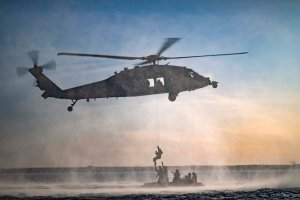
Team Rubicon, a veterans-led disaster response organization, has sent reconnaissance teams to central Texas and established a quick reaction force there to help people dealing with the aftermath of recent devastating floods, said the group’s CEO Art delaCruz.
“We’ll continue to grow the operation as the waters recede primarily and as the local authorities transition out of search and rescue,” delaCruz told Task & Purpose on Monday. “Our goal is to be amongst the first there and to be the last to leave.”
Search and rescue efforts continue after the Guadalupe River in Texas rose about 26 feet in a short time. At least 90 people have been confirmed dead and dozens more remain missing.
Team Rubicon volunteers in Texas are currently assessing what exactly is needed as the group prepares its response, which could ultimately involve at least 100 people, said delaCruz, a retired Navy commander.
“We will be there in short order,” delaCruz said. “One of the things that we’re really diligent about is ensuring that our presence doesn’t create a tax on the system. We line everything up so we’re essentially self-sustaining once there.”
Just like military operations, the group starts its efforts with reconnaissance, then it issues volunteers a warning order followed by an operations order, he said.
Right now, three reconnaissance teams have already arrived at the scene, delaCruz said Each team has two to three people, typically local volunteers who know their communities, and they will scout out the area for potential damage and report back to Team Rubicon.
“Then we begin to pair it up with our volunteers on what they can do, which is probably, in this case, I would imagine, a lot of debris removal,” delaCruz said. “Everything that has been moved down river or is blocking roads, we have qualified sawyers that can come in and cut trees, and we can use heavy equipment to either move debris or materials out of the way.”
The reconnaissance teams will also determine which communities are most in need of help, he said, adding, “It’s generally the poor and those who aren’t insured for the disaster that hit them.”
Team Rubicon has also established a quick reaction force in Kerrville at the request of the Salvation Army to help manage volunteers, he said.
“The primary effort of the QRF [quick reaction force] right now is to assess damages, like people are coming in and saying: ‘Hey, I need help,’” delaCruz said. “And then they will also transition with the Salvation Army to help manage volunteers.”
As things stand, Team Rubicon could establish three “forward operating bases” in the region, each which might have about 30 people, delaCruz said.
One major task that delaCruz expects Team Rubicon volunteers to take on in Texas will be cleaning out flooded homes, schools, and other buildings, he said.
“They’re essentially in this race against mold and damage, so we’ll help them out at no cost to the homeowners,” delaCruz said.
Team Rubicon has responded to other recent natural disasters including wildfires in southern California and the aftermath of Hurricane Helene last year in North Carolina., delaCruz said. The group has about 200,000 volunteers in total, more than half of whom are veterans. Team Rubicon came about in 2010 and is largely staffed by military veterans. The organization leans pretty heavily on the professional and lived-experiences of its members, particularly when it comes to planning operations and logistical support.
For the current crisis, the Team Rubicon volunteers could take over food and water distribution for first responders, who have been working for days without rest, he said.
“We’ll try to relieve people of the burdens that they have so they can also take care of their own families,” delaCruz said. “We’ll do whatever is necessary.”
The latest on Task & Purpose
- Sergeant Major of the Marine Corps learns an old lesson: Don’t mess with Audie Murphy
- A breakdown of safety procedures ‘directly contributed’ to an 82nd Airborne paratrooper’s death
- WWII Marine Raider who fought at Iwo Jima, Guadalcanal wants cards for 100th birthday
- Navy identifies special warfare sailor killed while parachuting
- Pentagon appears to pause renaming of Navy ships