
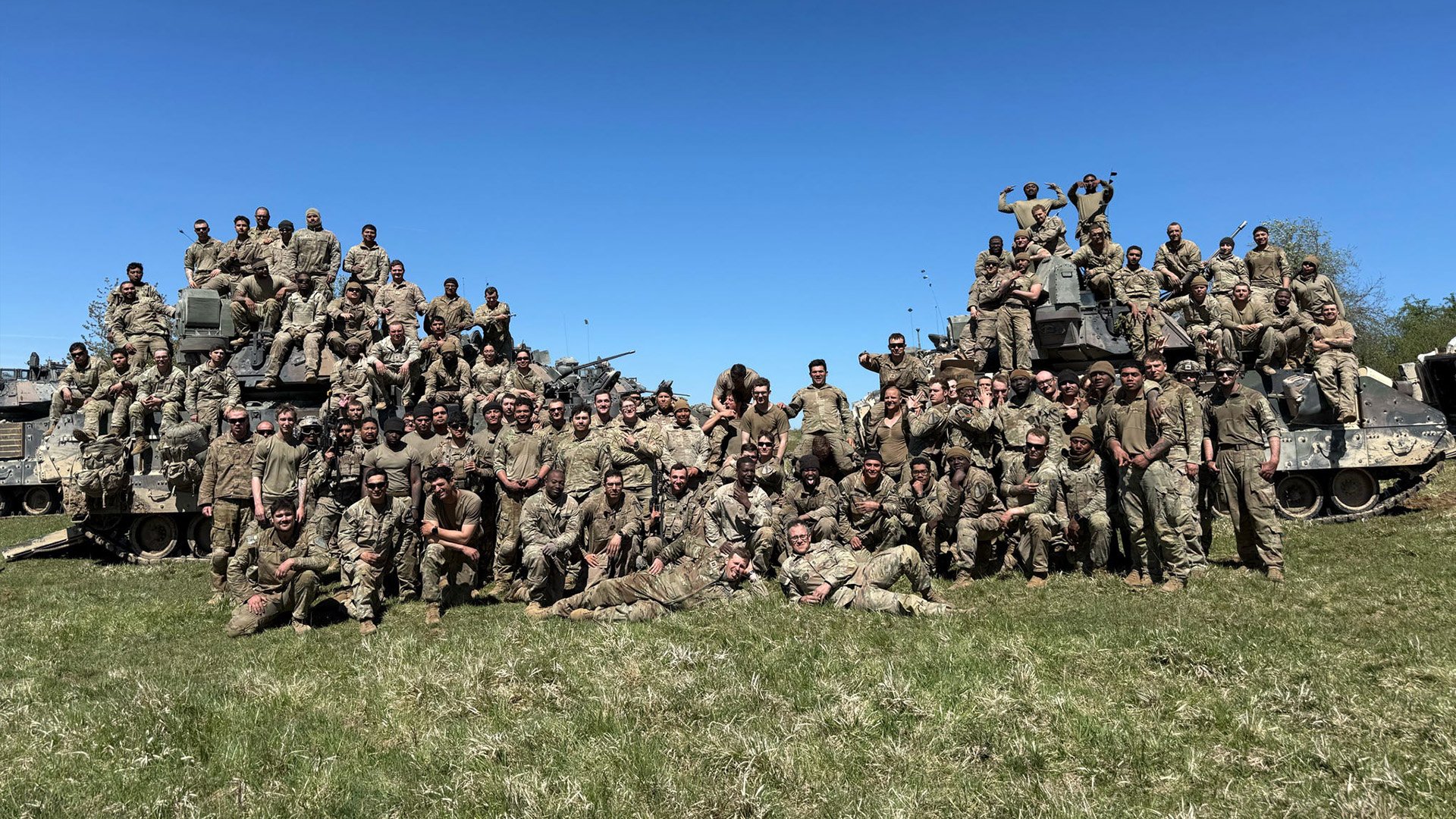
On the morning of April 22, 2026, Blackhawk Company, 2nd Battalion, 7th Cavalry Regiment, began a 10-day collective training event at the Joint Multinational Readiness Center in Hohenfels, Germany.
As Blackhawk Company rolled through the Bavarian countryside in a column of Bradley Fighting Vehicles, we didn’t realize our exercise would soon make national news in a Wall Street Journal article headlined “U.S. and Ukrainian Forces Went Head-to-Head in an Exercise. Ukraine’s Drones Won.”
According to the newspaper, “during the exercise, called Combined Resolve, Ukrainian drone units easily spotted and defeated U.S. troops and armored vehicles on rotation from Fort Hood in Texas.” It was, the paper said, a “drubbing.”
As the commander of Blackhawk Company during Combined Resolve, I don’t believe the article fully captures Blackhawk Company’s performance in Hohenfels, from our successes in the training scenarios to what we learned from the Ukrainians.
Here is what really happened.
Entering ‘The Box,’ watched from above
As we headed toward the training area — a 14-by-27-kilometer range we universally called “the box” — we already knew that Hohenfels’ full-time opposition force, known as the Warrior Battalion, would be augmented by the Ukrainian Unmanned Systems Forces’ 412th Regiment, an elite unit known as “Nemesis.”
Our soldiers had spent the previous days meeting and getting to know the Nemesis troops as we prepared for the exercise, learning about their real-world combat experience and checking out their gear. One soldier, our troops reported back, was said to have close to 500 battlefield kills.
As we approached the box, Nemesis was already watching. As our mechanized company filed through the only gate into the training area — a textbook chokepoint — their reconnaissance drones were overhead.
Our first mission was to prepare a defense. For several days, we built engagement areas, constructed fighting positions, and maneuvered to locate and destroy opposing forces.
Above us, Ukrainian drones flew. Some were large enough that their propellers sounded like helicopters. Others were small and difficult to see until they buzzed past you amid the trees. We knew they were there, and we knew they were looking for us.
We did not have counter-Unmanned Aircraft Systems (cUAS) capability that we would have wanted. Our brigade was not a Transformation-in-Contact (TiC) unit that places new, sometimes untested weapons and tech directly in the hands of soldiers.
Perhaps the Army and industry partners have already developed a secret “win button” device for drone warfare. But if they did, we didn’t have it.
But fighting a tilted, uphill battle against seasoned combat veterans is exactly what made the experience so valuable. We did not complain; we adapted, accepting that the sky — in perpetuity, not just sporadically — was now part of the battlefield.
‘Clearing the skies’ by changing tactics
Within hours, we changed how we occupied positions. We improved concealment. We dispersed vehicles and personnel as widely as we could. We hid Bradleys in heavy trees, risking getting stuck in soft ground (and damaging expensive German trees) to mitigate the overhead threat.
We became more deliberate about movement. We studied what we looked like from above, not just what we could see from the ground.
We also threw a twist at Nemesis we knew they would not expect. The training center is densely vegetated, with hills cut by draws, valleys, and deep pockets of dead space. As a result, mechanzied units usually stick to small roads and trails — routes we knew Nemesis would dominate on.
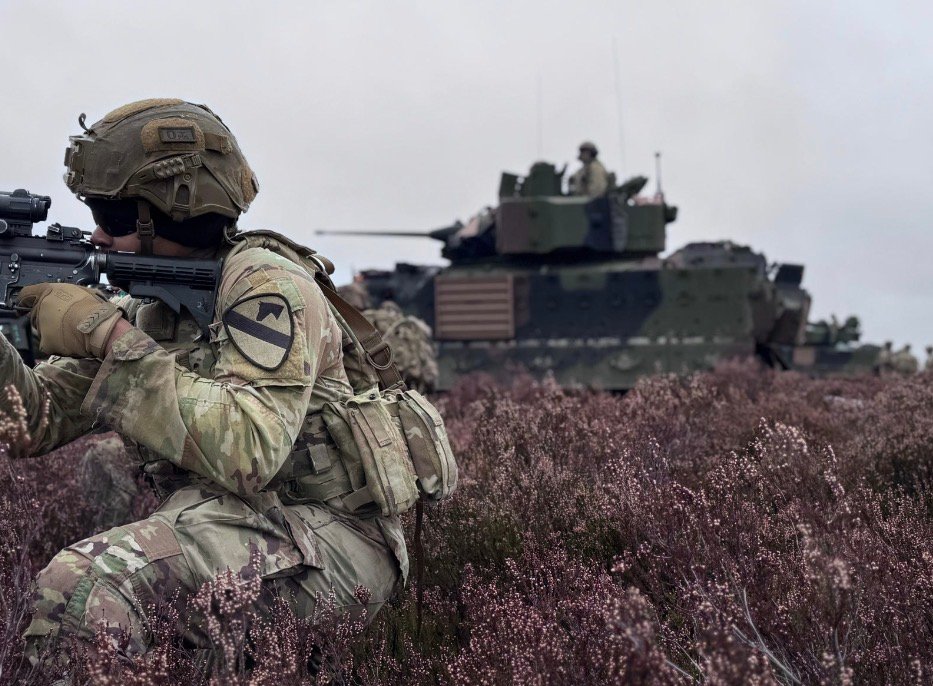
So we headed into the steep gullies and heavy trees. More than once, I found myself standing sideways in the turret of our Bradley, barking orders as our platoons traversed 40-degree slopes, finding new routes to an objective. We were at our limits, but the terrain gave us natural concealment and terrain masking, and we took full advantage of it.
The enemy still found us, but it’s important to understand how: even with drone reconnaissance, the enemy had to use traditional ground reconnaissance and infiltration techniques. While a drone could identify us from above, only troops on the ground could exploit the information.
As we fought, we lost Bradleys and tanks and some of the crew that manned them. Of course we did. This was training with the pressure dialed as high as we could get it to teach our formations tough lessons.
However, the lesson from our time with Nemesis was not that heavy armor is obsolete or a liability against drones. Those vehicles carried us through terrain that would have slowed lighter formations and protected crews while we seized objectives. Our armor did not make us more vulnerable — it made us mobile, protected, and dangerous.
Top Stories This Week
Soldiers will be far more confident in spreading out if they believe in their equipment, like our Bradleys and Abrams tanks. It is a difficult environment, but I also learned how capable and adaptive our soldiers and formations are.
On the sixth day, the formation moved from defensive to offensive operations. During the second half of the exercise, the same Ukrainian formation that had spent days hunting us from the air was now working alongside us. I watched our soldiers’ competence and confidence grow throughout the exercise. They began the training event knowing they were about to face a battlefield that would challenge assumptions they had trained with for years. They left knowing they could adapt when those assumptions stopped working.
Our Ukrainian partners brought cutting-edge technology and techniques honed over years of combat operations. They showed us ways to effectively fly cheap drones incredible distances. They put on a masterclass in sensor-to-shooter kill chain management and speed using tactics, techniques, and technology that we can now use in our formations.
But we also learned another key lesson: regardless of the technology, humans are still the critical component, and a weak point we learned to target.
When we maneuvered and made the hunters of Nemesis feel like the hunted, the skies cleared up.
Loading comments…
Comments couldn’t be loaded. Please refresh the page.