
As America’s westernmost territory, the island of Guam is the logistical heart of any large-scale military build-up in the western Pacific. It has long runways, a deepwater port, huge fuel storage and weapons depots, and it’s about 2,000 miles closer to China than it is to Hawaii. The island is also U.S. soil, so the military does not need permission from a foreign government to operate there.
Those factors make Guam a prime target for the People’s Liberation Army (PLA) if a conflict were to break out between the U.S. and China. The PLA has hundreds of missiles it would almost certainly fire at Guam in a shooting war. That would disrupt the military’s logistics machine, on top of endangering 170,000 U.S. citizens who live there.
While the military is building a new missile defense system to protect Guam, it’s not clear when that system will be fully operational. And, as the war with Iran has shown, even a robust missile defense system can’t stop everything. So how can the military keep both the troops and civilians on its most important island safe in an all-out war?
Next-gen defense
Despite the island’s importance, as of May 2025, there were just six Terminal High Altitude Area Defense, or THAAD, launchers with eight interceptors each on Guam, for a total of 48 interceptors. There are also components of the Aegis missile defense system on shore and aboard whatever Navy ships are in town at a given time.
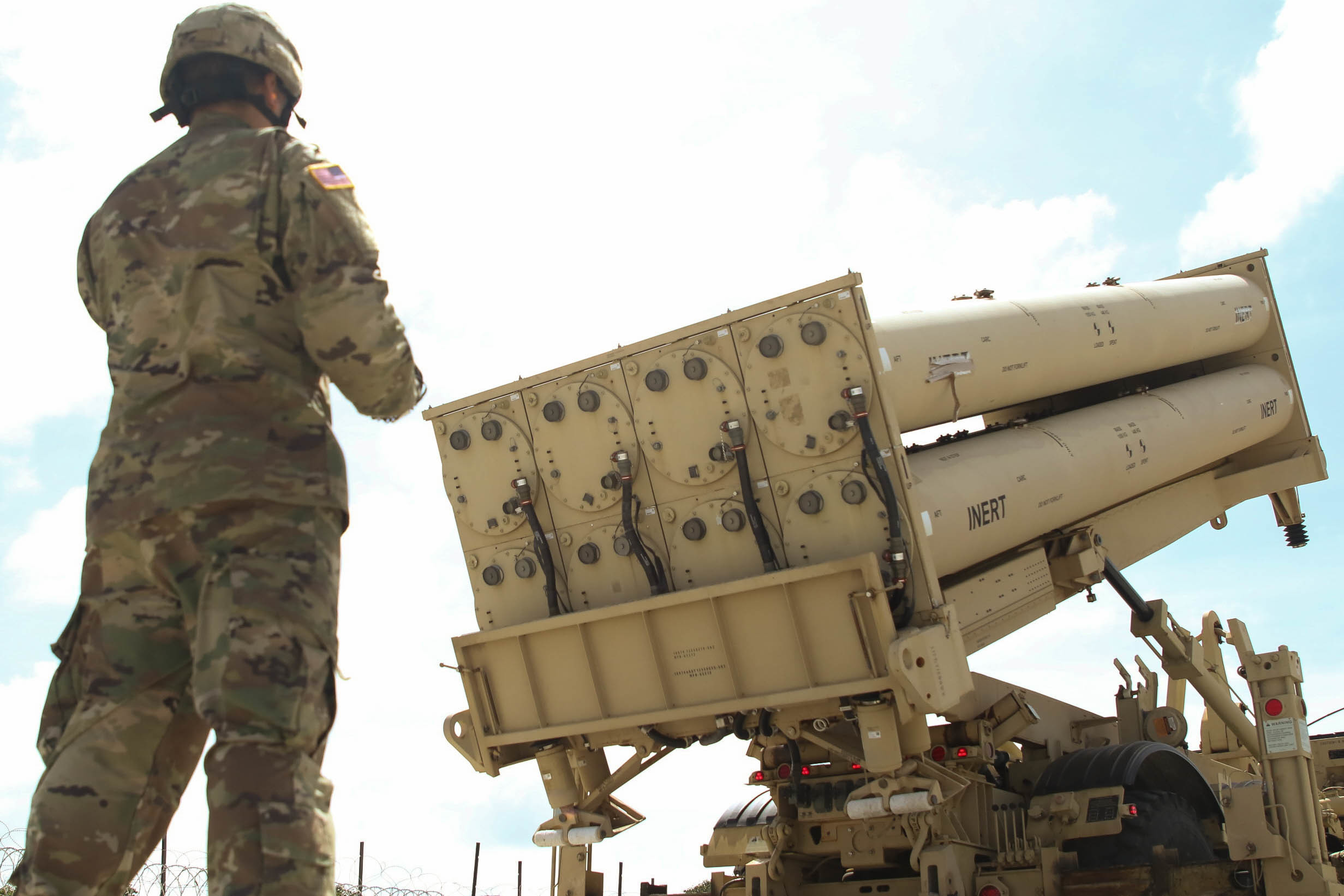
That’s set to change in the next few years, as the military builds an Enhanced Integrated Air and Missile Defense System with new sensors, launchers, and command-and-control suites at 16 sites spread across the island. They would include older systems such as THAAD, Aegis, and Patriot, which together can knock out ballistic missiles and other airborne threats at various ranges and stages of flight.
Newer tools could include the Indirect Fire Protection Capability System, which is supposed to fill a mid-range interception role; new radars and sensors to detect and track threats; and new command-and-control systems to make it easier for sensors, interceptors, and service members to share information and adapt on the fly.
Missile mysteries
How well the new system will work is unclear, since many of the new sensors, launchers, and radars are still in prototyping and development. Perhaps more troubling is that, according to a 2025 report by the U.S. Government Accountability Office (GAO) the military does not know how many people it needs to run these systems or when they should deploy to Guam.
The GAO found that estimates range from just 913 Army personnel to over 4,000. The numbers matter because soldiers need housing, health care, drinking water, schools for their children, and other infrastructure that Guam — an island just 30 miles long — is already straining to provide for its current residents.
Top Stories This Week
Without a decent estimate of troop strength, the military can’t plan out how many new barracks, schools, or clinics to build, or how many new teachers and medical providers it needs to staff them.
Making the situation more complex is the fact that Guam is a U.S. territory, which means the people born there are U.S. citizens who pay American taxes, but because the island is an unincorporated territory, none of them can vote for president, and they have no voting representation in Congress. That has left some Americans there feeling as if they are second-class citizens with less of a say in how the U.S. military defends the island.
Passive defenses
Even if the new defense system works perfectly and the new troops can be accommodated, it still may not be enough to protect Guam. As the war with Iran has shown, modern militaries have so many ballistic missiles, cruise missiles, long-range glide bombs, and one-way attack drones that something will likely get through.
U.S. defense analysts have long called for greater investment in passive defenses such as hardened aircraft shelters made out of concrete, or the ability to rapidly repair damaged runways and ports, or mobile control centers. But those analysts say concrete doesn’t have the same influential fanbase in the Pentagon that missile interceptors have. As of 2023, Guam had no hardened air shelters.
Guam’s electric grid, which both troops and civilians rely on, is similarly vulnerable, retired Brig. Gen. Michael Cruz, the former head of the Guam National Guard, wrote in an essay for War on the Rocks.
Cruz called for more resilient civilian and military infrastructure, a shelter system for civilians, and retraining Guam National Guardsmen to operate the missile defense system, rather than bringing in troops from elsewhere.
“On Guam, what happens outside the fence line can directly affect what happens inside it and vice versa,” he wrote. Learn more about the defense of Guam by watching our latest YouTube video here.
Loading comments…
Comments couldn’t be loaded. Please refresh the page.