
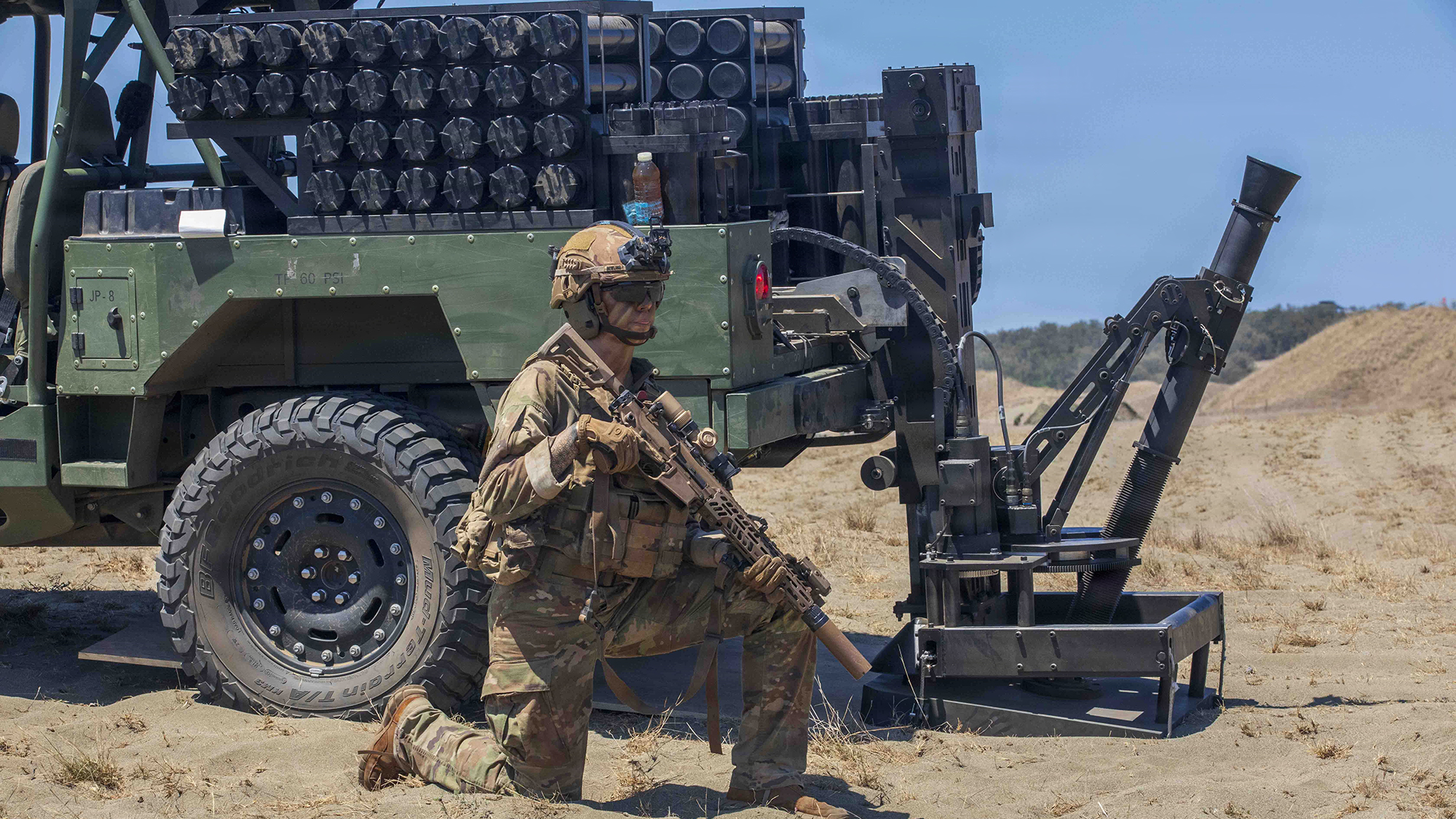
When responding to a call for fire, mortar crews have to verbally yell out deflection, charge, and elevation before dropping a round in the tube, but a new mortar system being developed for the Army and Marine Corps could automate much of that process.
The Scorpion Light 81mm mobile mortar system allows crews to use a map-like device to digitally enter the information needed to hit targets, and then the tube is moved into firing position automatically, said James Knight, director of business development for Global Military Products.
“The only thing that’s manually not really going to change is that you have to grab the round from a ready rack or the ammo storage point, implement the correct charges on that round, and then drop down the tube, but everything else is going to be automated and streamlined,” Knight told Task & Purpose during this year’s SOF Week exhibition in Tampa, Florida.
The system has a manual backup in case it fails, Knight said.
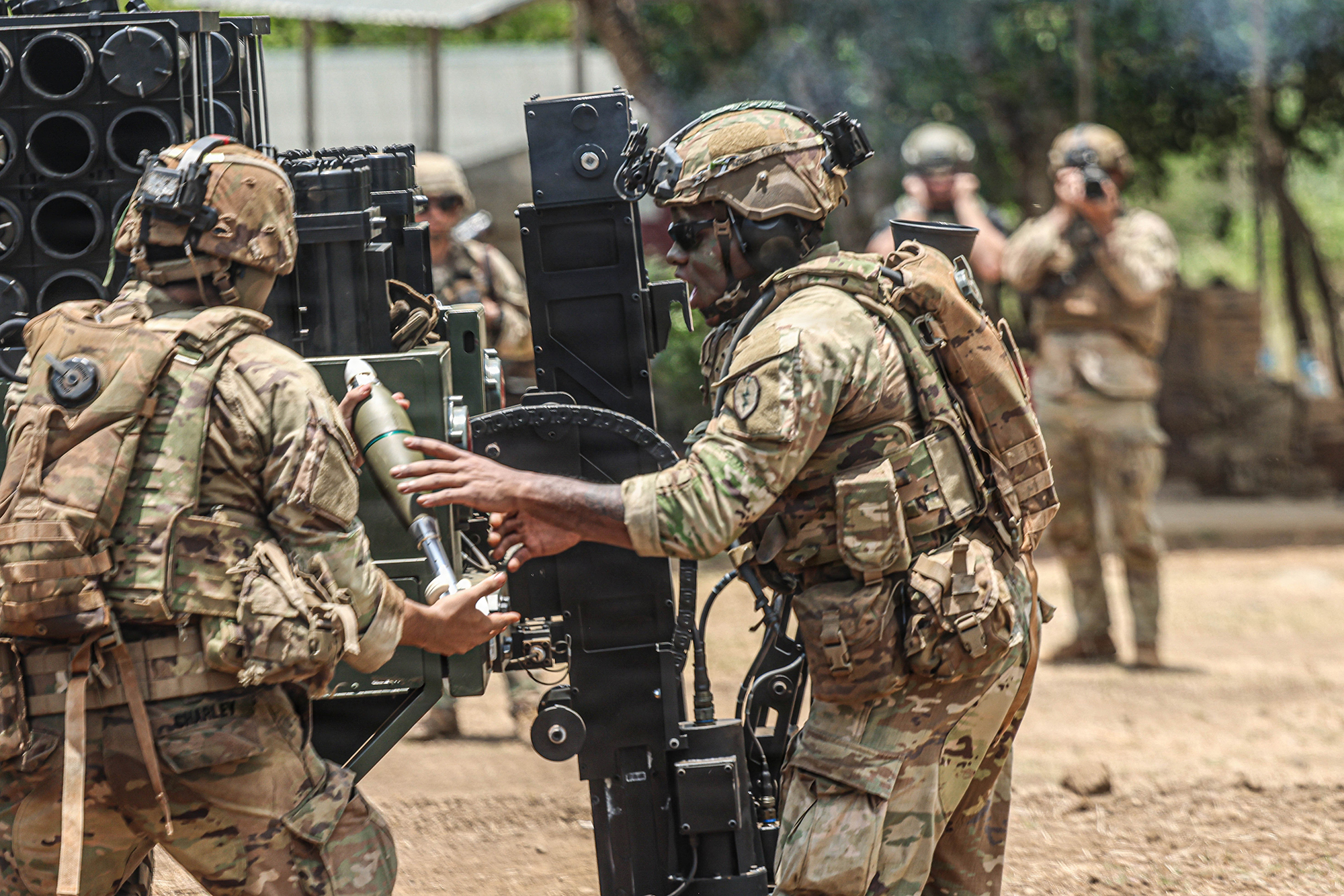
With so much of the firing process automated, mortar crews who use the Scorpion Light won’t have to shout as many commands, Knight said.
“There’ll be some auditory commands, like ‘hang it,’ but the way that they receive those fire missions will all be digitally sent messages that increase the sensor-to-shooter capability,” Knight said. “Once a target is identified down range, that digital message will go down and to the firing position much faster, and there will be less auditory communication.”
The Scorpion Light uses the Global Positioning System to allow crews to shoot more accurately than currently fielded mortars, Knight said.
“It has two dual GPSs on it that give it a specific location and has a specific inertial navigation system and an inclinometer that ensures that you’re accurate to one [millimeter] on aiming and elevation,” Knight said.
The system weighs about 940 pounds and is attached to a vehicle, Knight said. The Army recently conducted live-fire tests of the Scorpion, which was fitted to the service’s Infantry Squad Vehicle, and the Marine Corps plans to test whether the mortar system can be carried by the Polaris MRZR Alpha 6×6 tactical vehicle prototype, he said.
Top Stories This Week
The Scorpion Light is capable of firing eight rounds within two minutes and then moving to a new firing position before being targeted, and it also has a special base plate that makes it easier to use in all types of terrain, Knight said.
“Mortars nowadays have to find a soft ground area, open terrain around a field, dig that base plate in before they can actually shoot,” Knight said. “With this, you don’t have to dig any base plate in, and you not only can shoot on an open field on soft ground, but you can also shoot in urban terrain where any number of asphalt, concrete, or hard surfaces can be found.”
As a former Army indirect fire infantryman, Knight said he is excited about what the Scorpion Light mortar system will allow soldiers and Marines to do.
“It’s very personal to me to ensure that future 11 Charlies and mortarmen have the best capability possible,” Knight said. “I believe in the system, and I’ve seen in person how fast, accurate, and mobile it makes them.”
Loading comments…
Comments couldn’t be loaded. Please refresh the page.