
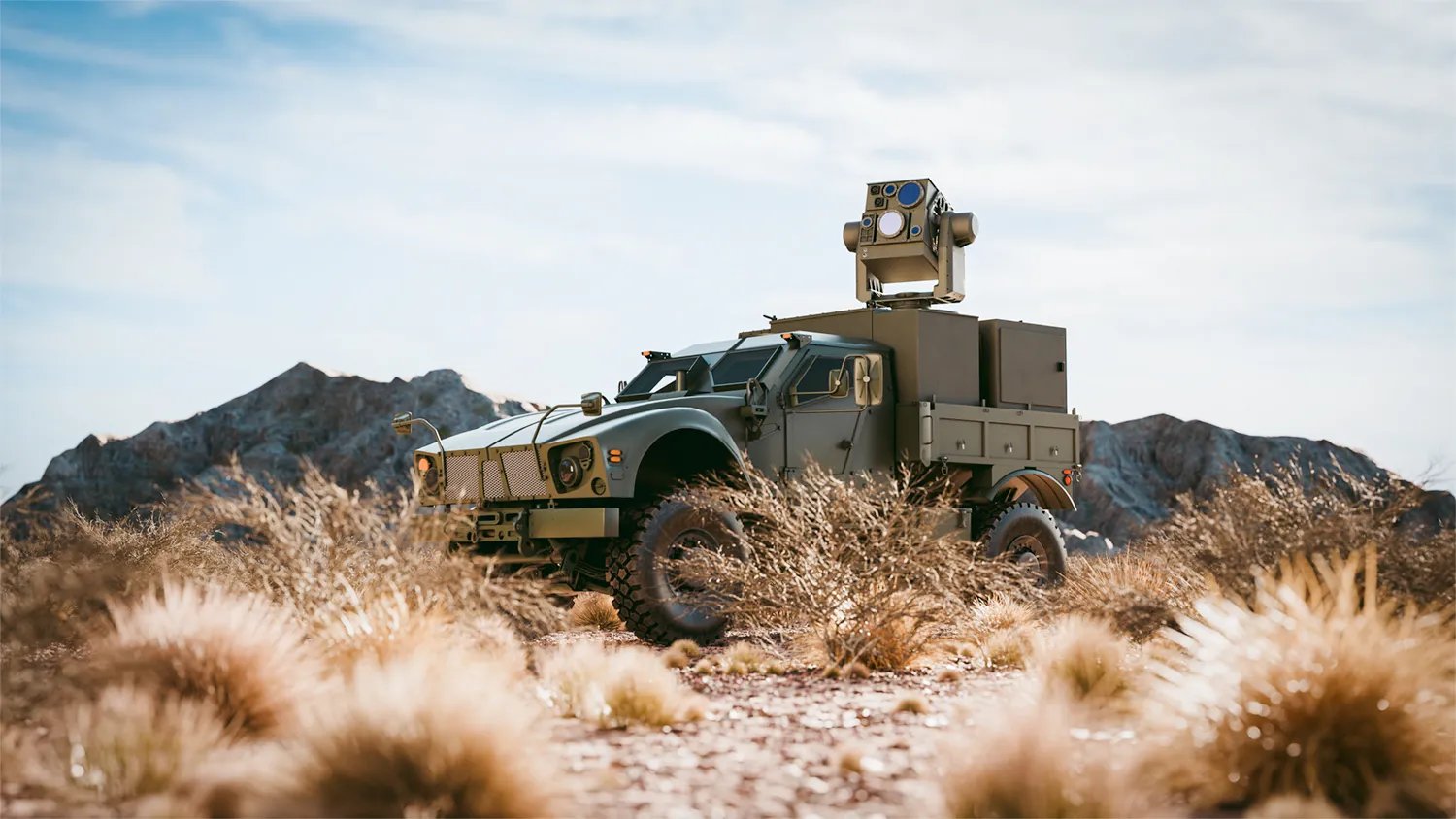
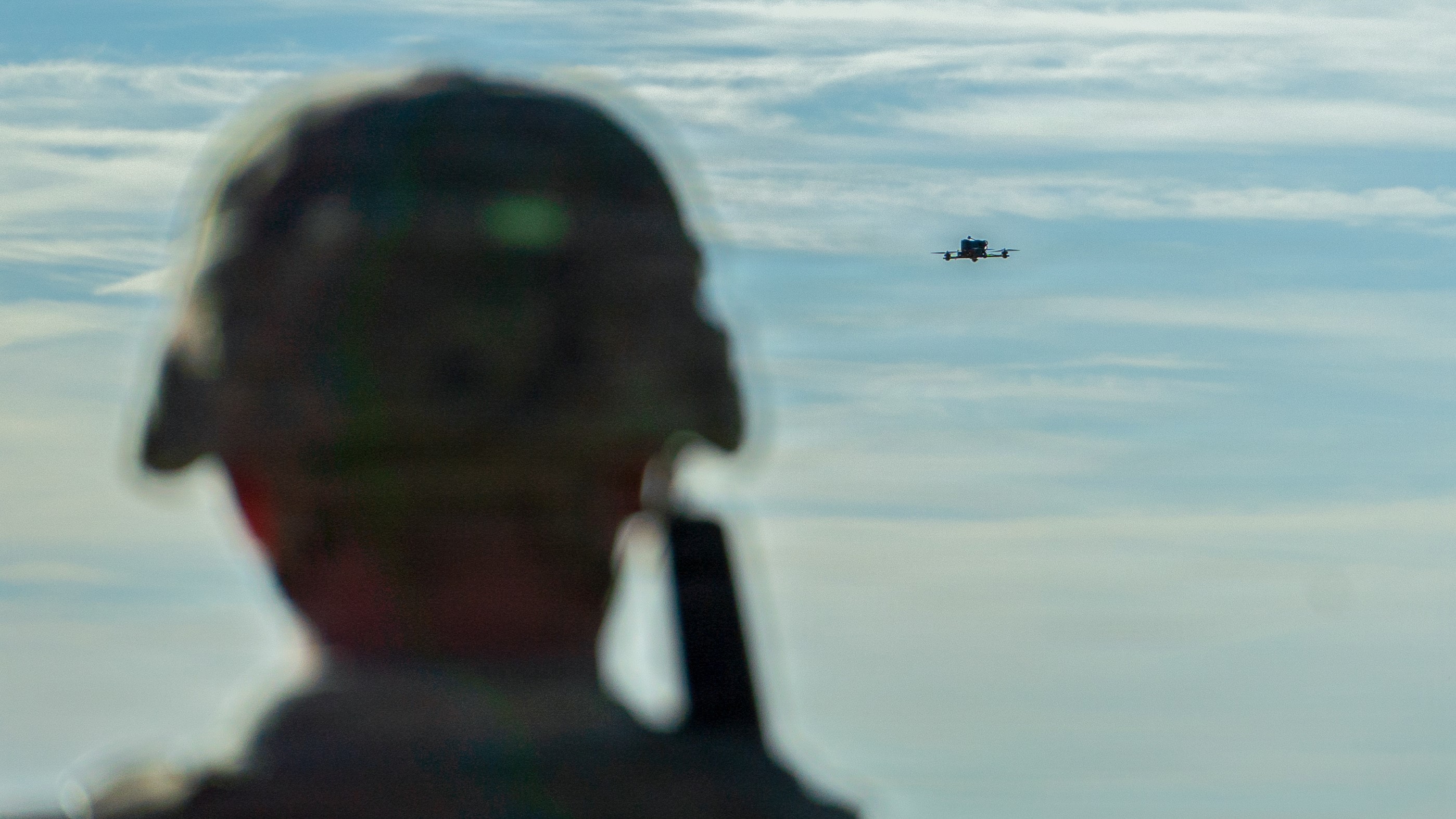
The Pentagon plans to install laser and microwave weapon systems at five bases in the United States by year’s end, to defend the important installations from aerial drones.
On Thursday the military’s task force overseeing drone policy announced that five bases will be participating in the directed-energy counter-unmanned aircraft systems pilot program. They are Fort Bliss in Texas, Fort Huachuca, Arizona, Grand Forks Air Force Base, North Dakota, Whiteman Air Force Base, Missouri and Naval Base Kitsap, Washington.
“Countering unlawful and adversarial drone activity is a homeland defense imperative,” Army Brig. Gen. Matt Ross, Joint Interagency Task Force 401 director, said in the release. “There is no ‘silver bullet’ to address this challenge, and this pilot program integrates cutting-edge technology into the department’s broader counter-drone toolkit.”
Top Stories This Week
JIATF-401 was set up last year, to serve as a central, joint-service hub for addressing the integration of and defense against uncrewed aerial systems or UAS. The military has tried several methods to deal with small, cheap drones that can swarm positions, including specialized ammunition to shred through them, as well as giving installation commanders more leeway in deciding how to deal with potential airspace incursions.
The launch of the pilot program comes after U.S. Northern Command disclosed drone incursions over U.S. bases. In a written statement to Congress, NORTHCOM head Gen. Gregory Guillot reported troops deployed to the southern border have also dealt with dozens of small uncrewed aerial systems, using systems including a new “Flyaway Kit” to “mitigate” the threats.
The bases chosen span the armed forces and the country. Naval Base Kitsap is the home port for several submarines and aircraft carriers. Fort Huachuca is home to several intelligence and information technology units, as well as the Army Intelligence Center of Excellence. Whiteman AFB is the home base for all of the Air Force’s B-2 Spirit stealth bombers, which have played a role in major combat operations including the 2025 Midnight Hammer attack on Iran.
JIATF-401 didn’t specify exactly directed-energy systems would be installed at these bases, only saying the capabilities include “high-energy lasers and high-powered microwave systems.” The military has been testing several types of these weapons in recent years. Earlier this year, a laser system used by the Army was fired twice, leading the Federal Aviation Administration to close the airspace near El Paso twice in February out of concerns for safety in the skies. In one instance, Department of Homeland Security personnel used the Army’s laser.
In March, the FAA and Pentagon reached an agreement over domestic counter drone defenses. That came as JIATF-401 and the FAA tested laser systems such as the Army Multi-Purpose High Energy Laser (AMP-HEL) system at White Sands Missile Range in New Mexico. AeroVironment Inc., which makes the LOCUST laser system used by the Army at Fort Bliss, said tests included hitting airborne and stationary targets.
JIATF-401’s release emphasized safety concerns for surrounding communities and airspace. Army. Col. Scott McLellan, the task force’s deputy director, said that these directed-energy weapons “can counter drone threats while preserving the safety of air travelers.”
According to the Pentagon, base commanders and the department will finalize details of operations over the next 180 days. The Pentagon intends for these laser systems to begin operating on the sites before the end of the year.
Loading comments…
Comments couldn’t be loaded. Please refresh the page.