
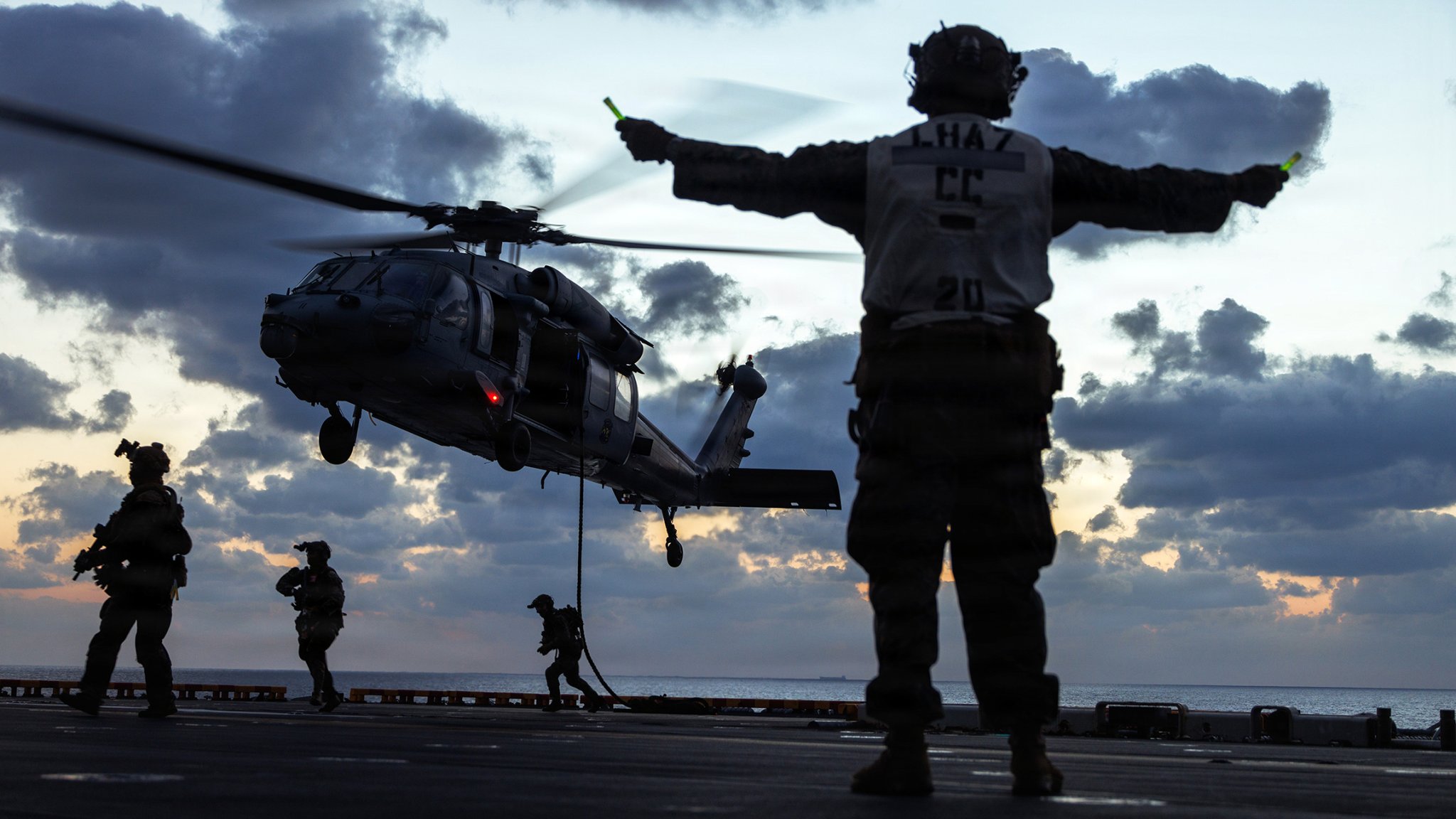
On Sunday, Marines from the amphibious assault ship USS Tripoli fast-roped from helicopters onto the deck of the Iranian cargo ship M/V Touska to take custody of the vessel, the first seizure of the week-long U.S. military blockade of Iranian ports. The Touska was first disabled by sailors on the Navy destroyer USS Spruance, who fired several shots from its 5-inch MK 45 gun at the vessel’s engine room.
Carried out under the cover of darkness, the operation highlighted the capabilities of a small, highly trained group of Marines known as a Maritime Raid Force, or MRF, that specializes in boarding and seizing vessels at sea.
Currently, the 2,200-strong 31st Marine Expeditionary Unit embarked on the Tripoli Amphibious Ready Group is deployed to the Middle East. A U.S. official confirmed to Task & Purpose that the Marines who boarded the M/V Touska were with the unit’s MRF.
A retired Marine special operations officer told Task & Purpose that embarked MRFs train for Visit, Board, Search and Seizure, or VBSS, missions, like the operation to take control of the Iranian cargo vessel.
Top Stories This Week
In another VBSS operation, a Maritime Raid Force successfully retook the container M/V Magellan Star in September 2010, capturing nine Somali pirates and freeing the ship’s crew, all without firing a shot.
These missions are so complex and dangerous that preparing for them requires a unit to put in between six months and a year of specialized training, said the retired Marine, who spent a total of more than 20 years’ operational experience in both U.S. Marine Forces Special Operations Command and force reconnaissance units.
“You need people who can do it,” the retired Marine said. “They’ve got the mental prowess to kind of overcome that fear and execute it. Then, if they got into any kind of shooting onboard that ship, they have to have people who are very capable with what’s called close-quarter battle marksmanship. They have to be able to make split-second decisions and move very quickly inside of confined spaces, where you need people who have been well rehearsed in doing that. You have to have very specific people who are trained to do that.”
When embarked with an MEU, he said, the team works directly for the commander of a Marine Expeditionary Unit, he said. MRFs pull members from reconnaissance and infantry Marines and set up their own communications and dedicated air support, said the retired officer.
The danger involved with VBSS missions was painfully illustrated in January 2024, when a Navy SEAL fell overboard while trying to climb onto a ship off Somalia. Another SEAL jumped in after him. Both drowned.
Deliberate search after a helicopter raid
The Marines who seized the vessel used the “top-down” approach by lowering themselves onto the vessel’s deck from helicopters, said Jonathan Schroden, an expert on Marine Corps force design with CNA, a Washington, D.C.-based not-for-profit research and analysis organization.
“There’s not a lot of other Marines outside of the [U.S. Marine Forces Special Operations Command] environment who are trained to rappel from helicopters like that,” Schroden told Task & Purpose. “So, that particular mode of insertion is something that the [Maritime Raid Force] is specifically trained to do.”
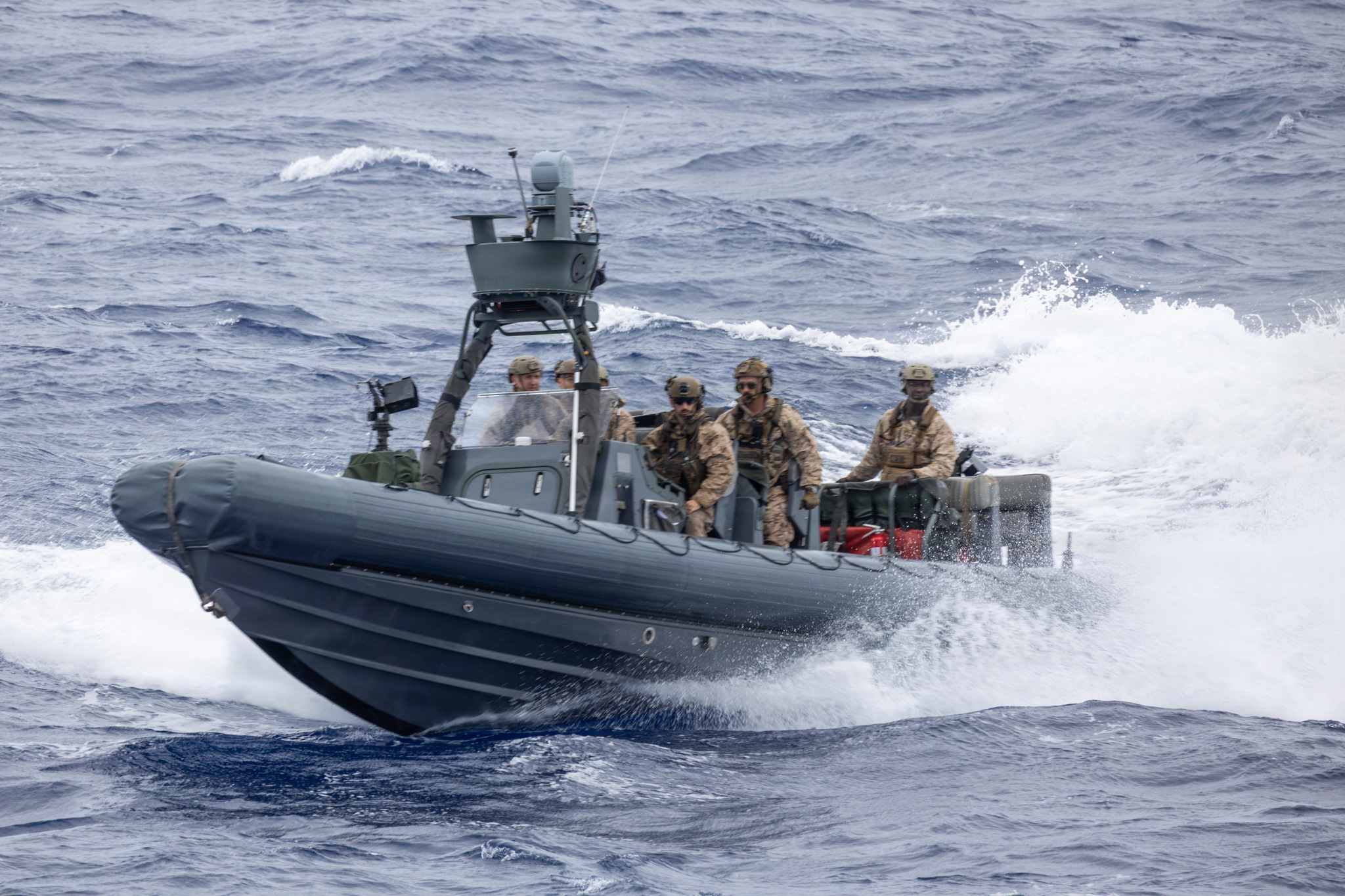
Members of a Maritime Raid Force also practice the “bottom-up” approach to boarding missions, in which they approach a ship in rigid hull inflatable boats and then use ladders to climb up the vessel’s side, Schroden said.
“A lot of people think that only the Navy SEALs have the ability to board and potentially seize ships, but this is a mission that the Marine Corps does and has trained to for decades, and is something that every Marine Expeditionary Unit that deploys has within its capability set the ability to do,” Schroden said.
Loading comments…
Comments couldn’t be loaded. Please refresh the page.