
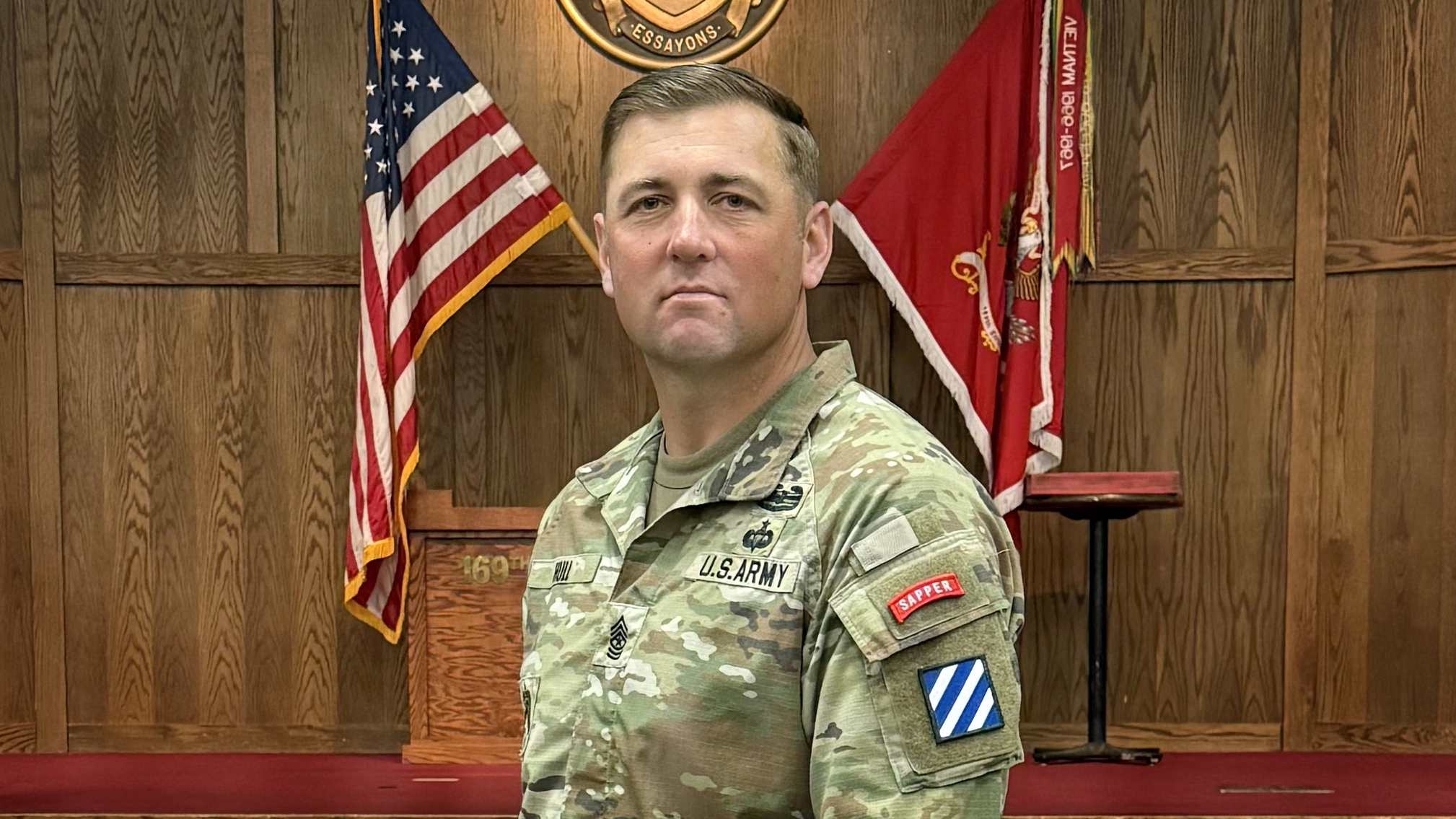
Face down in the dirt, with his hands held behind his back, Sgt. Maj. Russell Hull inched his body up a hill. It was around that time that he started to rethink the choices that led him to that moment.
“That was miserable,” said Hull, who graduated from the Army’s Sapper Leader Course in the Spring. “There was a few minutes where I wanted to quit, because I was just like, ‘What am I doing? I’m 43 years old. I’ve been in the Army over 20 years. Why am I POW crawling up this hill right now?”
The course at Fort Leonard Wood, Missouri, is considered one of the most physically and mentally demanding schools in the Army. These kinds of schools are typically made up of younger soldiers who are either at the start of their careers or halfway through and expect the course will help them in future bids for promotion. When Hull graduated on March 20, he became the first sergeant major to do so in over 15 years, base officials confirmed.
The Sapper Course puts soldiers through a series of physically demanding trials, often carrying heavy loads as the combined weight of their rucksack, breaching tools, service weapon, ammunition, food, water, armor, and other gear quickly stacks up. For the first phase, soldiers are woken up at 4 a.m. and put through a series of written tests and engineering skill challenges where they practice breaching, rappelling and casualty recovery. In the final phase, soldiers are put in the field and continue to train, albeit with little rest.
The course’s physical and mental demands also make it highly competitive. For Hull’s class, 60 soldiers showed up. After the prerequisite fitness test and two phases of the actual course, only 13 soldiers graduated.
Hull has spent five years in the Army Reserve and 18 on active duty. He is currently the senior enlisted leader with the 9th Engineer Battalion, 2nd Armor Brigade of the 3rd Infantry Division. Even with his 23 years of experience, Hull said his grit was tested during the 28-day course.
“You get in your head,” Hull said. “Why am I here doing this? Why am I beating myself up?”
Hull had opportunities to go to the course earlier in his career, but he had been medically disqualified or opted to attend a different school. At 43, he decided to try his hand at it.
“We’re having a hard time getting actual hard slots. And then, just kind of as we do, we start trying to joke around with each other and our brigade commander looked at me, he’s like, ‘Hey, why don’t you go?’,” Hull said. “If I can get medically cleared, I was like, ‘I’ll go for it,’ and then that’s kind of where it started.”
Hull sought a rank waiver and medical evaluation. He was ultimately allowed to join the course and filled an empty spot.
As for the course itself, Hull recalled that one of the worst days was a long walk they were sent on. Hull wasn’t sure of the entire distance, but it seemed like they were “walking forever,” he said. They finished in about six hours.
“We were in Missouri, at that time it was early March,” he said. “It was a pretty decent-looking day, and then we got rained on while we were walking. And then that night, it actually snowed a little bit and it was sleeting and windy. We got all four seasons in that 18-hour period.”
Top Stories This Week
In the final phase, soldiers were dropped into the woods and had to put what they’d learned to practice to pass.
“We were the first class that they started incorporating drones,” Hull said. “While we were doing dismounted movements they would go overhead, we had to react to those. Then, some of the objective was getting to where some drones were stored.”
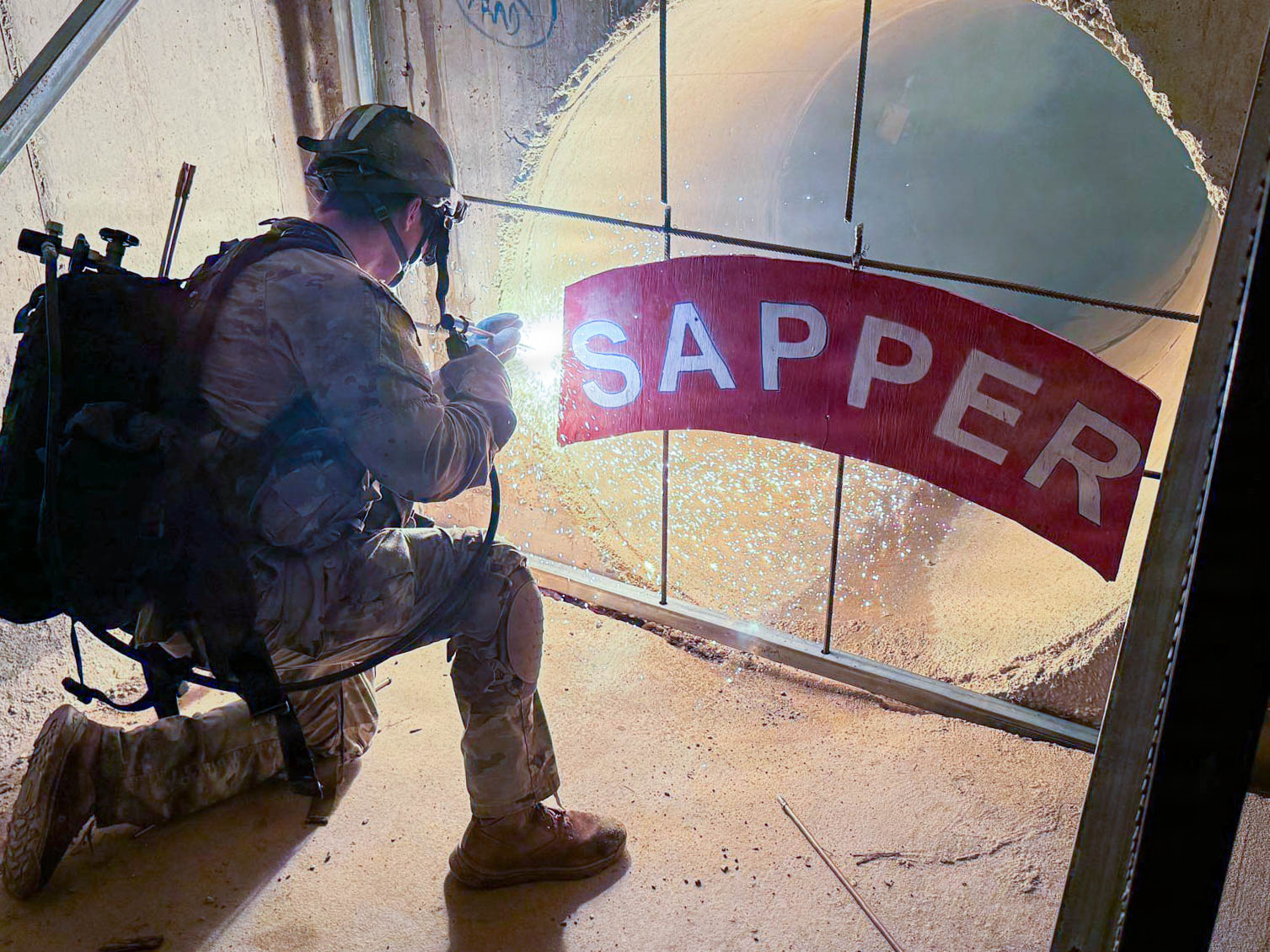
During a patrol, Hull led his platoon on a simulated raid into a village to hunt for enemy drone and their operators. They entered the local tunnel system where they had to use flame torches and tactical saws to breach wired gates and other barriers.
The Sapper Course is mostly made up of enlisted and officer combat engineers, but other military occupational specialties can also attend. As part of the training regimen, the students are stripped of their rank and referred to by their roster number or last name — like “Sapper Hull,” for instance. Hull said he attempted to blend in, but course leaders sometimes asked if he could give some perspective to junior soldiers who were struggling.
Hull said completing the course at his age gave him some perspective — one he thinks other soldiers his age and rank might benefit from.
“We have lots of aches and pains, but the mental strength that a lot of us have from doing this for so long, if you want something, you can do it. It’s just a matter of taking the time to commit,” he said. “If there’s something you still wanna pursue that you wish you would have done when you were younger, as long as you can get medically cleared, that’s a challenge for a lot of us — you can still do it.”
Loading comments…
Comments couldn’t be loaded. Please refresh the page.