
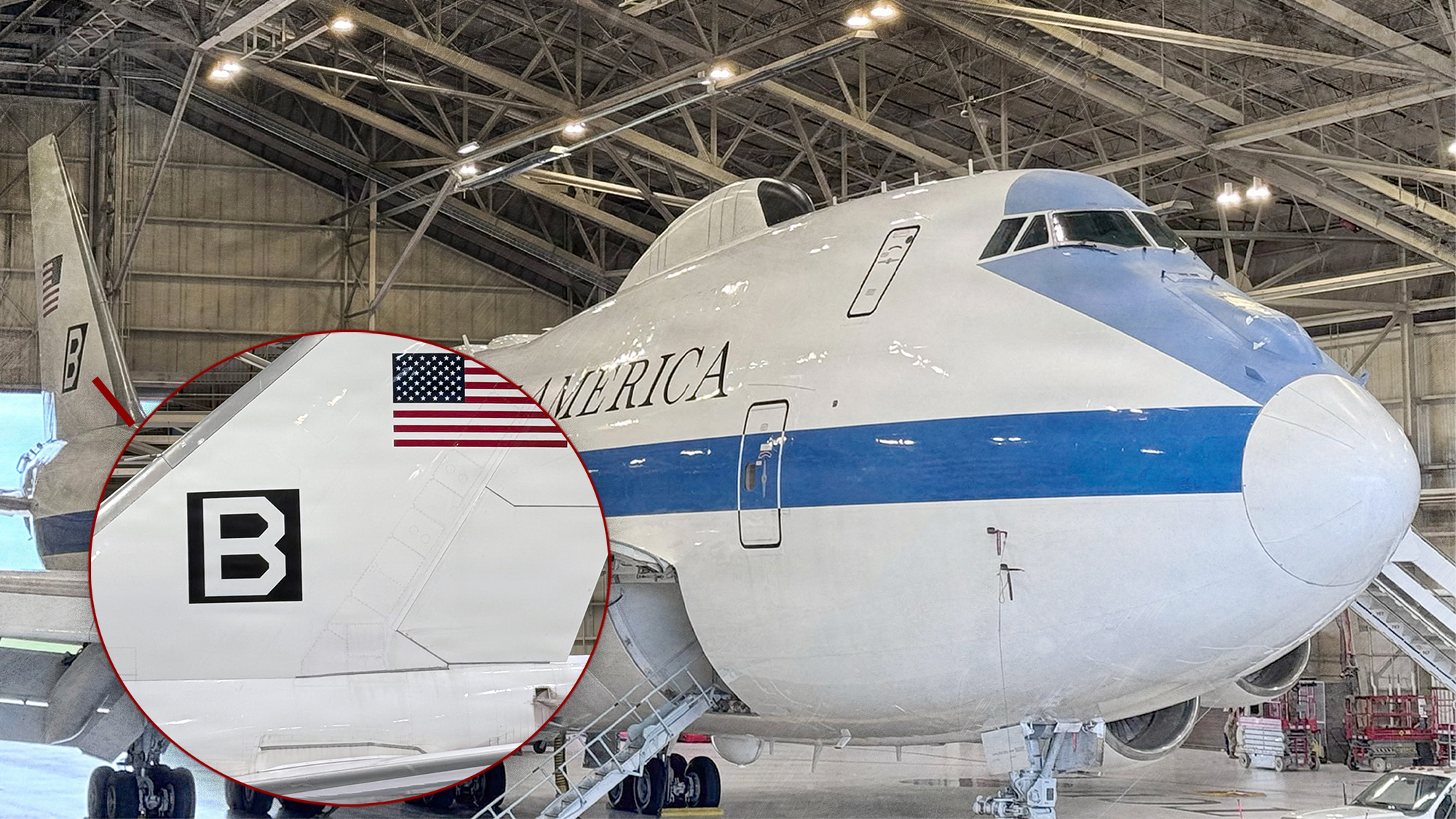
The tail insignia for the Air Force’s E-4B Nightwatch airborne command post — unofficially nicknamed the “Doomsday Plane” — pays tribute to a legendary World War II bomber unit that was awarded three presidential citations.
On June 26, the first E-4B featuring the Square B tail flash — a black box with a white letter “B” — was unveiled at Offutt Air Force Base, Nebraska, as part of the 95th Wing’s heritage week, according to a news release from Eighth Air Force, which oversees the wing.
The Square B aircraft tail insignia was first introduced during World War II to identify B-17 Flying Fortresses with the wing’s predecessor, the 95th Bombardment Group (H). At the time, Eighth Air Force used shapes and letters to distinguish aircraft from various units “due to the immense size of bomber and fighter formations during the air war in Europe,” according to the 95th Wing’s website.
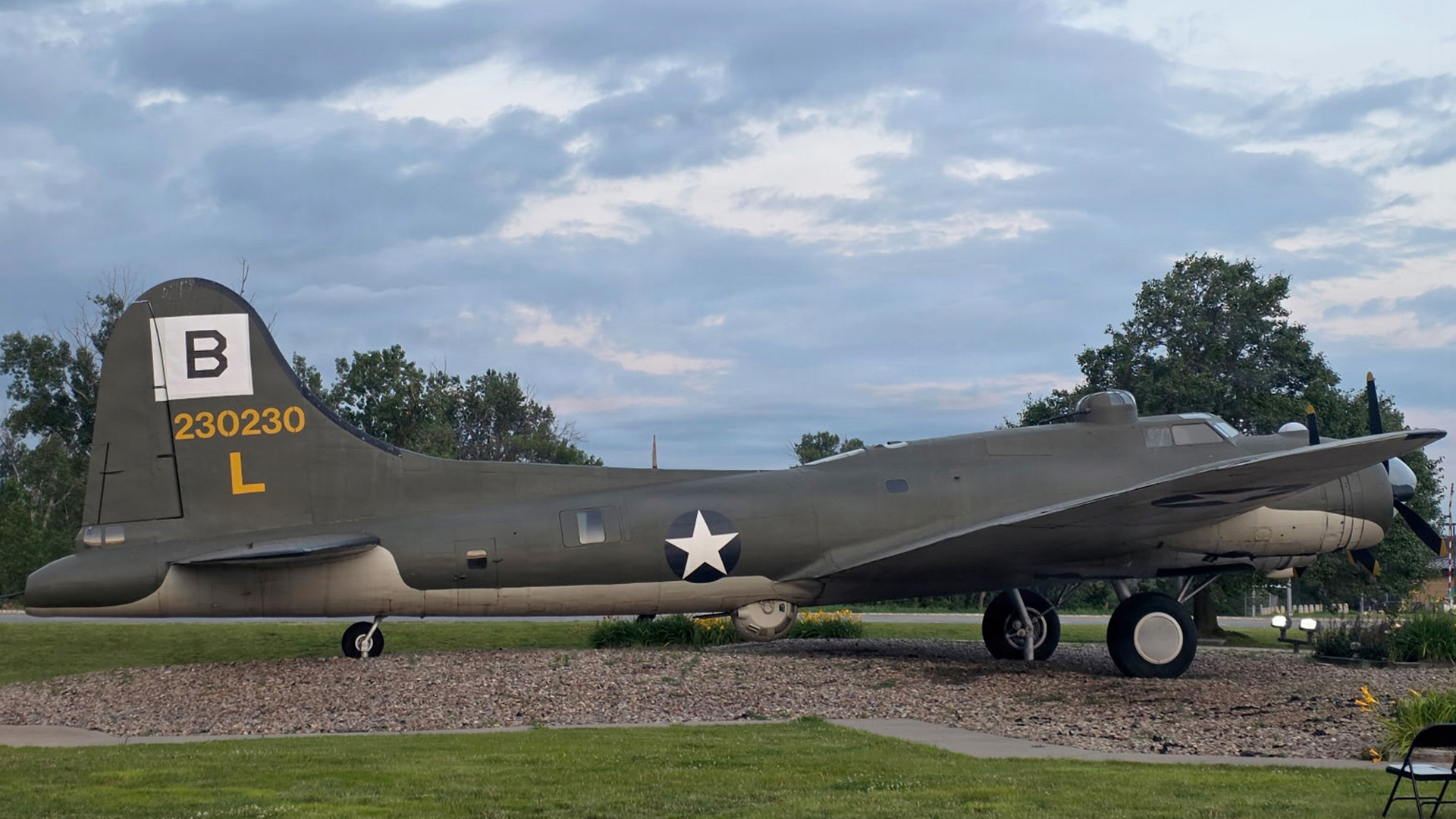
The group was the only Eighth Air Force Unit to receive Distinguished Unit Citations for its wartime service — the award was later renamed the Presidential Unit Citation. It also took part in the first daytime bombing raid on the German capital of Berlin in March 1944.
The 95th Bombardment Group was awarded its first Distinguished Unit Citation after 24 of its bombers flew as part of a harrowing two-pronged attack against the German cities of Regensburg and Schweinfurt.
It was the Eighth Air Force’s deepest strike into Germany at the time, and the American bomber force suffered extremely heavy losses, with 60 out of a total of 376 B-17s shot down and more than 600 airmen killed, captured, or listed as missing.
At the time, Allied fighters did not have the range to escort the B-17s all the way to their targets and back, so the bombers had to try to fend off constant attacks from German aircraft by themselves for most of the mission. Weather also delayed the second wave of bombers, giving German fighters time to land, rearm, refuel, and take off again before the second prong of the attack.
The raid marked the highest losses that Eighth Air Force had suffered up to that point in the war, said historian and author Donald Miller.
“It’s one of those raids where you can say that both sides lost the air battle,” Miller told Task & Purpose.
Reichsmarschall Hermann Göring, who led the Luftwaffe, was furious at his pilots for letting the American bombers strike so far into Germany, Miller said.
“At the same time, the Air Force just took staggering, demoralizing losses,” Miller said. “It was a prelude to even greater losses in October.”
Top Stories This Week
Four B-17s from the 95th Bombardment Group were shot down during the raid, and other bombers that were damaged or ran out of fuel were ditched while heading to a temporary base in North Africa after the mission, said Master Sgt. Rachel Waller, a spokesperson for the Eighth Air Force. More than a week later, only eight flyable bombers returned to the unit’s home base in England.
The group went on to receive two more presidential citations in October 1943 and March 1944, Waller told Task & Purpose. By the war’s end, the unit had flown 8,265 sorties over 321 combat missions, dropped 19,769 tons of munitions, and delivered more than 456 tons of food to Dutch citizens.
The Square B insignia was retired when the 95th Bombardment Group was inactivated in August 1945, the Air Force news release says.
Now, the tail flash adorns the E-4B, which serves as the National Airborne Operations Center used by the president, the defense secretary, and the Joint Chiefs of Staff. The modified version of the Boeing 747-200 is designed to survive the effects of a nuclear war and an electromagnetic pulse.
“The Square B is more than a symbol,” Col. Brian Hassler, commander of the 95th Maintenance Group, said in the Air Force news release. “It represents one of the most decorated Eighth Air Force bomb groups of WWII, a formation of airmen who flew into the heart of danger over Europe and helped shape the outcome of the war through courage, discipline, sacrifice and an unshakable commitment to one another.”
Loading comments…
Comments couldn’t be loaded. Please refresh the page.