
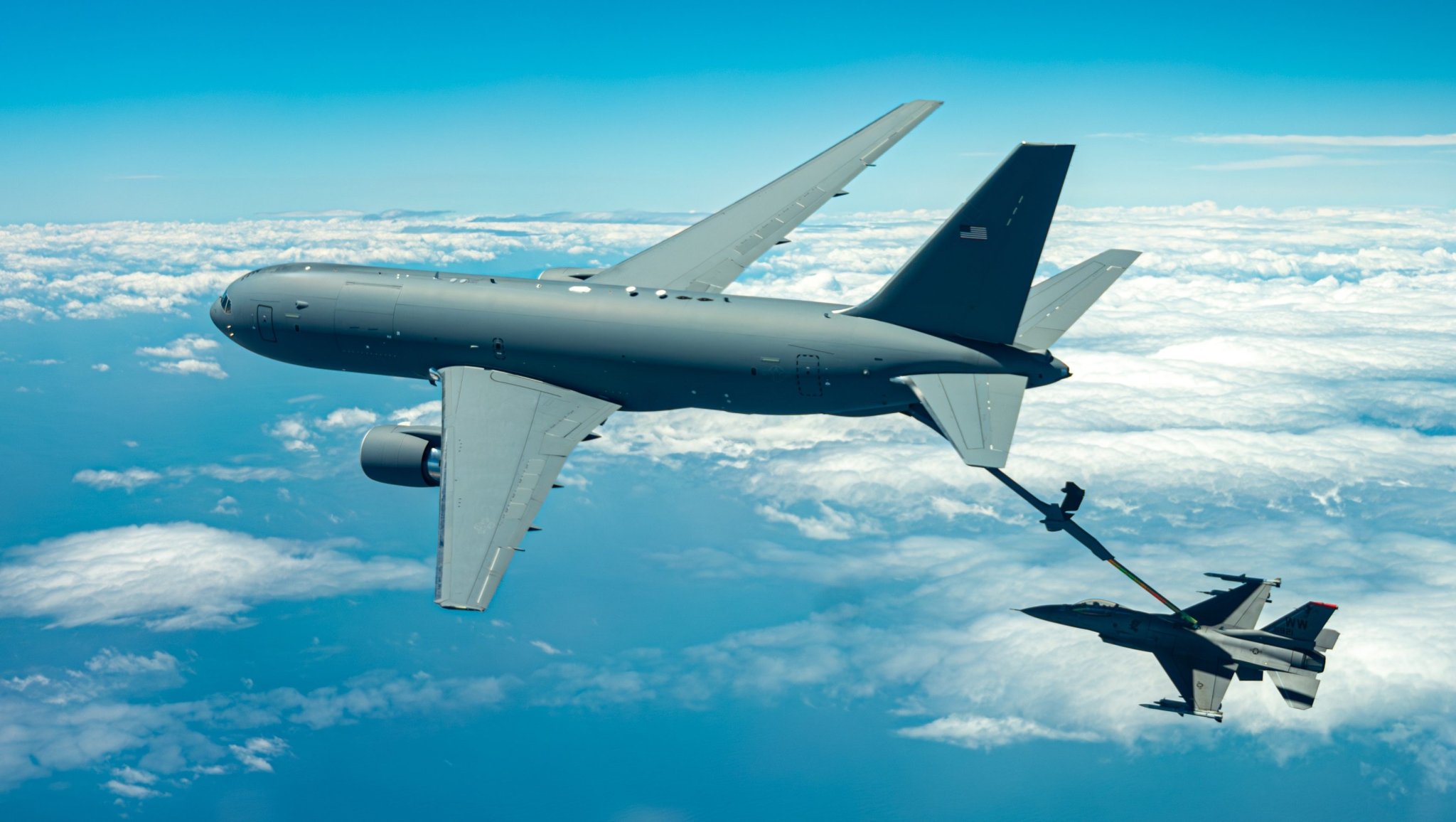
A botched midair refueling last year ripped the refueling boom off one of the Air Force’s newest tanker aircraft, sending the multi-million-dollar fueling arm tumbling into the Atlantic Ocean. A report released last week on the mishap found that the violent mishap was set in motion when the KC-46A Pegasus’ fuel probe became stuck in a fighter jet’s fuel port.
The 2025 accident marked the second time in 11 months that the same failure — a KC-46A’s fuel probe becoming stuck while refueling — led to a 50-foot refueling boom ripping from a plane and falling to earth.
In all, stuck KC-46A probes have now led to four midair mishaps since 2022.
A report released last week on the July 2025 accident laid the blame for the mishap primarily on a boom operator applying too much force to the controls as a student fighter pilot made a shaky approach to the tanker. The “boom” is a tube that extends from the back of the tanker to the fuel port of another aircraft. During refueling, the boom’s operator “flies” the boom through a system of cables and wings with a control stick.
“The cause of the mishap was the mishap boom operator’s manual control inputs to the air refueling flight control stick,” investigators found. Those inputs, the report said, caused the boom to become stuck in the fuel port of an F-22 during refueling and caused an “unrecoverable boom fly-up rate upon release from the receptacle.” In layman’s terms, the boom slammed into the bottom of the tanker, then ripped free from the plane.
But the report also echoed findings in three previous KC-46 accidents, all of which were traced to a well-known flaw that can cause the boom to become stuck during refueling, known as “nozzle binding.” That flaw, the new report said, was a known “category 1 discrepancy,” a level of defect the Air Force says “may cause death, severe injury, or […] loss or major damage to weapon system.” The design of the jet’s refueling probe is “too stiff while in contact with a receiver aircraft.”
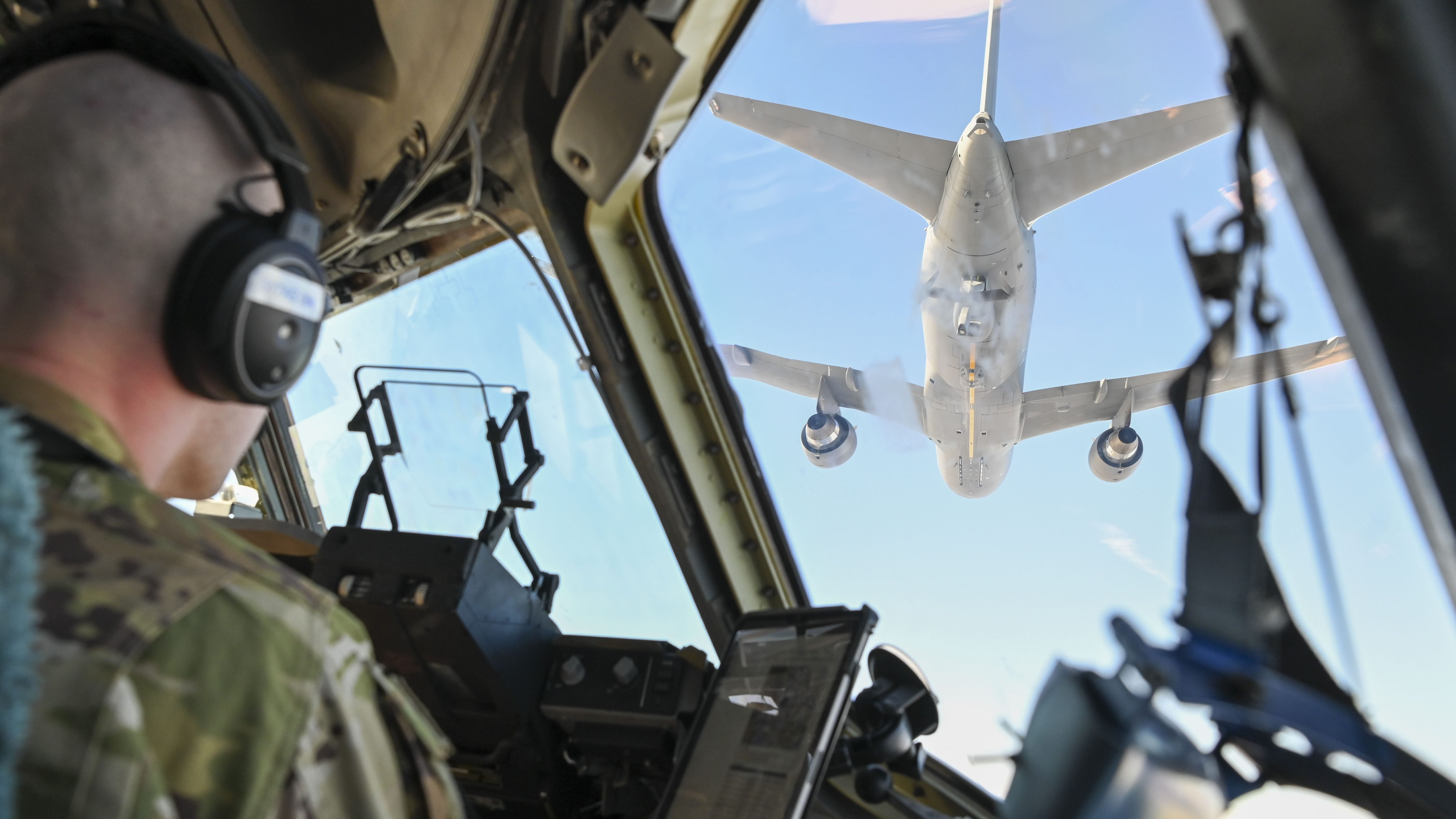
The flaw was “applicable” in the 2025 accident, board president Col. Kevin White wrote, but was not the primary cause.
Besides the 2025 and 2024 accidents that both ripped a KC-46’s boom off, two near-miss accidents in 2022 also saw KC-46A fuel probes become lodged in a fighter jet’s fuel port before breaking free. In one of those, the boom slammed dangerously into the tanker’s tail butstayed attached to the tanker.
The 2025 accident, the report said, caused $9,979,567 in damage. The three accidents in 2024 and 2022 caused a combined $22 million.
Boom torn off after ‘unrecoverable fly-up’
The July 2025 mishap, the report found, came during a training flight in which a KC-46A from McConnell Air Force Base, Kansas was refueling F-22s from Langley Air Force Base, Virginia, about 100 miles from shore.
The boom operator, the report said, was an instructor with 1,012 total flight hours on Air Force tankers, including two years on the KC-135 before switching to KC-46 duty in 2021.
The operator, the report said, put too much force into their control of the boom, causing “a radial force to be applied to the [fuel] nozzle and the nozzle to then become bound inside the receiver’s air refueling receptacle. This subsequently produced an unrecoverable boom fly-up rate upon release from the receptacle, striking [the KC-46] and causing a critical failure of the boom structure.”
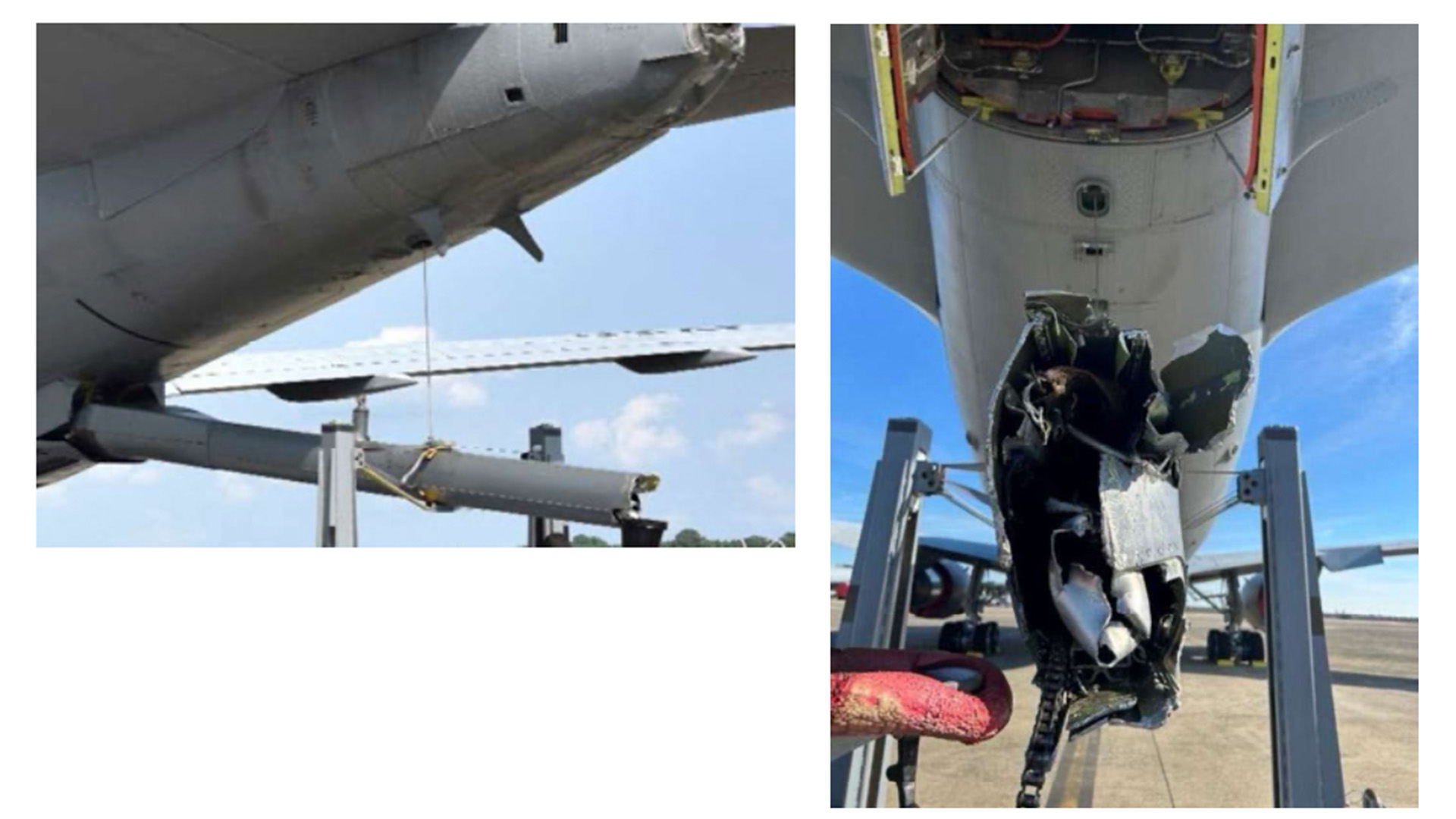
Along with the boom operator, the report put some blame on the F-22 pilot, a student with just 13 flight hours in the advanced fighter jet. The student, the report said, had difficulty connecting with the tanker and approached the KC-46 too rapidly, a “failure to account for the KC-46A stiff boom characteristics.”
Though the report faulted the two aviators, White noted that the nozzle binding issue in the KC-46’s system was “applicable to this accident investigation for the boom telescope.”
The mishap occurred in a nearly identical sequence to the 2024 accident, with a stuck nozzle, hard inputs from the operator and a boom fly-up that struck the tanker’s body before breaking away. That investigation also primarily blamed aircrew mistakes.
But the report on a similar 2022 mishap absolved both aviators, instead blaming the KC-46’s system.
“A pattern begins to emerge which leads me to conclude that this FCS input by [the boom operator] was inadvertent and due to a limitation of the KC-46 [boom] control system,” investigation board President Col. Chad Cisewski wrote. “It is not a reasonable conclusion that [the boom operator] could have recognized his inadvertent input and corrected the situation with the current [boom] control deficiencies.”
Fleet-wide ‘deficiencies’
The report comes just a week after a report by the Government Accountability Office found that deficiencies in the KC-46’s fuel system remain a major liability in the Air Force’s ability to go to war.
Top Stories This Week
“As of February 2026, Air Force officials reported one critical deficiency related to the KC-46A aircraft’s refueling boom. KC-46 unit officials also expressed concerns about Boeing’s quality control procedures and described a variety of issues that they observed with the new aircraft, including frequently failing electrical components on the boom, sensors that do not perform accurately, airframe cracks, and other structural issues.”
Because of KC-46A readiness issues, the report found, the Air Force was relying more each year on its aging KC-135 fleet.
“The tanker fleet did not meet the Air Force’s availability and capability standards from fiscal year 2019 through fiscal year 2025,” the report found.
Loading comments…
Comments couldn’t be loaded. Please refresh the page.