

Brandon Walker was on Navy orders at a joint base in Japan in 2013 when his wife, Kyla Walker, gave birth. Complications during her cesarean section cut off oxygen and blood flow to their baby for six minutes. Their daughter, Kira Walker, suffered a hypoxic brain injury.
The Walkers brought a medical malpractice claim against the Air Force and the OB-GYN who delivered their daughter, demanding $11.9 million in damages and care for their child, who suffered life-altering injuries. The Air Force offered $225,000 as a “compromise settlement,” but did not admit fault.
Now, the family is suing the Air Force in federal court in Washington, D.C., alleging that their constitutional rights were violated due to a gap in federal law that leaves them unable to legally challenge the service’s settlement offer. If Kira Walker had been born at a military hospital in the U.S., the family could have brought a malpractice claim under the Federal Tort Claims Act, which allows people to sue the government for wrongdoing or harm. But tort lawsuits specifically exclude claims “arising in a foreign country.”
Kira Walker, now 13, has been diagnosed with cardiomyopathy, epilepsy, and blood clots. She recently received a kidney transplant. Kyla Walker said her daughter is developmentally delayed and needs help with everyday tasks like brushing her teeth and getting dressed.
The family appealed the Air Force’s settlement offer in April. They still haven’t heard back.
The Walkers now live in Texas with their daughter, Kira Walker, and their other two children, 11 and 15. Kyla Walker is a stay-at-home mom — not as a financial decision, but because their daughter, Kira Walker, needs around-the-clock care. When Kyla Walker is not in classes at Alvin College to earn her nursing degree, Brandon Walker uses vacation days to take their daughter to medical appointments or pick her up from school.
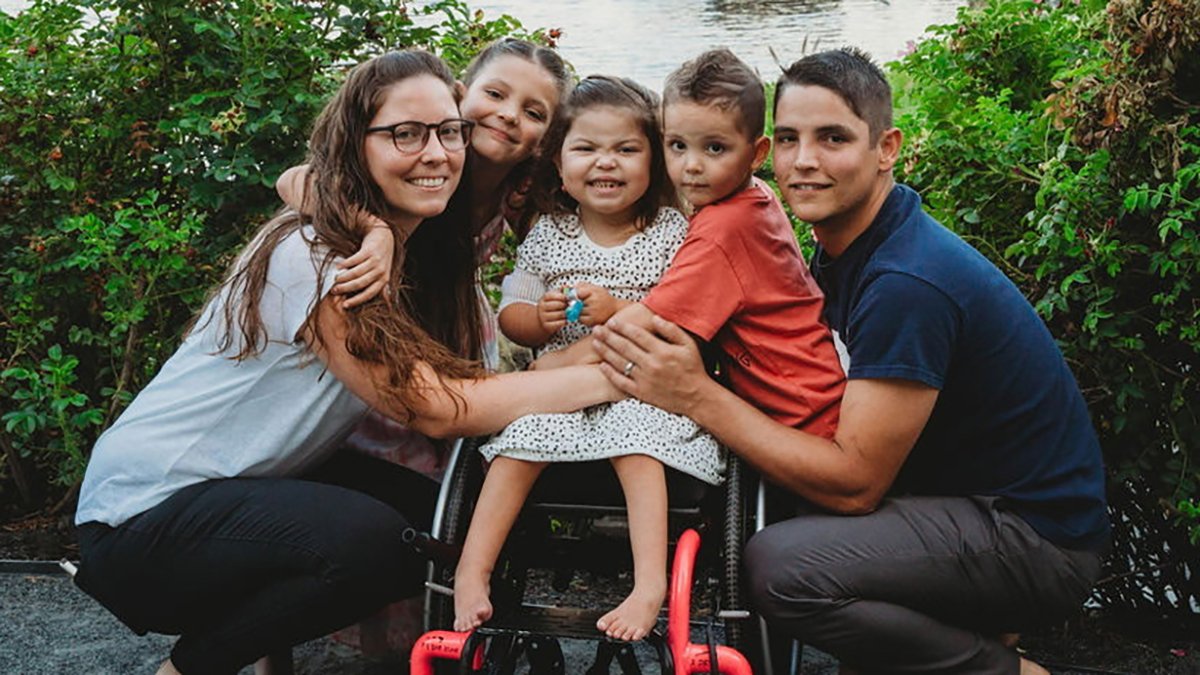
“It’s a balancing act to make sure one of us is available for what she needs. We have learned to live within our means,” Kyla Walker said. “It’s a struggle, but we make it work.”
Instead of bringing a Federal Tort Claims Act case, the family could only use what the lawsuit described as the “toothless” Military Claims Act — which gives certain military personnel and families an administrative way to seek compensation for personal injury, death, or medical malpractice incidents caused by military doctors outside the U.S. However, it does not give the Walkers their day in court with the Air Force.
“It affects potentially every service member who’s deployed overseas because their family could be in the same position,” L. Lee Thweatt, the Walkers’ lawyer, told Task & Purpose. “Why should a brain-injured child born at Camp Pendleton [in California] get much better treatment in the courts and in the claim system than a child with a brain injury born in Japan or in Germany or at any other U.S. military installation overseas? There’s no valid or legitimate reason for that, legally or otherwise. It’s crazy, and this system has to change.”
In recent years, two military families in the U.S. brought similar cases under the Federal Tort Claims Act, alleging that military doctors were too slow to deliver their babies and caused them to suffer permanent brain injuries. A case at Fort Campbell, Kentucky, resulted in an $11 million settlement earlier this year. Another case at Tripler Army Medical Center, Hawaii, led to a $38 million settlement in 2022.
The Air Force declined to comment for this story, citing the ongoing litigation.

The couple was assigned to Misawa Air Base in Japan when Kyla Walker gave birth on Nov. 21, 2013. She had been in labor for hours, so doctors suggested they do a C-section. During surgery, the placenta detached, which started a race against the clock for doctors to deliver a baby and prevent severe developmental risks. It took the Air Force doctor six minutes to deliver Kira Walker.
Kyla Walker awoke from surgery to learn that her daughter suffered a hypoxic brain injury. The baby had been rushed to a Japanese hospital with a neonatal intensive care unit, where she stayed for about three weeks. The family was medically evacuated to San Diego, California. For the next few months, the couple attended weekly appointments at a local children’s hospital and received training on how to care for their daughter’s unique medical needs.
“This is just our life. We found our new normal. I think we’re at a higher level of stress than normally having kids that are typical kids,” Kyla Walker said. “There’s always this high risk; she could have a perfectly normal day and be in the hospital the next day.”
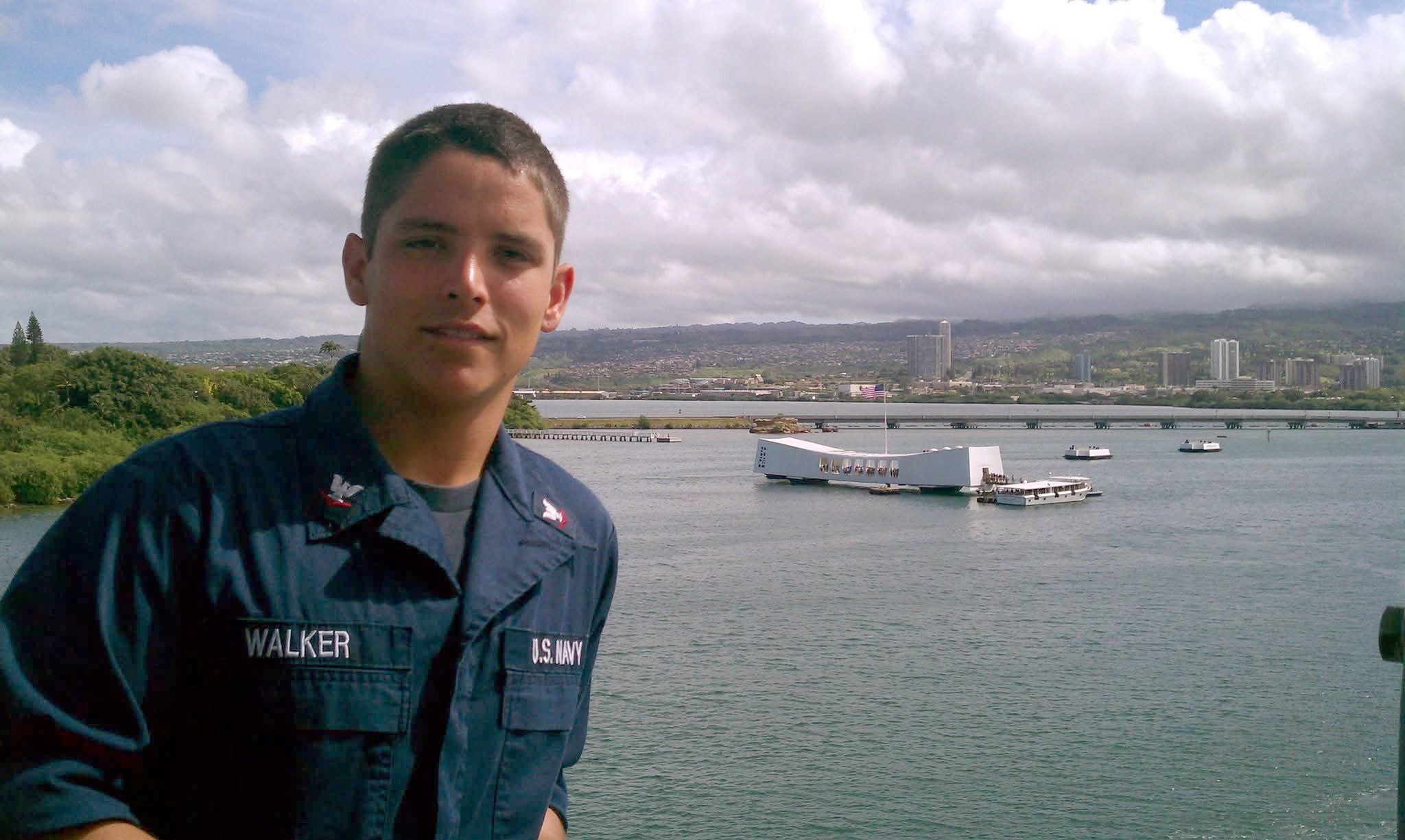
Brandon Walker, who now works as a contractor for NASA, was honorably discharged from the Navy in 2015 as an aviation electrician’s mate second class. The family moved back home to Texas. After her husband left the service, Kyla Walker said they weren’t going to pursue a medical malpractice claim, but were pushed to do so by their veteran fathers, one who served in the Navy and another in the Army.
In 2015, they filed their Military Claims Act request.
The Air Force offered $225,000 as a “compromise settlement” and said it “should not be construed as an admission of liability.” According to the Walkers’ lawsuit, the service argued that the OB-GYN, a captain who recently completed his residency, encountered pelvic adhesions, which complicated the C-section delivery.
The Walkers’ lawsuit argues that “pelvic adhesions are foreseeable” but can be managed, noting that Kyla Walker faced the same thing during the birth of her son, which “occurred without incident or harm.”
Kyla Walker said the Air Force’s $225,000 offer was “disappointing,” since it doesn’t cover the level of care that her daughter requires each day and will need for the rest of her life. Even insurance doesn’t cover all of her daughter’s medication, medical equipment like leg braces, or her yearly cardiology exams that come with a $4,000 bill.
“She just needed a new wheelchair and we had to get a grant for it because we couldn’t afford it … There’s all these little things that are big things,” Kyla Walker said. “That [amount of money] wouldn’t get her through a year or two to make sure she has everything she needs, and we would continue to financially struggle.”
In order to accept the terms of the Air Force’s settlement offer, the service required that Kira Walker, a minor, get approval from a state court. After reviewing the case, a Texas county judge denied the service’s offer in March, deciding that the amount was not in Kira Walker’s “best interest.”
It’s been seven months since the family forwarded the judge’s response to the Air Force and made an appeal. The family enlisted the help of Republican Sen. John Cornyn from Texas. The service told Cornyn’s office that their “appeal remains under consideration.”
The lawsuit demands that the Air Force settle the claim for $11.9 million — the original cost of care estimate from 2015 — plus interest. Thweatt said the number would likely be higher due to inflation. Their lawsuit requests that a judge order a bench trial so the family can “have the opportunity to prove the liability and catastrophic damages in this case.”
“It changed our entire lives. It affects my kids and who they’ll be,” Kyla Walker said. “It’s also kinda hard to see my oldest daughter and my youngest son and their potential and who they are and the path that they can later take and go to college and maybe get married and do all these normal things that she’ll never get to do. It’s not just a, ‘Well, this accident happened. It’s our whole family.”
Loading comments…
Comments couldn’t be loaded. Please refresh the page.